Maritime Welding Training: Clear Overview and Expert Insights
A poor welding decision at sea can do more than create an unattractive bead It can weaken a load-bearing connection delay a vessel repair expose workers to fire or electrical.
Maritime welding training prepares people for welding in shipyards, boatyards, offshore facilities, marine repair shops, and sometimes underwater environments. The work combines welding fundamentals with job-specific procedures, safety controls, inspection requirements, and the realities of working around water, steel structures, fuel systems, confined spaces, and changing weather.
I will explain what this training includes, which credentials matter, how surface and underwater pathways differ, what a realistic training route looks like, and how to evaluate schools or employers before paying for a program. The goal is to help a prospective welder choose training that supports actual maritime employment instead of collecting credentials that do not match the intended job.
What Maritime Welding Training Covers
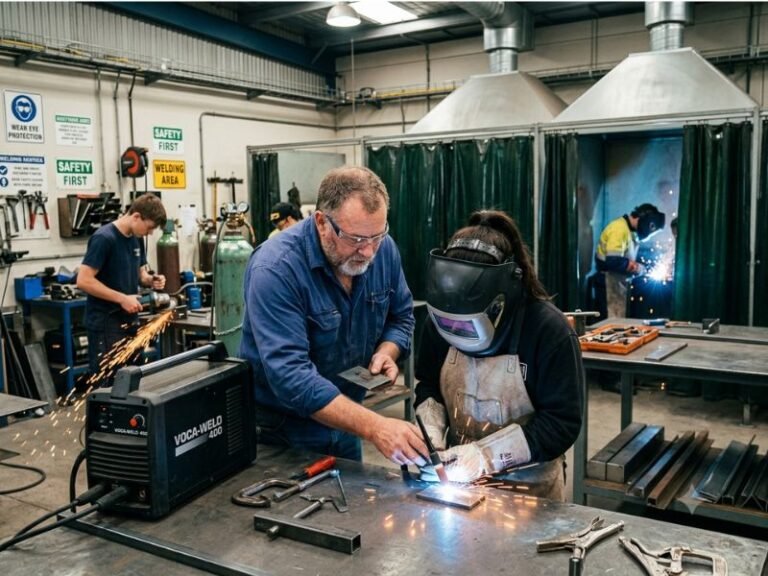
Maritime welding training is structured instruction for producing, repairing, and inspecting welded connections used in boats, ships, barges, offshore structures, terminals, and related marine equipment. It normally combines classroom instruction, shop practice, welding qualification work, and safety training.
The exact curriculum varies by school and employer, but a credible program usually covers:
- Welding theory, metallurgy, joint design, and heat control
- Shielded metal arc welding, commonly called stick welding or SMAW
- Gas metal arc welding, or GMAW, including solid-wire and flux-cored applications
- Gas tungsten arc welding, or GTAW, for controlled work on suitable metals
- Flux-cored arc welding, or FCAW, often used for productive work on heavier steel
- Blueprint reading, weld symbols, measurements, and fit-up
- Welding positions, including flat, horizontal, vertical, and overhead work
- Joint preparation, tacking, distortion control, and weld cleaning
- Visual inspection and basic understanding of nondestructive testing
- Marine safety, fire prevention, confined-space awareness, and personal protective equipment
Marine work adds conditions that are less common in a general welding classroom. A welder may need to work inside a compartment, on a ladder, near moving equipment, in a noisy shipyard, or on material affected by corrosion and salt exposure. Training should therefore teach controlled work habits, not just electrode manipulation.
Some programs focus on entry-level shipyard welding. Others prepare experienced welders for specific procedures, alloys, pipe, aluminum fabrication, structural repair, or underwater work. I would treat the course description as a starting point and ask for the actual process list, practice hours, qualification tests, and employer connections before enrolling.
Where Maritime Welders Work
“Maritime” describes an industry rather than one single occupation. The daily duties of a shipyard welder can differ substantially from those of an offshore construction welder or an underwater welding diver.
Shipyards and boatyards
Shipyard welders fabricate and repair hulls, decks, bulkheads, frames, brackets, piping supports, tanks, and machinery foundations. Work may involve carbon steel, stainless steel, aluminum, or specialized alloys. Production speed matters, but weld quality and adherence to an approved procedure matter just as much.
Boatyards may handle smaller vessels and a broader mix of repairs. Aluminum welding is especially relevant in some boatbuilding environments, while steel repair is common on commercial vessels, barges, and larger marine structures. A program aimed at large ship construction may not provide enough aluminum practice for a small-craft repair career.
Offshore and marine construction
Offshore work can include platforms, support structures, pipelines, wind-energy components, docks, and marine terminals. These jobs may require structural welding, pipe welding, rigging awareness, elevated-work controls, and strict documentation. Travel, rotational schedules, weather delays, and additional site credentials can also affect employment.
Marine repair and maintenance
Repair welding often involves identifying the source of damage before depositing new metal. Corrosion, fatigue, impact, previous repairs, contamination, and hidden defects can all affect the job. A competent welder must know when a surface needs cleaning, when damaged material needs removal, and when an engineer or supervisor must approve the repair plan.
Underwater welding
Underwater welding is a specialized commercial-diving activity, not simply ordinary welding performed while submerged. It requires commercial-diver training, underwater construction skills, diving safety, equipment procedures, and specialized wet or dry welding techniques. A short “underwater welding” course cannot replace recognized commercial-diving preparation.
Core Skills Students Need to Build
A student should leave training able to produce repeatable welds under controlled conditions and understand why a weld succeeds or fails. Employers generally value consistent fundamentals more than a long list of unrelated certificates.
Welding processes and power sources
SMAW remains important because it is portable and practical for repair work. FCAW and GMAW can support efficient fabrication in shipyards, especially when shop conditions allow appropriate shielding and equipment control. GTAW offers precision and is useful for selected materials and applications, but it is slower and demands strong torch, filler, and heat control.
Training should explain process selection rather than presenting one process as universally best. Material thickness, joint position, access, production requirements, weather, cleanliness, and the approved welding procedure all influence the correct choice.
Fit-up and welding positions
Many poor welds begin before the arc starts. Incorrect bevels, excessive or insufficient root openings, poor alignment, inadequate tacking, and contaminated surfaces can create defects that no finishing pass can fix. I would look for substantial practice in joint preparation and fit-up, not only time spent running beads.
Marine welders also need practice beyond the comfortable flat position. Vertical and overhead welding require control of puddle size, travel speed, arc length, and deposition. A training center that advertises shipyard readiness should explain how students practice realistic positions and access limitations.
Blueprints, weld symbols, and procedures
Welders commonly work from drawings, weld symbols, work instructions, and welding procedure specifications. Students should learn to identify joint type, weld size, length, location, process, consumable, position, and any special instructions.
A welding procedure specification, or WPS, describes how a particular weld is to be made. It may identify base material, filler metal, preheat, interpass temperature, electrical settings, shielding, and position. A welder qualification test demonstrates that the individual can produce an acceptable weld under specified conditions. Those two documents serve different purposes and should not be confused.
Inspection awareness
Entry-level training does not usually make someone a welding inspector, but it should teach the causes and visible signs of common discontinuities. These may include porosity, undercut, lack of fusion, overlap, cracking, incomplete penetration, arc strikes, and excessive spatter.
Students should also understand that visual acceptance depends on the governing code, contract, drawing, owner, or classification requirements. A weld can look acceptable to an untrained observer and still fail a formal inspection or nondestructive examination.
Safety Requirements in Marine Welding
Marine welding combines standard welding hazards with confined spaces, combustible materials, electrical exposure, elevated work, heavy lifting, and difficult evacuation routes. Safety instruction should be practical and specific to the work environment.
Hot work and fire prevention
Welding, cutting, and grinding can ignite insulation, coatings, residues, vapors, wood, plastics, or materials on the opposite side of a steel partition. Hot-work permits, fire watches, gas testing where required, ventilation, housekeeping, and post-work monitoring are essential controls.
Shipboard tanks, voids, and compartments can contain dangerous vapors or lack sufficient oxygen. A welder should never assume that a space is safe because it appears empty. Site procedures determine atmospheric testing, ventilation, entry authorization, communication, rescue planning, and continuous monitoring.
Electrical and personal protection
Marine environments can increase electrical risk because of conductive surfaces, damp conditions, restricted movement, and nearby water. Training should cover machine grounding, cable inspection, electrode-holder condition, dry work clothing, ventilation, and the employer’s rules for welding in wet or confined locations.
Required protective equipment may include a properly rated welding helmet, safety glasses, flame-resistant clothing, gloves, hearing protection, respiratory protection when required, safety footwear, fall protection, and suitable life-safety equipment near water. Personal protective equipment is only one layer of protection; it does not replace hazard elimination or site controls.
Coatings, fumes, and contaminated materials
Marine steel may carry paint, galvanizing, oil, fuel residue, antifouling coatings, or unknown substances. Grinding or welding these materials can produce hazardous fumes. Training should teach surface preparation, ventilation, exposure controls, and the need to stop work when the material or atmosphere is uncertain.
A responsible program also teaches students to report unsafe conditions. Maritime productivity never justifies bypassing a permit, entering an untested space, removing required guards, or welding on a container with unknown contents.
Credentials, Codes, and Qualification Tests
There is no single universal “maritime welder license” that qualifies a person for every marine job. Employers, shipyards, vessel owners, government contracts, and classification organizations can impose different requirements.
Commonly relevant credentials or standards may involve:
- AWS welding qualifications or certifications, depending on the job and applicable code
- Employer or shipyard performance qualification tests
- Project-specific qualification under a welding procedure
- Safety training required by the employer, site, or contract
- Commercial-diving credentials for underwater work
- Additional training for confined spaces, fall protection, rigging, respiratory protection, or first aid
American Welding Society documents are widely recognized in the United States, but an AWS credential does not automatically satisfy every marine specification. Some work is governed by a particular AWS structural code, a vessel owner’s standard, a government contract, or rules associated with a classification society such as ABS, DNV, or another authority. The applicable requirement depends on the project.
A qualification test typically specifies variables such as material thickness process position joint design backing filler and other conditions Qualification may be limited to a range of variables.
Certificates of course completion can show attendance, but they are not the same as a performance qualification. The distinction is important when comparing programs. A school should be able to explain which credentials are nationally recognized, which are employer-specific, and which simply confirm classroom participation.
Surface Welding and Underwater Welding Paths
Most people interested in marine welding should first clarify whether they mean welding on marine structures above the waterline or welding while submerged. These paths overlap in basic welding knowledge but diverge sharply in training, risk, equipment, and hiring requirements.
Surface marine welding
Surface welding is the normal entry path for shipyard, boatyard, dock, barge, and many offshore fabrication jobs. A student usually needs strong fundamentals in one or more common processes, blueprint reading, fit-up, safety, and the ability to pass employer qualification tests.
This route can lead to positions such as shipyard welder, marine fabricator, repair welder, structural welder, pipe welder, or welding helper. Advancement may come through additional process qualifications, lead responsibilities, inspection training, or specialized material and pipe work.
Commercial diving and underwater welding
Underwater welding requires two separate skill sets: welding and professional diving. A person must be prepared to work in an underwater construction environment, manage breathing systems and communication, respond to emergencies, and perform tasks in limited visibility and challenging currents.
Underwater techniques may include wet welding, in which the arc operates directly in the water, and dry or habitat welding, in which the work area is isolated from water. Each technique has different equipment, procedures, limitations, and inspection considerations. The work is often repair-oriented and may involve cutting, fitting, inspection, burning, and structural tasks in addition to welding.
I would be cautious about any school that presents underwater welding as a quick shortcut to high pay. Earnings depend on location, diving credentials, experience, project conditions, travel, employer, and the ability to perform a broad range of commercial-diving work. Welding skill alone is not enough.
How to Choose a Maritime Welding Program
The best program is the one that matches the intended job, provides meaningful supervised practice, and clearly explains what its credentials mean. A polished website is less useful than evidence of training quality.
Review the hands-on schedule
Ask how many hours students spend welding rather than observing demonstrations. Find out whether practice includes multiple positions, joint types, thicknesses, and processes. A course that offers only introductory flat-position beads may be useful for orientation but insufficient for shipyard employment.
Check equipment and class size
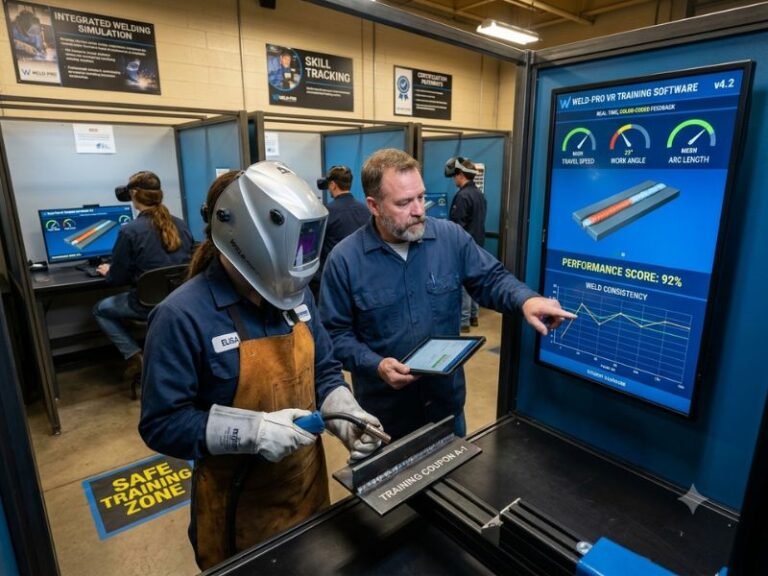
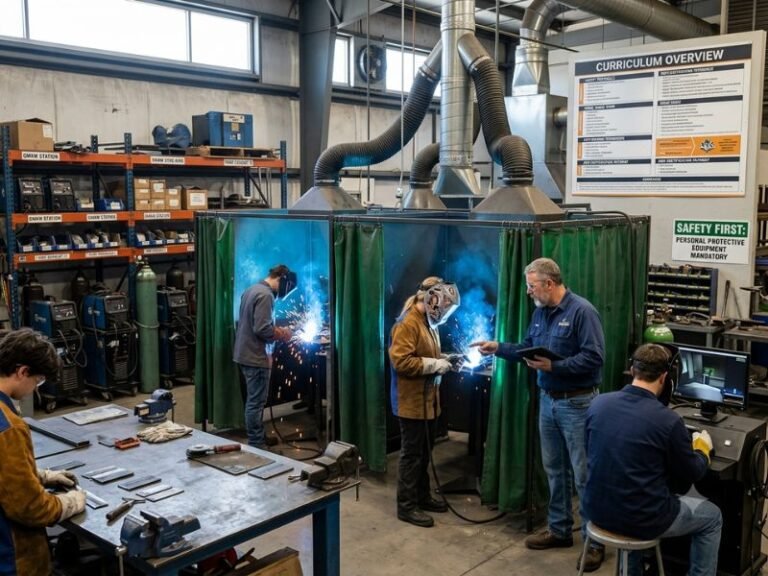
Students should have regular access to functioning machines, appropriate consumables, cutting and grinding tools, fit-up equipment, and inspection tools. Class size affects practice time and instructor supervision. I would ask how many students share each booth and how instructors provide correction during live welding.
Verify instructor qualifications
Instructors should be able to explain welding variables, defects, safety controls, and the expectations of marine employers. The relevant question is not only whether an instructor has welded, but whether the instructor can teach repeatable technique and evaluate student work against a defined standard.
Ask about job placement honestly
“Job placement assistance” may mean anything from resume help to direct interviews with shipyards. Ask for the names or types of employers that recruit graduates, the regions where jobs are located, and whether hiring depends on passing a separate test. Avoid treating an advertised wage as a promise.
Understand total cost and prerequisites
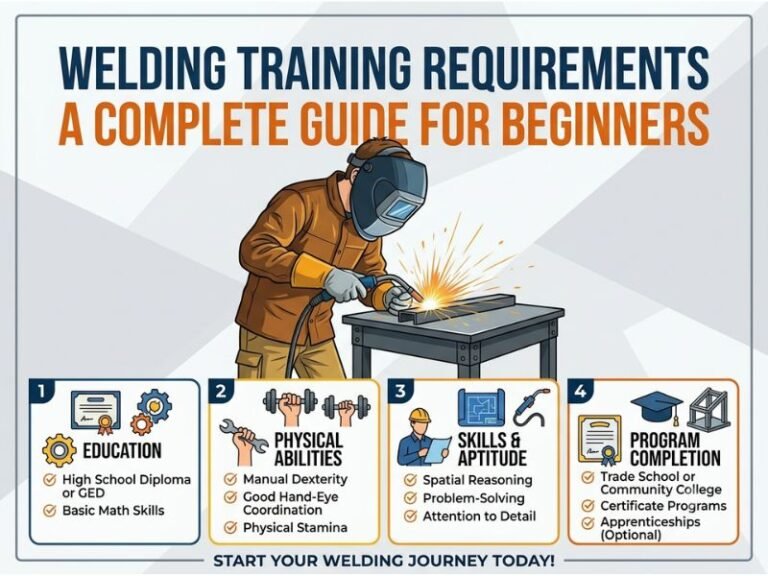
Tuition may not include helmets, boots, protective clothing, consumables, testing fees, medical evaluations, transportation, housing, or additional safety courses. Some programs require basic math, physical ability, drug screening, background checks, or a commercial driver’s license for certain jobs. A written cost breakdown helps prevent surprises.
A Practical Training and Career Sequence
A sensible pathway usually develops skill in stages rather than attempting every specialty at once.
- Build welding fundamentals. Learn safety, machine setup, joint preparation, electrodes and wire, arc control, positions, and basic inspection.
- Practice marine-relevant fabrication. Add blueprint reading, fit-up, distortion control, heavier material, confined access simulations, and realistic work procedures.
- Pass a targeted qualification. Choose a process, material, position, and code or employer test that matches available jobs.
- Enter an entry-level role. A helper, welder trainee, or shipyard production position can provide supervised exposure to actual marine procedures.
- Add specialized credentials. Pursue pipe, aluminum, stainless steel, inspection, rigging, or commercial diving only when the career direction supports it.
- Maintain documentation. Keep qualification records, training cards, employer evaluations, and a clear list of processes and positions successfully performed.
This sequence is not mandatory, and unions, community colleges, employers, and apprenticeship programs may organize training differently. The important principle is alignment. A person targeting shipyard structural work should prioritize structural practice and qualification tests before paying for unrelated specialties.
Physical preparation also matters. Marine welding can involve kneeling, climbing, lifting, awkward positions, heat, noise, and long periods of concentration. Training cannot eliminate those demands, but it can teach safer body positioning, tool handling, housekeeping, and work planning.
Common Mistakes to Avoid
Choosing a course by title alone
A program labeled “marine welding” may focus on boat repair, shipyard production, aluminum, underwater welding, or general introduction. Read the curriculum and ask what graduates actually practice.
Confusing attendance with qualification
A certificate of completion does not necessarily prove that a welder has passed a code-based performance test. Ask for the exact qualification, test variables, and issuing organization.
Ignoring fit-up and drawings
Some beginners focus almost entirely on bead appearance. Marine employers also need people who can measure, interpret drawings, identify joint requirements, protect tolerances, and communicate problems before fabrication continues.
Underestimating safety training
Fire prevention, atmospheric hazards, electrical protection, and confined-space procedures are not administrative details. A welder who cannot follow a hot-work permit or stop work around an unsafe coating may be unsuitable for a marine site regardless of welding ability.
Assuming underwater welding is the fastest route
Commercial diving is a demanding profession with its own training pathway. Anyone attracted to underwater welding should investigate diver certification, medical requirements, employment conditions, travel, and the full range of underwater construction duties before committing to a school.
Buying every credential available
Extra certificates have value only when employers recognize them or when they satisfy a real job requirement. I would select a target position first, identify its qualification requirements, and spend training money in that order.
FAQ About Maritime Welding Training
How long does Maritime welding training take?
There is no single duration. An introductory course may take weeks, while a structured welding program, apprenticeship, or commercial-diving pathway may take much longer. The deciding factors include the number of processes, practice hours, material types, qualification tests, and whether underwater diving is included.
Do I need prior welding experience for Maritime welding training?
Many entry-level programs accept beginners, although basic math, mechanical ability, and comfort with tools are helpful. Advanced marine courses may require prior welding experience or an existing qualification. Program prerequisites should be confirmed directly with the school.
Is underwater welding included in regular maritime welding training?
Usually not. Standard marine welding programs generally prepare students for surface work in shipyards, boatyards, and marine fabrication. Underwater welding requires separate commercial-diving education, diving safety training, and specialized underwater welding instruction.
What welding processes are most useful for maritime jobs?
SMAW, FCAW, and GMAW are frequently relevant to steel marine fabrication and repair, while GTAW can be valuable for selected precision or alloy applications. The best process combination depends on the employer, material, production method, and qualification procedure.
Does maritime welding training guarantee a job?
No. Training can improve employability, but hiring also depends on skill, qualification results, safety record, physical readiness, location, background requirements, labor demand, and the employer’s current projects. Job placement claims should be reviewed carefully.
Which certifications should a beginner pursue first?
A beginner should first build reliable welding skill and pursue the qualification most commonly requested by target employers. That may be an employer test or an AWS-related qualification, depending on the job. Additional safety or specialty credentials should follow a specific employment need.
Can a general welding certificate lead to marine work?
It can provide a foundation, but marine employers may require different processes, positions, materials, safety training, and qualification tests. A general certificate is useful when paired with marine-relevant practice and the ability to meet the shipyard or project standard.
Conclusion
Effective Maritime welding training connects welding fundamentals with marine safety fit-up procedures inspection awareness and the qualification requirements of a specific employer or project I would compare programs.