Welding Machine Training: Clear Overview and Expert Insights
Many people assume welding machine training is mainly about learning how to strike an arc. That is only one part of the skill. A capable operator must also select the right process, set machine controls, prepare the joint, recognize defects, and work safely around heat, electricity, fumes, and pressurized gas.
Welding machine training helps turn machine operation into a controlled, repeatable process. I use the term broadly here: it can mean introductory instruction for a hobbyist, structured workplace training for an operator, or preparation for a qualification test. The right path depends on the equipment, materials, welding process, and type of work involved.
This overview explains what training normally includes, how the main welding processes differ, what a good class should provide, how to practice safely, and which mistakes commonly slow beginners down. It also clarifies the difference between learning to operate a welder and becoming qualified for a specific welding job.
What Welding Machine Training Teaches
Welding machine training teaches a person to create sound welds while controlling equipment, materials, and working conditions. It is not simply a demonstration of machine buttons. Effective instruction connects machine settings to arc behavior, weld appearance, joint strength, and safety.
Most programs cover four related abilities:
- Equipment operation: identifying controls, connecting leads, loading consumables, adjusting polarity, and selecting suitable settings.
- Welding technique: maintaining arc length, travel speed, torch or gun angle, work angle, and consistent movement.
- Joint preparation: cleaning, fitting, tacking, selecting joint designs, and controlling gaps or alignment.
- Quality and safety control: identifying defects, preventing injuries, managing fumes, and following workplace procedures.
Training may focus on one process, such as gas metal arc welding (GMAW), or introduce several processes. A short beginner class may teach basic flat-position welds on mild steel. A technical program may progress to carbon steel, stainless steel, aluminum, multiple welding positions, blueprint reading, and qualification testing.
Why Proper Training Matters
A welding machine can produce an acceptable-looking bead even when the weld has poor penetration, trapped slag, porosity, undercut, or an incorrect profile. Appearance alone does not prove that a weld is sound. Training gives the operator a way to connect visible results with the settings and actions that caused them.
Good instruction also reduces preventable equipment damage. Incorrect polarity, poor shielding-gas connections, wrong wire size, excessive amperage, or a restricted cooling system can create problems before the first weld is completed. An instructor can often identify these errors quickly and explain the reason behind the correction.
Safety is another major reason to train before working independently. Welding exposes a person to ultraviolet radiation, hot metal, sparks, electric shock, compressed gases, fire hazards, and airborne contaminants. A class should teach hazard recognition as part of normal work, not treat safety as a brief introduction that is forgotten once practice begins.
For employers, training can improve consistency and make it easier to assign work within a person’s actual ability. For individuals, it can provide a foundation for further education, an employer skills assessment, or a formal performance qualification. Training does not automatically make a person qualified for every welding task, but it makes the path to qualification clearer.
Core Topics Covered in a Welding Course
Machine controls and setup
Students usually learn how to identify the power source, electrode holder or welding gun, work lead, torch, shielding-gas hose, regulator, ground connection, and consumable system. They also learn how the machine displays or controls amperage, voltage, wire-feed speed, inductance, pulse settings, or other process-specific variables.
Setup instruction should include a pre-use inspection. That may involve checking cables for damage, confirming secure connections, inspecting the gun or electrode holder, verifying the gas cylinder is properly secured, and making sure the work area is suitable. A machine should never be treated as ready merely because it powers on.
Polarity, amperage, and voltage
Polarity determines the direction of electrical current through the welding circuit and must match the process and consumable Amperage primarily affects heat input and depending on the process may be.
Settings are starting points, not guarantees. Material thickness, joint design, position, fit-up, electrode type, shielding gas, and travel speed all affect the result. Training should teach students to make one controlled adjustment at a time and observe the change.
Joint preparation and fit-up
Weld quality starts before the arc is established. Rust, paint, oil, moisture, mill scale, and other contaminants can interfere with fusion or cause porosity. Students learn when cleaning is required, which tools are suitable, and how surface preparation affects the process.
Fit-up includes joint alignment, root opening, bevel angle, tack-weld placement, and restraint. Poor fit-up can force an operator to compensate with excessive heat or awkward manipulation. That often creates distortion or inconsistent penetration. A well-prepared joint makes the machine easier to control.
Weld positions and movement
Flat-position welding is generally easier for beginners because gravity helps keep molten metal in the joint. Horizontal, vertical, and overhead positions require different travel speeds, angles, bead sizes, and heat control. A course should explain why a technique that works in the flat position may fail overhead.
Students practice steady travel, correct gun or electrode angle, consistent arc length, starts and stops, and controlled bead placement. Depending on the joint, they may use stringer beads or a weave pattern. The goal is not to make the widest bead possible; it is to achieve the required fusion and profile without adding unnecessary heat.
Understanding the Main Welding Processes
Machine training is most useful when it explains what each process is designed to do. The common processes below use different equipment, consumables, shielding methods, and operating techniques.
GMAW or MIG welding
Gas metal arc welding, commonly called MIG welding, feeds a continuous wire electrode through a gun while shielding gas protects the arc and molten pool. It is popular for fabrication, maintenance, automotive work, and general shop use because it can be relatively easy for beginners to learn.
Training must cover wire-feed speed, voltage, polarity, contact-tip distance, gas selection, and gun angle. A common beginner error is moving too quickly, which can produce a narrow bead and inadequate fusion. Another is holding the gun too far from the work, which can make the arc unstable and reduce shielding effectiveness.
FCAW or flux-cored welding
Flux-cored arc welding uses a tubular wire containing flux. Some flux-cored wires require external shielding gas, while self-shielded wires generate shielding from the flux itself. This process can provide useful penetration and productivity in outdoor or heavy-fabrication settings, depending on the wire and application.
Instruction should emphasize wire type, polarity, drag or push technique, slag removal, and wind protection when an external shielding gas is used. Slag left between passes can cause inclusions, so cleaning is part of the process rather than an optional finishing step.
SMAW or stick welding
Shielded metal arc welding uses a flux-coated consumable electrode held in an electrode holder. It requires no external shielding-gas cylinder and can be practical for field work, repair, structural fabrication, and conditions where portability matters.
Beginners usually need focused practice on striking and maintaining the arc, controlling arc length, choosing electrodes, managing slag, and restarting a bead. Moisture control and electrode storage may also be important for certain electrodes and applications. Stick welding is portable, but it is not automatically simple; technique strongly affects bead quality.
GTAW or TIG welding
Gas tungsten arc welding, commonly called TIG welding, uses a nonconsumable tungsten electrode and usually requires a separate filler rod. It offers precise control and can produce clean welds on materials such as stainless steel and aluminum, but it demands greater coordination and cleanliness.
TIG training includes tungsten preparation, shielding-gas control, torch angle, filler addition, foot-pedal or fingertip control when available, and heat management. It is often taught after students understand basic arc behavior because contamination, inconsistent hand movement, and excessive heat are easy to see in the finished weld.
How Practical Training Usually Progresses
A sensible training sequence moves from equipment awareness to controlled practice and then to inspection. I would expect a beginner program to follow a progression similar to this:
- Orientation: identify hazards, personal protective equipment, machine components, controls, and emergency procedures.
- Demonstration: watch correct setup, joint preparation, machine adjustment, arc starting, and shutdown.
- Basic practice: run beads on clean plate before attempting more complicated joints.
- Joint practice: make fillet and groove welds on suitable material and gradually add different positions.
- Inspection: clean and examine welds for profile, fusion, undercut, porosity, overlap, cracking, and other visible problems.
- Correction: connect each defect to likely causes and repeat the exercise after changing a controlled variable.
- Assessment: complete practical tasks under defined conditions, if the program includes a test or employer evaluation.
Practice should be deliberate rather than repetitive for its own sake. Running dozens of beads without checking settings, fit-up, and results can reinforce poor habits. A student should know what is being practiced and what evidence will show improvement.
Instructors may use weld coupons, sample joints, visual inspection tools, and, for advanced work, nondestructive or destructive testing. The inspection method should match the purpose of the training. A hobby class may rely on visual examination, while a code-related qualification may require a formal procedure and testing method.
Choosing the Right Training Format
Community or introductory classes
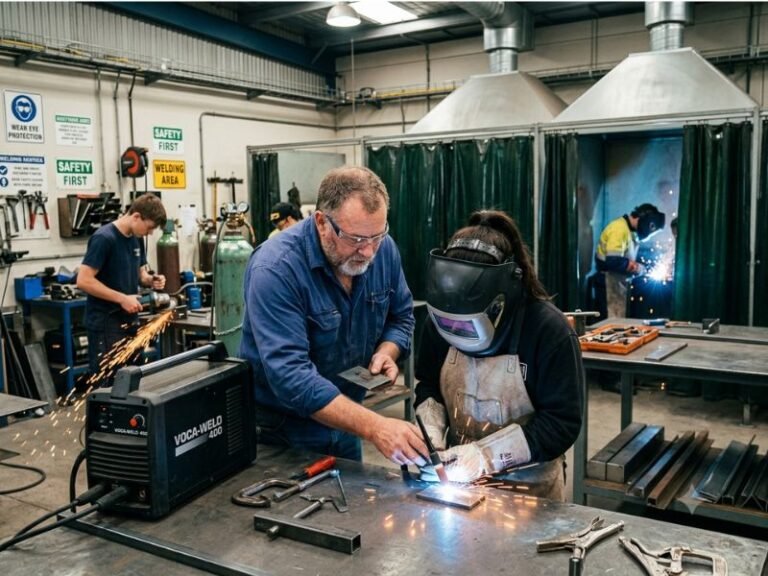
These classes can suit people who want to learn basic machine operation, small repairs, or hobby fabrication. I would look for supervised shop time, a clear safety orientation, and access to the same process named in the course description. A class that is mostly demonstration may not provide enough practice for independent work.
Trade school or technical college
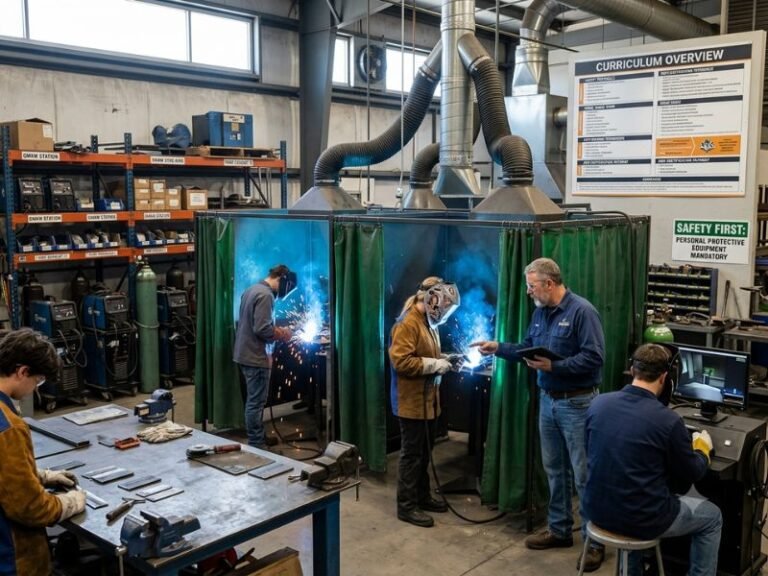
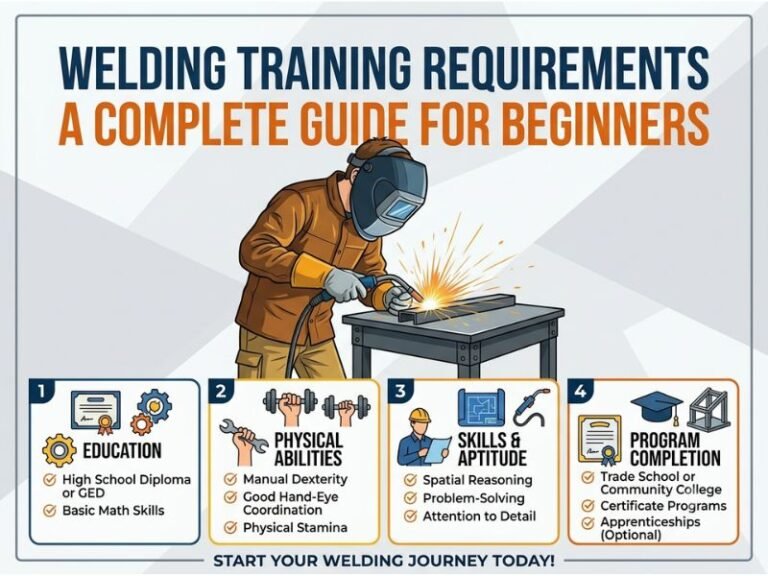
A longer program usually offers more equipment, more materials, more welding positions, and a broader foundation. It may include blueprint reading, shop mathematics, metallurgy, fabrication, inspection, and employability skills. This route is appropriate for someone pursuing welding as a career rather than learning one machine for occasional use.
Employer-based training
Workplace training can be highly relevant because it uses the employer’s machines, procedures, materials, and production standards. However, it should still be structured. A new operator needs documented instruction, supervision, defined limits, and a clear method for checking competence.
Online learning
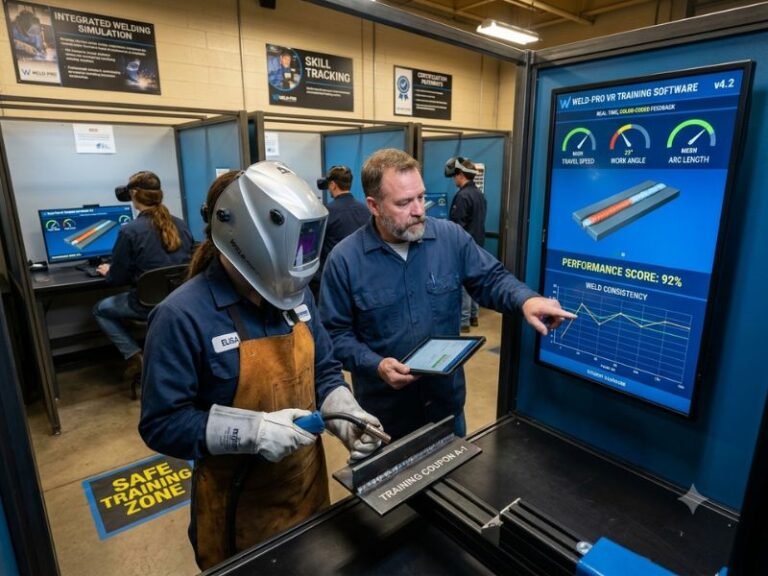
Online videos and courses can explain terminology, machine controls, joint types, and troubleshooting. They cannot replace supervised hands-on practice for tasks involving heat, electricity, fumes, and molten metal. I consider online material a useful supplement, not a complete substitute for practical instruction.
Before enrolling, ask who teaches the class, how much hands-on time is included, which processes are covered, what materials are available, whether protective equipment is supplied, and whether completion produces a certificate or a formal qualification. Those terms are not interchangeable.
Safety Requirements During Training
Welding safety should be specific to the task and environment. Basic protective equipment commonly includes a properly shaded welding helmet, safety glasses, flame-resistant clothing appropriate to the work, welding gloves, suitable footwear, and hearing protection when noise requires it. Loose clothing, synthetic fabrics that melt, exposed skin, and cuffs that collect sparks create avoidable risks.
Ventilation is essential because welding fumes can contain hazardous substances depending on the base metal, coatings, consumables, and process. Local exhaust ventilation is often preferable because it captures fumes near the source. A fan that merely moves contaminated air around the room is not the same as effective source control.
Fire prevention requires removing combustible materials, controlling sparks, checking adjacent areas, and following hot-work procedures. Fire extinguishers should be accessible, but they do not replace housekeeping or a proper permit system where one is required.
Electrical safety includes keeping equipment dry, inspecting cables, using correct connections, and avoiding contact with energized components. Gas cylinders must be secured, handled with care, and kept away from damage and excessive heat. Regulators and hoses should be appropriate for the gas in use.
Welding screens protect nearby people from arc flash, but they do not make an unsafe setup safe. Everyone in the area needs appropriate protection, and the operator must understand the controls for the specific machine and worksite.
Common Beginner Mistakes
- Using settings without understanding them: Copying a number from a chart without considering joint design, material condition, or position can produce poor results.
- Skipping cleaning: Contamination can cause porosity, unstable arcs, inclusions, and weak or unattractive welds.
- Moving too fast: Excessive travel speed may create a narrow bead, poor sidewall fusion, or insufficient heat at the joint.
- Moving too slowly: Too much heat can cause burn-through, excessive reinforcement, distortion, or a wide irregular bead.
- Holding an inconsistent arc length: This changes the heat and arc behavior during the same weld.
- Ignoring fit-up: Large or uneven gaps force the operator to compensate and make repeatable results difficult.
- Failing to remove slag: In processes that produce slag, leaving residue between passes can trap inclusions.
- Trying to hide a defective weld: Grinding or adding another pass without understanding the defect may conceal a problem instead of correcting it.
- Practicing without inspection: A bead can look smooth while still having a serious process problem.
I recommend changing one variable at a time during practice. If wire-feed speed, voltage, travel speed, and joint gap all change together, it becomes difficult to know which adjustment helped. Keeping brief notes can also reveal patterns that are hard to notice from memory.
How to Judge a Training Program
A credible program should explain learning objectives before practice begins. It should identify the process, material, thickness range, welding positions, equipment, and assessment method. Vague promises such as “master welding quickly” are less useful than a clear description of what a student will be able to set up and perform.
Instructor supervision matters, especially during the first sessions. Students should be able to ask why a setting was selected and receive an explanation tied to the process. The instructor should also correct unsafe habits immediately rather than allow them to become routine.
Look for a reasonable student-to-equipment ratio. A class can have a knowledgeable instructor and still provide too little practice if several students share one machine. Shop ventilation, housekeeping, machine maintenance, and protective-equipment policies are also signs of program quality.
Certificates deserve careful interpretation. A certificate may confirm attendance or completion of a course. A welding qualification generally refers to performance under specified conditions, such as a particular process, material, position, joint, and procedure. A person qualified for one welding configuration is not automatically qualified for every other configuration.
Training, Certification, and Job Readiness
Training provides knowledge and practice. Certification or qualification documents may verify that a person met a defined standard. Job readiness includes additional factors such as reading drawings, measuring and fitting parts, understanding work instructions, maintaining equipment, communicating problems, and working safely under production conditions.
Requirements vary by employer, industry, project, and applicable code. Structural, pressure-related, pipeline, aerospace, and specialized manufacturing work may impose different testing and documentation requirements. A general introductory class should not be presented as a substitute for a required employer test or industry qualification.
For a job search, it helps to describe training accurately. List the processes practiced, materials and positions covered, equipment used, and any formal qualifications earned. Avoid claiming broad expertise based on limited practice. Honest scope is safer and more credible than an inflated skill label.
Frequently Asked Questions About Welding Machine Training
What is included in welding machine training?
It commonly includes equipment setup, controls, polarity, consumable selection, joint preparation, basic welding technique, safety, defect recognition, and machine shutdown. More advanced programs may add blueprint reading, metallurgy, multiple positions, inspection, and qualification testing.
How long does welding machine training take?
There is no single duration. A short class may introduce one process and basic beads, while job-focused or technical programs can take much longer. The necessary time depends on the process, material, required positions, practice opportunities, and whether a formal performance qualification is required.
Can I learn to operate a welding machine online?
Online instruction can teach terminology, process differences, safety concepts, and basic control functions. It cannot provide the supervised physical practice needed to manage an arc, molten metal, fumes, and machine-specific problems. Hands-on instruction remains important for safe independent operation.
Which welding process should a beginner learn first?
Many beginners start with MIG because continuous wire feeding and relatively simple operation can make basic practice accessible. Stick, flux-cored, and TIG may be better starting points for specific work environments or career goals. The best first process is the one that matches the materials, equipment, and work the learner expects to perform.
Does completing training make someone a certified welder?
Not necessarily. Course completion may show that a person attended or met the class objectives. A formal welding qualification usually requires a specified practical test and conditions. The certificate or training provider should state exactly what the document represents.
What should I practice after an introductory class?
Practice should stay within the process and materials you have been taught to use. Repeat clean, properly fitted joints; inspect each weld; record settings; and ask an instructor or qualified supervisor to review defects. Do not move into structural, pressure, overhead, or unfamiliar-material work without appropriate instruction.
Is a more expensive welding machine easier to learn?
Cost alone does not determine learning difficulty. A machine with clear controls, suitable adjustment ranges, reliable wire feeding, and good documentation may be easier to use than a cheaper or poorly matched unit. Training should focus on selecting equipment for the intended process and work, not on price as a shortcut to skill.
Conclusion
Effective Welding machine training combines safe setup, process knowledge, controlled practice, joint preparation, and honest inspection of results. I would choose instruction that provides meaningful hands-on time, explains why settings change, and clearly distinguishes course completion from formal qualification. With that foundation, a learner can build machine-specific skill without mistaking a smooth-looking bead for proof of a sound weld.