Basic Welding Process Names: SMAW, GMAW, GTAW, and FCAW Explained
The four welding process names most beginners meet first are SMAW (stick), GMAW (MIG), GTAW (TIG), and FCAW (flux-cored arc welding). Each joins metal with an electric arc, but the electrode, shielding method, speed, and cleanup differ.
Are you trying to make sense of a job listing that says “MIG,” a class that says “GMAW,” and a welding machine with a few unfamiliar settings? Or are you choosing a process for a project and worried about buying the wrong gear?
I once treated a wire-feed machine as a simple, ready-to-go setup and skipped checking what kind of wire was loaded. The weld looked rough, and I had to clean and redo the joint; that mix-up is common, not dumb.
I wrote this to translate the names into practical choices, whether you’re learning in a garage, comparing shop processes, or getting ready for a first welding class. You’ll see what each process does well and where its limits start to matter.
Match the process to your material and work conditions, and you can save time, make cleaner joints, and avoid a frustrating pile of spatter. Pick by name alone, and the machine, wire, or shielding gas may not suit the job.
Set aside about 10 minutes. By the end, you’ll know how to:
- Tell the four common process names apart.
- Match a process to the metal, location, and finish you need.
- Read the basics of wire, gas, current, and polarity.
- Spot safety and setup details worth checking before you strike an arc.
Welding Process Names and What They Mean
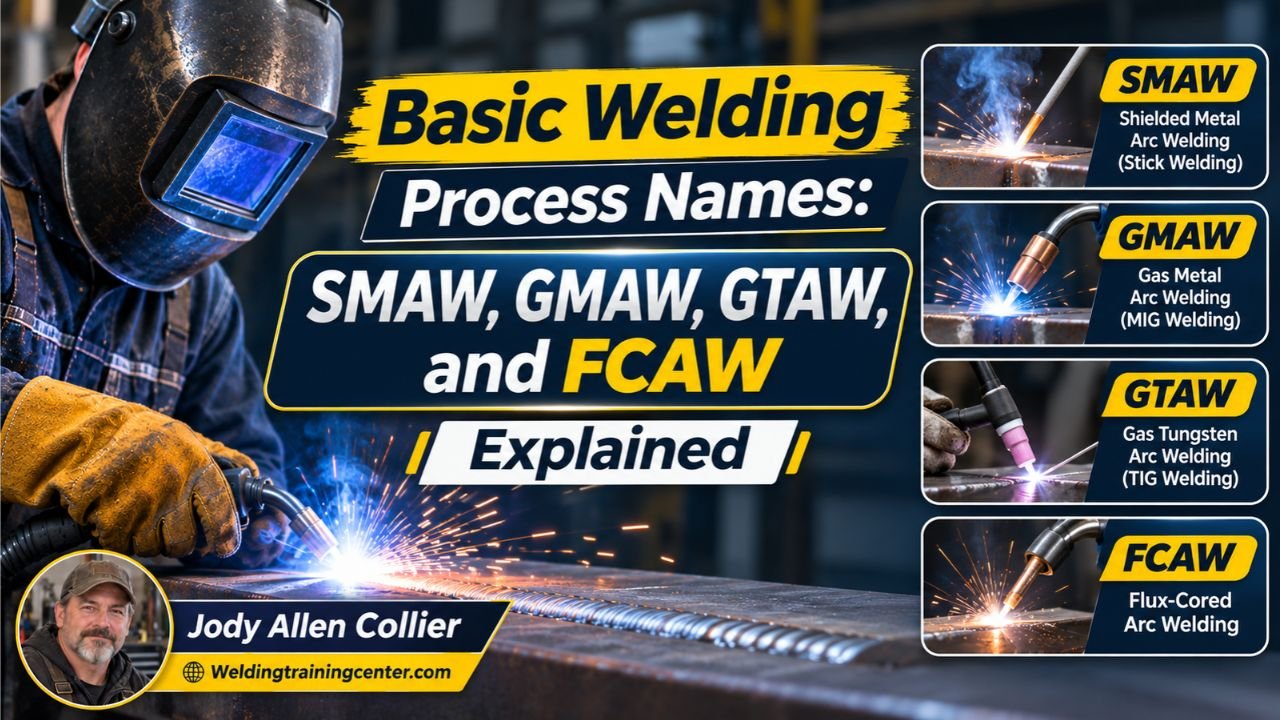
SMAW, GMAW, GTAW, and FCAW name four common ways to create an arc and protect molten metal while it cools. In plain terms, they’re stick, MIG, TIG, and flux-core welding, with different tradeoffs in speed, control, portability, and cleanup.
A welding process is the method used to generate heat, deliver filler metal when needed, and shield the hot weld area from air. The arc melts the edges of the pieces and, in many cases, filler metal; the molten pool then cools into a joint.
| Process name | Common shop name | Electrode or filler | Shielding | Typical strengths |
|---|---|---|---|---|
| SMAW | Stick | Consumable coated rod | Rod coating creates shielding | Portable, flexible, good outdoors |
| GMAW | MIG or wire-feed | Continuously fed solid wire | Shielding gas from a cylinder | Fast, easy to automate, little slag |
| GTAW | TIG | Non-consumable tungsten; separate filler may be added | Shielding gas, often argon | Precise control and clean welds |
| FCAW | Flux-core | Continuously fed tubular wire with flux | Flux alone or flux plus gas | Fast deposition and useful outdoors, depending on wire |
These names focus on the process, not the whole welding setup. A steel joint made with GMAW still depends on the wire, gas, joint fit, machine settings, and operator skill.
If you want the short version, stick is the portable rod, MIG is the fast solid-wire process, TIG is the controlled tungsten process, and flux-core uses a tubular wire. The names get easier once you know what’s happening at the joint; how welding works explains the arc and weld-pool basics.
How the Four Common Processes Compare
The right process depends on the job, not on which acronym sounds most professional. For a thin steel panel in a clean garage, MIG may be easier to control than stick; for a rusty outdoor repair, the best choice may be different.
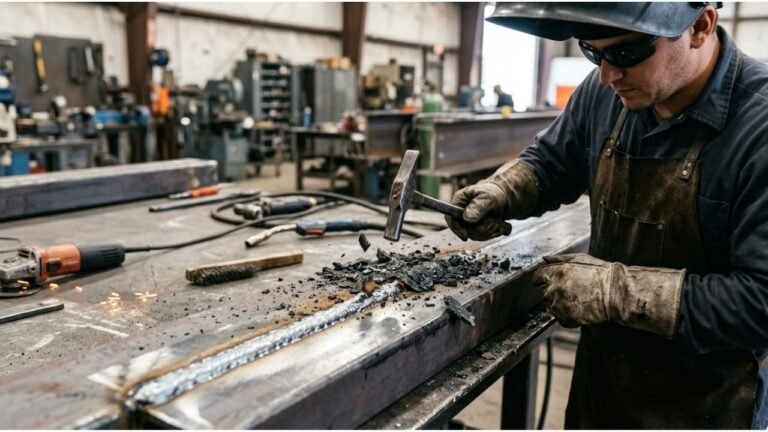
SMAW, or shielded metal arc welding, uses a flux-coated stick electrode that melts as you weld. The coating helps shield the weld and forms slag, a crust over the finished bead that you chip or brush away.
SMAW doesn’t need a shielding-gas cylinder, which makes it portable and practical outdoors. Rod changes interrupt the work, and the process takes practice to keep a steady arc and bead.
GMAW, or gas metal arc welding, feeds a solid wire through a gun while shielding gas protects the weld pool. Many people call it MIG, though the formal process name is GMAW and the shielding gas may be inert or active.
MIG can be quick and neat on clean metal, with no slag to chip off. Gas shielding can be blown away by wind, though, so a breezy driveway may call for a different process or a sheltered workspace.
GTAW, or gas tungsten arc welding, uses a non-consumable tungsten electrode to create the arc. The welder adds separate filler metal when the joint needs it, so GTAW gives fine control but usually moves more slowly.
People commonly call GTAW TIG. TIG suits work where careful heat control and a tidy appearance matter, such as thin stainless steel, but it asks more of your hands and setup than a basic wire-feed job.
FCAW, or flux-cored arc welding, feeds a tubular wire filled with flux. Some wire types rely on the flux for shielding, while others use shielding gas too, so the wire label and machine setup need to agree.
What makes flux-core appealing for a repair outside? Some self-shielded wire is designed for outdoor work because it doesn’t rely on a gas shield that wind can scatter. FCAW can make a lot of weld metal quickly, but it may leave slag and more cleanup.
Trade names and abbreviations can make the same process sound like a different one. A shop might say “stick,” while a training document uses SMAW; a reference to common welding abbreviations can help decode the rest of the paperwork.
Choose A Process for the Job
Pick a welding process by considering the base metal, thickness, location, weld appearance, and the equipment you can use safely. A useful first decision is whether you need portability, speed, fine control, or a clean finish most.
| Your priority | Process to consider | What to check first |
|---|---|---|
| Outdoor repair without a gas cylinder | SMAW or self-shielded FCAW | Electrode or wire type, wind, and metal condition |
| Fast work on clean steel indoors | GMAW | Correct wire, shielding gas, and machine setup |
| Precise control on thin metal | GTAW | Material, tungsten, current, and skill level |
| Faster deposition with tubular wire | FCAW | Whether the wire needs gas and how much cleanup it leaves |
These are starting points, not a promise that one process suits every joint. Metal thickness, joint shape, position, and the machine’s capacity can change the answer.
If your main concern is appearance, what should you choose? GTAW can give you close control, but it won’t cover up poor joint preparation or rushed technique; a neat MIG bead may be the more sensible choice for ordinary shop work.
I once prepared a small joint carefully, then rushed the setup because the work looked simple. The first pass showed how much a clean surface and stable fit-up matter, even with a process I knew; a steady setup beats a last-minute scramble.
Before you choose, make sure the process can handle the work position and access. A cramped corner can be awkward for a bulky torch, while a short repair away from a power source may favor a portable machine and process.
Current, Polarity, and Gas Change the Setup
Process names tell you the general method, but they don’t tell you every machine setting. Polarity describes the direction of electrical current through the welding circuit, and the correct choice depends on the process and electrode or wire.
Welding machines may provide AC, alternating current, or DC, direct current. The process, material, and consumable help determine which current type works; follow the machine instructions and the rod or wire maker’s guidance.
For wire welding, solid GMAW wire commonly uses direct current electrode positive, while some flux-core wires call for a different polarity. Don’t assume all wire takes the same setting, because the wrong choice can make the arc unstable or the weld poor.
SMAW electrodes also vary in the current and polarity they call for. GTAW commonly uses direct current electrode negative on steel, while aluminum GTAW often uses AC; the right setup depends on the material and equipment.
This is where AC vs DC welding and DCEN vs DCEP become useful topics, especially if you’re comparing machine settings rather than process names alone.
Pro Tip: Before striking an arc, check the machine manual and the package for the exact electrode or wire. A small label can save you from chasing a bad bead with the wrong setting.
Shielding gas needs the same attention. GMAW and gas-shielded FCAW use a gas cylinder and hose, while GTAW commonly uses shielding gas; confirm the gas and flow setup for your specific equipment and consumable.
Avoid Setup Mistakes and Work Safely
Most frustrating beginner problems come from a mismatch between the process, the consumable, and the conditions. A wire made for gas shielding won’t behave as intended without the specified setup, and wind can disrupt a gas shield.
Use this quick check before starting:
- Confirm the base metal and joint thickness.
- Match the process to the job and work location.
- Check the electrode or wire type and its setup instructions.
- Prepare clean, well-fitted joint edges where the job calls for it.
- Set up the machine using its manual and the consumable guidance.
- Test the setup on scrap of similar material before welding the actual piece.
Important Tip: Welding can expose you to intense light, hot metal, sparks, electric shock, fumes, and fire risk. Wear suitable welding protection, keep flammable items away, and use ventilation suited to the material and workspace.
Don’t weld coated or unknown metal until you know what’s on it and how to control the fumes. If the job involves a tank, a confined space, structural work, or a material you can’t identify, stop and ask a qualified professional rather than guessing.
Use the right eye and face protection, gloves, clothing, and footwear for the process. Keep bystanders away from the arc, and check the work area for fire hazards before welding; a spark can travel farther than you’d expect.
For gas-shielded processes, secure cylinders upright and handle them according to their labels and supplier instructions. If your setup or the material raises a safety question, check the applicable manual or get qualified help before continuing.
FAQs About Welding Process Names
What Are The Four Main Welding Process Names?
The four common process names are SMAW, GMAW, GTAW, and FCAW. Their everyday names are stick, MIG, TIG, and flux-core welding. Each uses an arc, but the electrode, shielding method, speed, and cleanup differ.
Is MIG The Same As GMAW?
Yes, MIG is the common shop name for GMAW, or gas metal arc welding. The formal process name is more precise because GMAW may use different shielding gases. Check the wire and gas recommendations for the material and machine rather than relying on the word MIG alone.
Is TIG The Same As GTAW?
Yes, TIG is the familiar name for GTAW, or gas tungsten arc welding. GTAW uses a tungsten electrode that doesn’t melt into the weld; filler metal can be added separately. TIG offers careful control, though the process generally takes more practice than basic wire-feed welding.
Which Welding Process Is Easiest For A Beginner?
Many beginners find GMAW approachable because the machine feeds wire continuously, but the best starting process depends on the equipment, project, and instruction available. A class can teach setup and safe technique before you work on a real part, where mistakes cost more time.
Can You Weld Outdoors With MIG?
Sometimes, but wind can blow away the shielding gas used by GMAW and leave the weld poorly protected. A sheltered area can help if the setup and work remain safe. Self-shielded FCAW or SMAW may suit outdoor jobs better, depending on the wire or electrode and the project.
What Do SMAW, GMAW, GTAW, And FCAW Stand For?
SMAW means shielded metal arc welding, GMAW means gas metal arc welding, GTAW means gas tungsten arc welding, and FCAW means flux-cored arc welding. The names describe the process, while terms like stick, MIG, TIG, and flux-core are common shop shorthand.
Choose by Fit, Not by Acronym
Welding process names are useful once you connect each one to its electrode, shielding, and working conditions. Stick welding favors portability, MIG can move quickly on suitable indoor work, TIG gives careful control, and flux-core offers a different wire-based option.
I’d choose the process that fits the metal and location, then confirm the consumable and machine settings before starting. That approach is less flashy than picking a process by reputation, but it saves you from a rough bead and a redo.
Your clearest next step is to identify the base metal, thickness, and workspace, then compare those details with the process and consumable instructions. If any part of the setup or safety plan feels uncertain, pause and ask a welding instructor or qualified professional.