Welder Vs Soldering: Side-by-Side Comparison and Key Differences
Welding melts the base metals to create a strong structural joint, while soldering melts a lower-temperature filler to join parts without melting them.
A joint can look neat and complete while hiding weak bonding, overheated components, contamination, or an unsuitable joining method. That difference between appearance and actual condition is why choosing between welding and soldering matters more than simply judging the finished bead or shiny seam.
Think of welding like permanently fusing two pieces of plastic by softening their edges, while soldering is closer to using a specially formulated metal adhesive that flows between clean surfaces. Both can create reliable connections, but they work at different temperatures, suit different materials, and tolerate very different loads. This guide explains welder vs soldering, including the practical details and important limitations.
This guide to welder vs soldering compares how each process works what equipment and skill it requires how strong the results are and where each method belongs You.
- ✓Welding fuses base metals and is normally preferred for structural strength and heat-resistant joints.
- ✓Soldering uses a lower-melting filler, making it suitable for electronics, wiring, plumbing details, and delicate parts.
- ✓Joint strength depends on material compatibility, surface preparation, joint design, heat control, and inspection—not appearance alone.
- ✓Neither process is universally better; the correct choice follows the load, temperature, material, size, and repair conditions.
Welder vs Soldering
The central difference is whether the base material melts In welding an arc flame laser or other heat source raises the edges of the workpieces to their melting.
Soldering keeps the workpieces below their melting temperature. A filler called solder melts and flows across properly prepared surfaces, usually with help from flux. When it cools, it creates a mechanical and metallurgical bond, but the original parts generally remain solid.
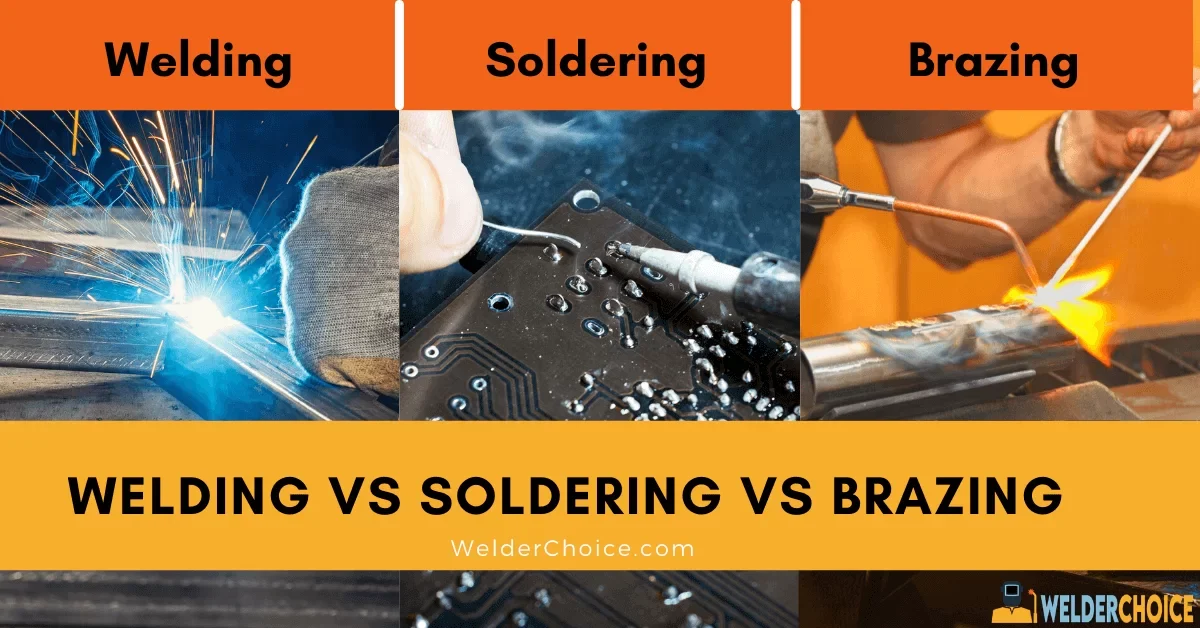
- Heat level: Welding uses enough heat to fuse the parent metals; soldering uses less heat and melts only the filler.
- Typical strength: Welds usually handle higher structural loads, while soldered joints are intended for lighter mechanical or electrical service.
- Heat effect: Welding can distort, harden, soften, or damage nearby material; soldering is gentler but can still harm heat-sensitive components.
- Joint purpose: Welding is commonly selected for frames and pressure-capable metal assemblies; soldering is common for electrical connections and small fittings.
Temperature alone does not define every joining process Brazing for example also melts a filler without melting the base metal but it uses a higher-temperature filler than conventional.
| Feature | Welding | Soldering |
|---|---|---|
| What melts | Base metal, with or without filler | Filler metal only in normal use |
| Common heat source | Arc, gas flame, resistance, laser, or plasma | Soldering iron, hot-air tool, torch, or induction heater |
| Typical joint strength | High when correctly designed and executed | Low to moderate, depending on alloy and joint design |
| Common applications | Steel structures, equipment, automotive repairs, fabrication | Electronics, wires, small plumbing joints, stained glass, light assemblies |
| Risk to nearby parts | High heat, sparks, ultraviolet radiation, and distortion | Lower heat, but flux, fumes, and thermal damage remain concerns |
| Typical skill focus | Heat control, penetration, shielding, travel, and weld profile | Cleaning, tinning, wetting, heat control, and avoiding cold joints |
How Welding Works and What Makes a Weld Strong
Welding creates a continuous fused region called the weld zone. Heat melts the joint edges and often a compatible filler rod or wire. As the molten pool cools, it solidifies into a connection whose strength depends on fusion, penetration, alloy chemistry, joint geometry, and cooling conditions.
Common American workshop methods include shielded metal arc welding, gas metal arc welding, gas tungsten arc welding, and flux-cored arc welding. They differ in electrode design, shielding, deposition rate, precision, portability, and the thickness or type of metal they handle well.
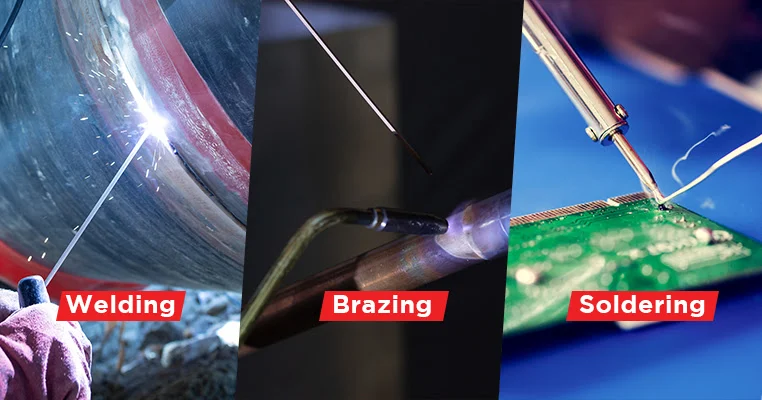
- Base-metal compatibility: Confirm that the process and filler are suitable for the alloys being joined.
- Penetration: A raised bead does not prove the weld fused deeply enough into the joint.
- Heat control: Excess heat can warp thin sheet, weaken heat-treated parts, or create unwanted metallurgical changes.
- Shielding: Gas coverage or flux must protect the molten metal from atmospheric contamination.
Welding methods in practical terms
MIG welding technically gas metal arc welding feeds a continuous wire electrode through a gun It is productive and relatively easy to learn making it popular for mild-steel.
TIG welding uses a nonconsumable tungsten electrode and usually a separate filler rod. It offers excellent control and a clean appearance on steel, stainless steel, aluminum, and other metals, but it is slower and demands more coordination. It is valuable when appearance, thin material, or precise heat placement matters.
Stick welding uses flux-coated consumable electrodes It is versatile outdoors and does not depend on a separate shielding-gas bottle but it produces slag that must be removed and.
Why a weld can look strong but fail
A weld may have an attractive, evenly spaced surface pattern while containing internal porosity, cracks, incomplete fusion, or inadequate penetration. Conversely, an irregular-looking weld can sometimes be serviceable, but an unattractive profile should prompt inspection rather than assumption.
Failure often begins with oil, paint, mill scale, rust, moisture, or an incorrect joint gap. Wrong polarity, unsuitable amperage, excessive travel speed, poor electrode angle, contaminated shielding gas, and insufficient preheating can also prevent the molten pool from bonding correctly.
- Chasing appearance: A smooth cap is not a substitute for correct penetration and fusion.
- Ignoring distortion: Thin panels can pull out of alignment as one side of a joint heats and contracts.
- Using a universal filler: Filler selection affects strength, corrosion behavior, cracking risk, and service temperature.
How Soldering Works and Where It Performs Best
Soldering depends on wettability: molten solder must spread across clean, properly heated surfaces instead of forming a ball. Flux removes or disrupts surface oxides so the solder can contact the underlying metal. The solder then flows into a close-fitting joint, capillary gap, terminal, pad, or wire connection.
A soldering iron is common for electronics and small wires while a torch or specialized heater may be used for larger metal parts and plumbing-related work The tool. This is an important consideration for welder vs soldering.
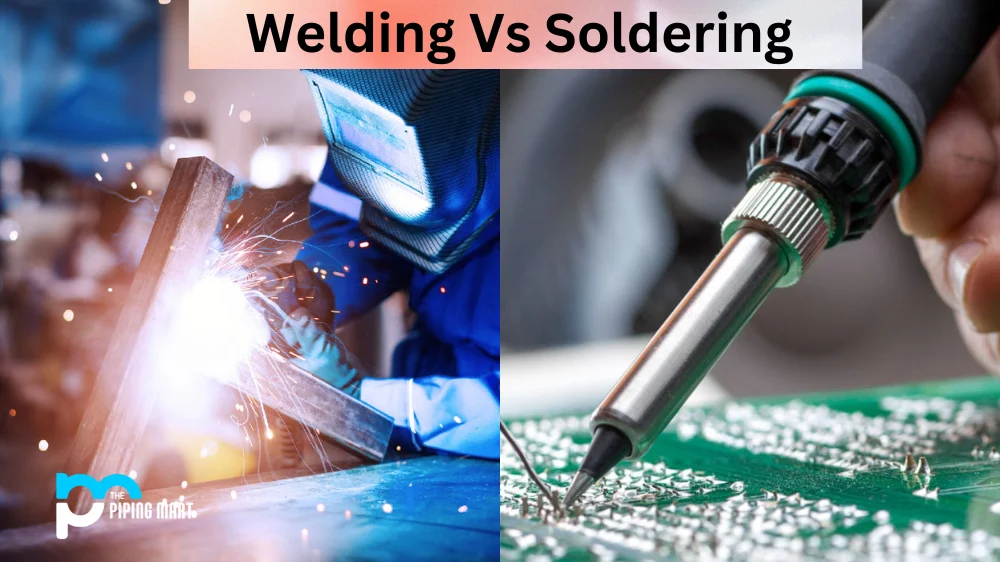
- Electronics: Solder connects components to circuit-board pads while avoiding the high temperatures of fusion welding.
- Wire joining: Properly prepared conductors can receive a compact electrical and mechanical connection.
- Small fittings: Appropriate solder alloys can join certain copper and other compatible tubing systems.
- Delicate assemblies: Lower process temperatures reduce distortion compared with welding, though sensitive parts still need protection.
Electrical soldering versus metalwork soldering
Electrical soldering prioritizes conductivity, strain relief, insulation clearance, and protection of heat-sensitive components. A solder joint should not be the only support for a wire that will flex repeatedly; the cable needs an appropriate mechanical anchor or strain relief.
Metalwork soldering may prioritize sealing, appearance, or joining thin sheets. Flux chemistry and cleanup requirements vary substantially. Residual corrosive flux can damage a joint or surrounding metal, so the product instructions and the material’s compatibility must guide cleaning.
Recognizing a sound solder joint
A good solder joint generally shows that the solder flowed onto both surfaces rather than sitting as a separate lump. It should be securely bonded, appropriately sized, and free of cracks, movement, excessive residue, and accidental bridges between adjacent electrical conductors.
A cold solder joint occurs when the solder fails to heat and wet the surfaces properly It may look dull grainy uneven or fractured but visual diagnosis is not perfect Gently moving the connection checking electrical continuity and examining the surrounding pad or insulation can reveal problems.
- Unwetted surface: Solder beads up instead of flowing across the terminal or pad.
- Movement: The component or wire shifts because the joint solidified before bonding correctly.
- Excess solder: A large mass can hide a weak connection or create an electrical short.
- Flux residue: Residue may be harmless in some applications but corrosive or conductive in others.
Strength, Temperature, and Load: Choosing by Service Conditions
For a load-bearing frame, bracket, trailer component, machine base, or repair exposed to repeated vibration, welding is usually the more appropriate starting point. It can create a joint with strength approaching the connected material when the design, filler, procedure, and workmanship are suitable.
That does not mean every weld is stronger than every soldered joint A poorly fused weld can fail quickly while a carefully designed soldered connection can perform reliably.
- Structural load: Choose a fusion or other qualified high-strength process when the joint supports people, equipment, or major forces.
- Electrical function: Solder may be suitable when the primary job is to conduct current and hold a small component in place.
- Operating temperature: Confirm that the filler will not soften or creep during normal service.
- Repeated movement: Add mechanical support; neither process should be expected to compensate for poor strain relief or flexible joint design.
Temperature is a design limit, not just a tool setting
Every solder alloy has a melting range and every application has a service temperature. If a soldered joint approaches the filler’s softening range, it may lose strength or creep under load. This is especially important near heat sources, in engine compartments, and in equipment that cycles repeatedly between hot and cold.
Welding also introduces thermal concerns. Heat can alter hardness, relieve or create stresses, damage coatings, and change the properties of aluminum, high-strength steel, or heat-treated components. A strong process can still be the wrong choice if its heat-affected zone compromises the surrounding part.
Joint geometry often matters more than filler quantity
Solder generally performs best when it fills a suitable close-fitting gap with adequate surface area. Simply piling more solder onto a poorly fitted connection rarely creates equivalent strength. The same principle applies to welding: a larger bead cannot reliably compensate for an incorrect joint design, inadequate preparation, or poor access.
Lap joints, butt joints, fillets, sleeves, terminals, and mechanically interlocked connections distribute forces differently. If the part will be pulled, twisted, vibrated, or pressurized, consider how the load travels through the joint before selecting the process.
Materials, Tools, and Project Fit
Material choice narrows the options Steel is commonly welded with several arc processes while copper wire is commonly soldered because its small conductors and insulation cannot tolerate ordinary.
Stainless steel galvanized steel cast iron brass copper and coated metals each present different concerns Zinc coatings can generate hazardous fumes when heated painted parts may release toxic. These practical limitations also matter for welder vs soldering.
- Welding setup: Account for the power source, electrode or wire, shielding, work clamp, ventilation, protective clothing, and fire control.
- Soldering setup: Match the iron or torch, tip, solder alloy, flux, stand, cleaning materials, and heat protection to the job.
- Surface condition: Remove coatings and contamination only with methods safe for the material and the work environment.
- Access: Select a process that can place heat, filler, shielding, and inspection tools where they are needed.
When soldering is clearly the better choice
Use soldering for many circuit-board repairs, electronic assembly tasks, small wire connections, and applications where welding heat would destroy insulation or components. It is also useful when the joint must be reversible or when a low-temperature filler is specifically required.
Soldering is a poor choice when the connection must carry substantial structural force, withstand a high operating temperature, or resist severe vibration without mechanical reinforcement. A shiny solder fillet cannot turn a low-strength filler into a structural weld.
When welding is clearly the better choice
Welding is generally favored for steel frames, equipment repairs, brackets, gates, heavy sheet assemblies, and other applications where the joint becomes part of the load path. It is also appropriate when a continuous fused connection is needed and the surrounding material can tolerate the process heat.
Do not weld blindly onto pressurized containers, fuel systems, unknown alloys, galvanized coatings, or heat-treated parts. The correct repair may require specialized procedures, controlled conditions, nondestructive inspection, or replacement instead of field welding.
Welding, Soldering, Brazing, and Adhesive Bonding Compared
People often use “soldering” as a general term for joining metal, but four different approaches are commonly confused. Welding melts the base metal; soldering melts a relatively low-temperature filler; brazing melts a higher-temperature filler without normally melting the base metal; adhesive bonding uses a chemical adhesive rather than molten metal.
These categories overlap in purpose but not in performance. Brazing can produce stronger and more heat-resistant joints than ordinary soldering, while adhesives can join dissimilar materials and distribute stress broadly but may degrade with heat, chemicals, moisture, or ultraviolet exposure.
- Soldering: Low-temperature filler joining for electrical work, small parts, and selected light-duty metal applications.
- Brazing: Higher-temperature filler joining that can offer stronger, more heat-resistant connections without melting the base metals.
- Welding: Fusion of the base metals for demanding structural or high-load applications.
- Adhesive bonding: Nonmetallic joining that can reduce heat damage but depends heavily on surface preparation and environmental compatibility.
| Question | Most relevant process | Reason |
|---|---|---|
| Must the joint carry a structural load? | Usually welding or qualified brazing | These methods can provide higher mechanical strength than ordinary solder. |
| Must nearby electronics remain cool? | Soldering | It avoids melting the component leads and board material. |
| Are the materials difficult to fuse directly? | Brazing or adhesive bonding may help | A suitable intermediate filler or adhesive can join compatible dissimilar materials. |
| Must the joint be removable? | Soldering or mechanical fastening | Some soldered connections can be reheated, unlike a fused weld. |
Safety and Quality Checks Before Trusting the Joint
Both processes involve heat, fumes, burns, fire hazards, and damage to nearby materials. Welding additionally creates intense ultraviolet radiation, sparks, hot slag, electric shock hazards, and potentially dangerous gases. Soldering has lower heat in many applications, but flux fumes, molten metal, lead exposure from certain products, and fire risks still require control.
Use the protective equipment and ventilation appropriate to the process, remove combustible materials, secure the work, and follow the tool and filler manufacturer’s instructions. Never assume a small flame or low-wattage iron is harmless, and never heat a container or coated part without knowing what it may release.
- Ventilation: Control fumes at the source and avoid breathing smoke from flux, coatings, galvanized surfaces, or unknown materials.
- Eye protection: Use protection suited to the process; welding requires appropriate lens shading, not ordinary clear safety glasses alone.
- Fire control: Check both sides of the work, nearby cavities, and hidden insulation for ignition risk.
- Post-work inspection: Treat the joint and surrounding metal as hot until verified otherwise.
A practical inspection sequence
- Identify the service: Determine what load, temperature, movement, current, pressure, and environment the joint will experience.
- Inspect preparation: Look for clean surfaces, correct fit-up, appropriate gap, and removal of harmful coatings or contamination.
- Inspect the joint: Check continuity, wetting, fusion, penetration indicators, cracks, porosity, voids, bridges, and unwanted residue.
- Check alignment: Verify that heat did not warp the part or place unintended stress into the assembly.
- Test appropriately: Use a gentle mechanical, electrical, leak, or visual test suited to the application; do not overload an unqualified repair.
Maintenance and repair considerations
Welded joints should be monitored for cracks, corrosion at the weld toe, distortion, and fatigue damage, especially where vibration is continuous. Soldered joints should be checked for corrosion, discoloration, loose wires, cracked solder, insulation damage, and strain that is being transferred directly into the connection.
Repairing over an existing joint without removing contamination often conceals rather than fixes the defect. For critical equipment, the safest decision may be to replace the part or have the work evaluated by a qualified professional instead of relying on a visual patch.
Common Questions About Welder vs Soldering
Is welding stronger than soldering?
Usually, yes. A correctly designed and executed weld generally offers much greater mechanical strength because it fuses the base metals. Strength still depends on the materials, joint design, welding procedure, and quality of execution.
Can solder be used instead of welding?
Only when the application does not require the strength, temperature resistance, or fatigue performance of a weld. Solder can be suitable for electronics and light-duty connections, but it is not a safe substitute for a structural weld.
Is soldering easier to learn than welding?
Basic soldering is usually easier to begin because the tools are smaller and the heat is lower. Producing reliable solder joints still requires practice with cleaning, heating, wetting, and inspection, while welding adds more variables involving shielding, penetration, arc control, and safety.
Can you solder steel, aluminum, or stainless steel?
Specialized solders and fluxes can join some steel, aluminum, and stainless-steel surfaces, but results depend strongly on alloy, preparation, joint design, and service conditions. Ordinary electronics solder and flux should not be assumed to work on structural metals.
What is the difference between soldering and brazing?
Both normally melt a filler rather than the base metal. Brazing uses a higher-temperature filler and can create stronger, more heat-resistant joints than conventional soldering, although it still differs from welding because the base metals are not normally melted.
Can a soldered electrical joint carry mechanical stress?
It can carry limited stress, but it should not be expected to flex repeatedly or support a hanging load by itself. Use proper crimping, anchoring, strain relief, or mechanical support so movement does not crack the solder or break the conductor.
Does a shiny joint mean it is a good joint?
No. Appearance can provide clues, but it does not prove adequate bonding, penetration, cleanliness, or service strength. A reliable evaluation considers the joint’s function, preparation, geometry, and appropriate testing.
Conclusion
The best choice in a welder vs soldering decision depends on the job’s load, temperature, material, joint geometry, access, and acceptable heat exposure. Welding is generally the answer for structural fusion, while soldering is better for electrical work, delicate parts, and light-duty connections where the base materials must remain intact.
Do not select a process based only on convenience or a polished appearance. Confirm material compatibility, prepare the surfaces correctly, control heat, protect yourself from fumes and fire, and obtain qualified help when a failure could injure someone or damage critical equipment.
Write down the joint’s load, temperature, materials, and movement requirements first; then choose welding, soldering, brazing, or another method that directly matches those conditions.