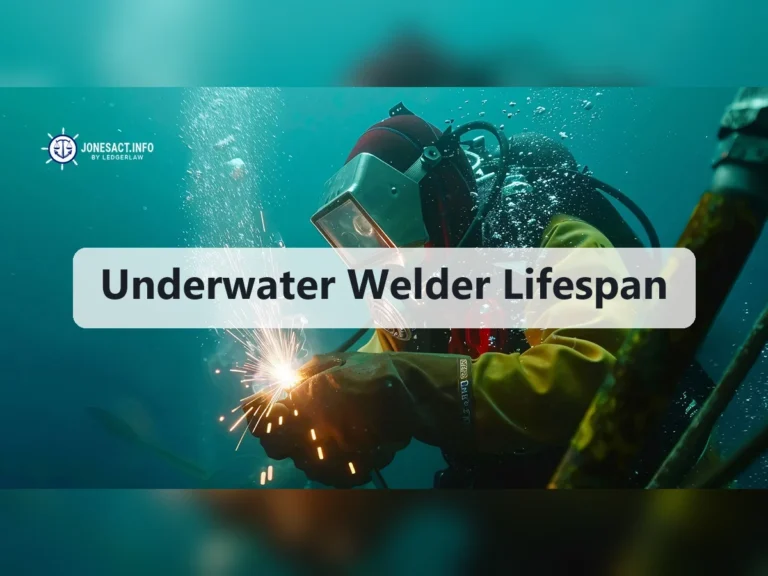
Underwater Welder Mortality Rate: Key Facts and Helpful Guidance
No single, reliable national percentage defines the underwater welder mortality rate; risk varies sharply by task, environment, training, and safety controls.
A sudden change in a diver s breathing pattern an umbilical that stops moving normally or a welding arc that behaves erratically can signal a problem long before.
People searching for the underwater welder mortality rate often encounter dramatic claims that commercial divers are the most dangerous workers or that a particular percentage applies to every.
This guide explains what can and cannot be concluded from available occupational-fatality information how underwater welding differs from other commercial-diving work and which hazards drive serious incidents It.
- ✓A universal fatality percentage for underwater welders is not scientifically dependable.
- ✓Exposure varies with depth, current, visibility, location, equipment, task, and dive frequency.
- ✓Most risk controls are organizational as well as technical: planning, supervision, communications, standby rescue, and maintenance all matter.
- ✓Electrical shock is only one hazard; drowning, entanglement, decompression illness, gas problems, and dropped objects can be equally consequential.
- ✓Compare claims by asking who was studied, over what period, and how the rate was calculated.
What the underwater welder mortality rate can—and
Mortality rate is a statistical measure, not a permanent property of a job title. It normally describes deaths in a defined population during a defined period, often relative to workers, hours worked, or full-time-equivalent employment. Without those details, a number may sound precise while providing little useful information.
Underwater welders are generally part of the broader commercial diving workforce. Fatality records may group underwater construction, inspection, salvage, repair, pipeline work, ship husbandry, and welding together. Some records also combine employees, contractors, self-employed divers, and military or recreational incidents, even though their exposure patterns and safety systems differ substantially.
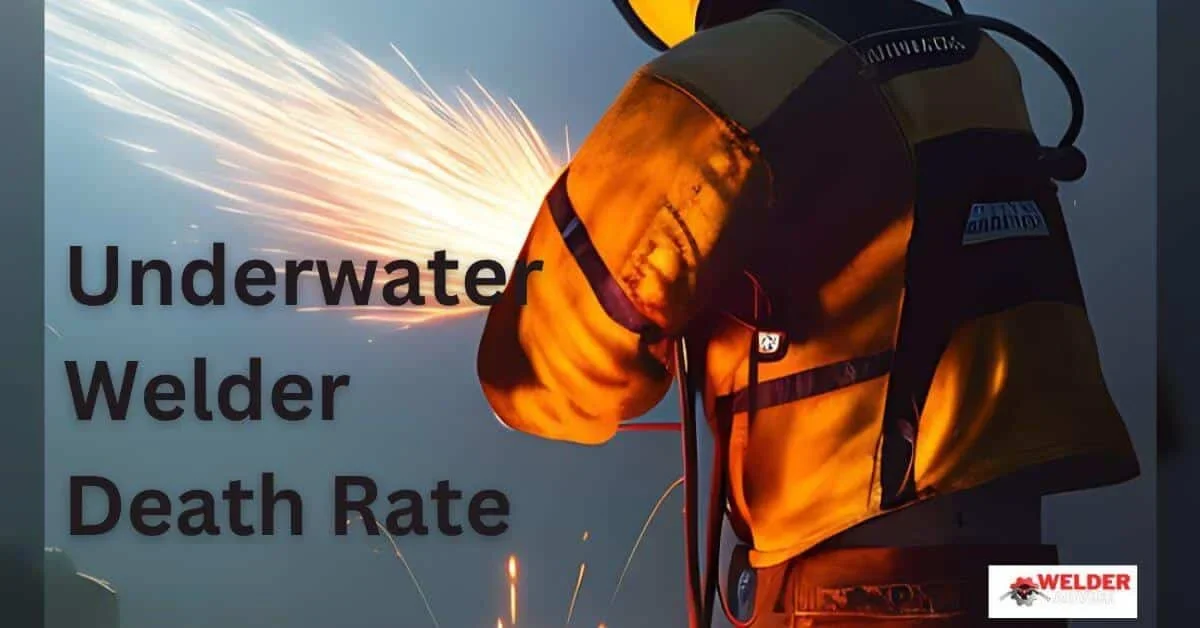
- Population: Determine whether the figure covers underwater welders specifically or all commercial divers.
- Denominator: Find out whether the rate uses workers, hours, dives, or career exposure.
- Time frame: A single incident year can distort results in a small occupation.
- Case definition: Confirm whether deaths include commuting, medical events, missing divers, and delayed consequences.
Why small occupations produce unstable percentages
When a workforce is small, one or two additional deaths can make the calculated rate rise dramatically. That does not necessarily mean the underlying hazard suddenly doubled; it may reflect ordinary statistical volatility. Conversely, a year with no recorded deaths does not prove that the work is safe.
Underreporting creates another limitation. A fatality may be coded under construction, maritime transport, diving, or another employer classification rather than “underwater welding.” Near misses and nonfatal injuries are often documented differently, so fatality data alone cannot show how frequently dangerous conditions occur.
Rate, risk, and probability are different ideas
A rate compares events with exposure. Risk describes the chance of an outcome under specified conditions. A worker’s cumulative career risk depends on how many dives are performed, how hazardous each dive is, and whether controls improve or deteriorate over time.
For example two divers may hold identical qualifications but face very different exposure One may perform occasional shallow harbor inspections with excellent visibility Another may make frequent deep.
Why underwater welding is considered high risk
Underwater welding is usually a form of commercial diving performed in an environment where ordinary industrial safeguards are harder to apply The diver may work in darkness cold.
The welding process adds electrical and thermal hazards but it is not accurate to treat electric shock as the only or even always the leading threat Many severe.
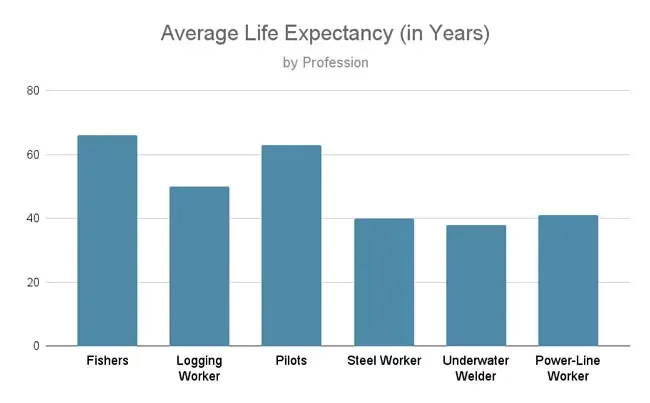
- Water is not the only hazard: Pressure, currents, suspended loads, vessels, gases, cold, and confined spaces can dominate the risk.
- Work can change conditions: Cutting, welding, pumping, lifting, and flooding may alter buoyancy, water flow, structure stability, or visibility.
- Rescue is difficult: A diver may be physically inaccessible, entangled, out of communication, or beyond the reach of an unprepared standby diver.
- Controls must work together: A good helmet or power supply cannot compensate for an unisolated energy source or an absent emergency plan.
Electrical hazards and stray current
Underwater welding uses specialized equipment and procedures rather than ordinary surface welding arrangements. The danger can involve damaged insulation, incorrect polarity, poor grounding, unapproved equipment, unintended current paths, or contact with energized systems nearby. A diver’s body, the water, the structure, and the welding circuit must be considered together.
Electrical safety begins before the diver enters the water The responsible team identifies every possible energy source isolates equipment where required checks connections and cables and verifies the setup through a formal work process Turning off one visible switch is not.
Drowning, breathing-gas failure, and umbilical problems
A diver can drown after losing breathing gas suffering equipment damage becoming incapacitated or being unable to reach the surface The umbilical typically supports breathing gas communications and.
Surface-supplied diving reduces dependence on a small cylinder but does not eliminate gas risk Hoses can be cut valves can malfunction compressors can fail and gas quality can.
Pressure, decompression, and gas effects
Increasing pressure changes how gases behave in the body and affects equipment performance A diver who ascends too quickly follows an unsuitable decompression plan or experiences an uncontrolled.
Depth also changes gas density and the diver’s workload. Breathing resistance, carbon-dioxide retention, narcosis, oxygen exposure, and thermal stress can impair judgment or physical performance. The relevant risk depends on the breathing mixture, depth, duration, decompression method, equipment, and medical supervision—not simply on whether welding occurred.
Entanglement, entrapment, and structural movement
Wires, lines, nets, rebar, hoses, scaffolding, and debris can trap a diver or restrict the umbilical. A diver working inside a tank, culvert, ship structure, or submerged component may have no direct route to open water. Welding and cutting can also weaken, heat, or release parts of a structure unexpectedly.
Planning should account for the difference between entanglement where lines or materials wrap around the diver and entrapment where the diver becomes physically confined Each requires different tools.
How risk changes by worksite and assignment
There is no single underwater-welding experience. A sheltered, shallow repair and an offshore intervention can involve entirely different hazards, equipment, staffing, and emergency resources. The underwater welder mortality rate cannot be meaningfully interpreted without asking what kind of work generated the underlying exposure.
Site assessment should cover the physical environment and the systems connected to it. That includes vessel movement, currents, tides, water quality, weather, nearby intakes and discharges, electrical systems, pipelines, lifting operations, stored pressure, and the possibility that welding or cutting will change the structure.
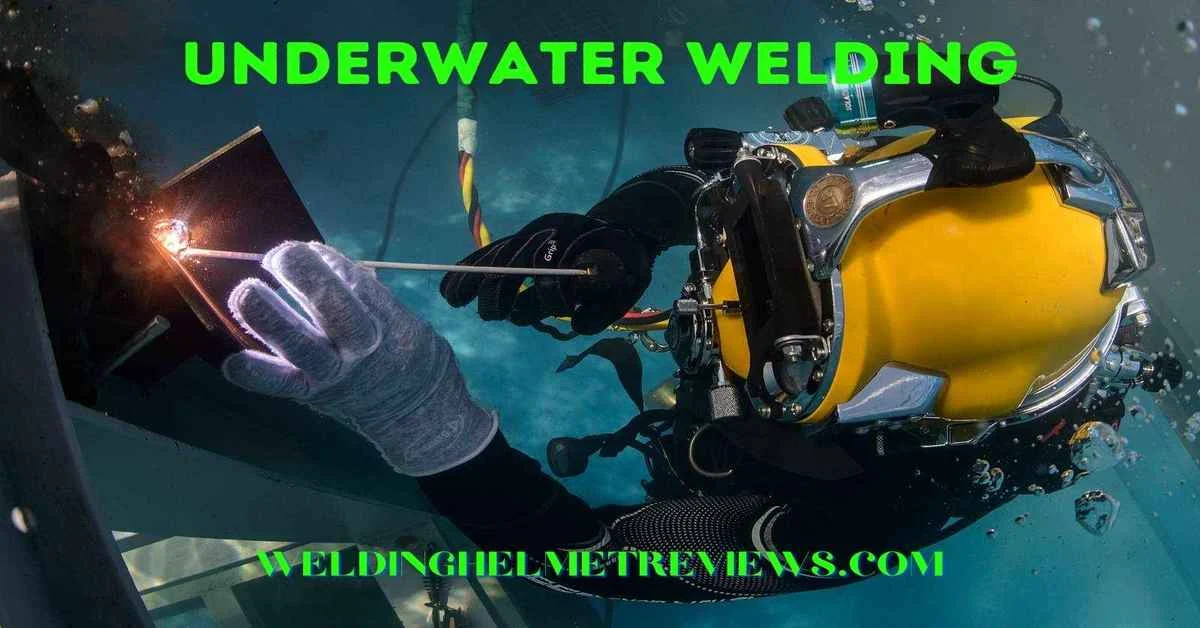
- Inland versus offshore: Offshore work may add waves, weather, vessel traffic, logistics delays, and longer evacuation times.
- Shallow versus deep: Deeper work can increase decompression obligations, gas consumption, density effects, and complexity of rescue.
- Open water versus confined space: Confined work restricts movement, visibility, access, and alternate escape routes.
- Planned versus emergency repair: Urgency can encourage shortcuts unless stop-work authority and supervision remain strong.
Harbor, bridge, dam, and inland construction work
Inland and nearshore projects may appear more manageable because the worksite is close to land. In practice, currents, low visibility, contaminated water, suction from intakes, changing water levels, and heavy construction equipment can create severe hazards. Bridges and dams may also involve complex structures, moving gates, turbines, and multiple energy sources.
Traffic control is particularly important around bridges, piers, and ports. A diver may be exposed to propellers, thrusters, lines, changing ballast, or a vessel’s unexpected movement. Communication between the dive supervisor, vessel operator, site owner, and lifting crew must be unambiguous.
Offshore, shipyard, and vessel-related work
Offshore projects can involve greater depth, stronger environmental forces, saturation operations, dynamic positioning, cranes, and long distances from medical support. Shipyard and ship-husbandry work can introduce confined spaces, coatings, fuel residues, cathodic protection systems, and complex electrical arrangements.
Work near a vessel requires more than telling the bridge that a diver is in the water. Procedures should prevent propulsion or thruster activation, control lines and overboard discharges, establish a clear diver-down status, and address what happens if the vessel loses position or power.
Why task frequency matters
Someone who welds underwater once a month and someone who performs multiple dives each week do not have the same cumulative exposure. Repetition can build skill, but it also increases the number of opportunities for an equipment defect, fatigue-related error, weather change, or unrecognized site hazard.
Fatigue deserves special attention. Long travel, extended surface-support duties, cold exposure, repetitive heavy work, and irregular schedules can reduce concentration and slow reactions. A formal rule may exist on paper while the actual work pattern quietly undermines it.
Controls that reduce fatality risk
Reliable safety comes from layered controls rather than a single piece of equipment. The strongest programs identify hazards early, remove unnecessary exposure, isolate energy, use suitable equipment, supervise the work, and maintain a realistic rescue capability. Personal protective equipment remains important, but it is the last line in a longer chain.
A qualified dive supervisor should coordinate the operation, confirm the plan, monitor conditions, and have authority to stop the job. The crew should understand the dive profile, communications, emergency signals, gas supply, decompression requirements, tool controls, and recovery method before the diver enters the water.
- Eliminate exposure: Consider whether the repair can be completed from the surface, during a shutdown, or with a remotely operated tool.
- Isolate energy: Lock out, tag out, block, bleed, ground, or otherwise control electrical, hydraulic, pneumatic, mechanical, and flow hazards as applicable.
- Verify conditions: Test gas, inspect equipment, confirm communications, and check that the actual site matches the plan.
- Prepare rescue: Keep a trained standby diver and recovery equipment ready, with a practiced response for likely failure modes.
Training and competency
Commercial-diving training should match the type of work rather than stop at basic certification. Competence may include surface-supplied diving, decompression procedures, underwater tools, welding fundamentals, emergency gas use, first aid, rescue, confined-space awareness, and site-specific hazards.
Experience should be evaluated honestly. A diver who has many routine dives may still lack experience with deep work, contaminated water, strong current, complex structures, or a particular welding process. Supervisors should verify practical competence instead of treating a résumé, card, or job title as proof that every assignment is suitable.
Equipment inspection and maintenance
Equipment failures often begin with small defects: a damaged hose, corroded connector, unreliable communication unit, poorly maintained compressor, depleted reserve, or helmet component that has not been checked under realistic conditions. Inspection should be systematic, documented, and performed by people who know what failure looks like.
Maintenance records are valuable because they show patterns. Repeated communication faults, unexplained gas consumption, cable damage, or recurring leaks should trigger investigation rather than temporary fixes. Equipment should be removed from service when its condition cannot be confidently verified.
Communication and the human factors behind decisions
Clear communication is a technical control and a human-factors control. The diver needs a dependable way to report discomfort, changing conditions, lost visibility, entanglement, or uncertainty. The supervisor needs enough information to pause the job before a manageable problem becomes an emergency.
Production pressure is a recognized warning sign. A crew that discourages questions, treats stop-work requests as disloyalty, or skips briefings because the job is “routine” is creating risk even if no equipment appears defective. Good safety culture makes conservative decisions normal and recoverable.
How to evaluate mortality claims and statistics
Online articles often present a striking number without explaining its source. Before accepting a claim about the underwater welder mortality rate, look for the study population, dates, geography, occupation coding, number of deaths, exposure denominator, and treatment of missing or unknown cases.
Pay attention to whether the figure is an annual occupational fatality rate or a lifetime probability. These answer different questions. An annual rate may help compare industries during the same period, while lifetime probability requires assumptions about years worked, number of dives, changing conditions, and competing causes of death.
- Ask “per what?”: A rate per 100,000 workers cannot be directly compared with a rate per 100,000 hours or dives.
- Check the numerator: Small death counts can produce large percentage swings and wide uncertainty.
- Check the denominator: Worker counts may hide major differences in hours, depth, task, and frequency.
- Separate populations: Recreational, military, scientific, and commercial diving data should not be blended casually.
Why sensational comparisons mislead
Statements such as “underwater welding is hundreds of times deadlier than ordinary work” may rely on an old estimate, a narrow sample, or a comparison with a low-risk occupation. Even if mathematically correct for that dataset, the comparison may not describe modern commercial diving, a particular employer, or a specific assignment.
It is also misleading to infer personal destiny from an industry average. A worker’s practical risk is shaped by employer controls, assignment selection, equipment condition, supervision, health, fatigue, and willingness to stop when conditions change.
Better questions than “What is the percentage?”
The more useful question is often, “What would make this particular dive unacceptable, and how would the crew know?” That reframes the issue from a frightening abstract number to observable controls and decision points.
- Identify the exact task, depth, location, duration, and frequency.
- List credible fatal hazards, including gas loss, entanglement, current, electrical energy, and structural movement.
- Confirm how each hazard is eliminated, isolated, monitored, or addressed in rescue planning.
- Ask what recent near misses, equipment failures, or work changes could alter the assessment.
- Verify that the supervisor can stop the work without retaliation or financial pressure.
Warning signs that a dive plan is not ready
A plan can look professional while omitting the detail that matters most at the water. Missing information about energy isolation, access, gas reserves, communications, current, weather, or recovery is not a minor paperwork issue. It may indicate that the team has not thought through how the dive could fail.
The underwater welder mortality rate is influenced by these preparation gaps even when they never appear in a fatality database. A near miss that ends safely can reveal the same weakness that, under slightly different conditions, produces a fatal incident.
- Unclear authority: Nobody can say who supervises the dive or who may order an immediate stop.
- Unverified isolation: The team relies on verbal assurances instead of testing or documented energy control.
- Weak standby coverage: The standby diver is unavailable, unready, or unable to reach the work area.
- Changing conditions: Current, visibility, vessel position, weather, or water level differs from the briefing.
Stop-work triggers
Work should pause when communications become unreliable breathing gas is questionable the umbilical behaves unexpectedly visibility collapses the diver reports unusual symptoms or an energy source cannot be.
Stopping is not an admission that the team failed. It is a control that prevents uncertainty from accumulating. The supervisor can reassess, repair, isolate, revise, or cancel the operation before exposure resumes.
Questions for a prospective employer or contractor
A worker considering commercial diving should ask how the company plans dives, maintains equipment, handles decompression emergencies, investigates near misses, and manages fatigue. The answers should be specific enough to describe people, procedures, equipment, and decision authority.
It is reasonable to ask who provides medical support, how emergency transport is arranged, what happens when weather changes, and whether workers can refuse unsafe work. A vague answer does not automatically prove an unsafe operation, but repeated vagueness is a meaningful warning.
FAQ: Underwater welder mortality rate
Is there an official underwater welder mortality rate?
There is not one universally accepted national percentage that applies to every underwater welder. Official fatality data may classify these workers within broader commercial-diving or construction categories, making a precise occupation-specific rate difficult to calculate.
Is underwater welding more dangerous than other commercial diving?
It can be, because welding may add electrical, thermal, structural, and tool-related hazards to ordinary diving risks. However, the danger depends heavily on the task, energy isolation, depth, environment, equipment, supervision, and rescue arrangements.
What is the biggest cause of underwater-welding deaths?
No single cause should be assumed across all locations and periods. Fatal incidents can involve drowning, breathing-gas failure, entanglement, decompression or gas effects, vessel movement, electrical energy, structural collapse, contaminated water, or failures in planning and rescue.
Does modern equipment eliminate the danger?
No. Better helmets, communications, gas systems, monitoring, and tools can reduce exposure, but equipment can fail or be used in conditions it was not designed to handle. Safe work still requires competent people, verified controls, supervision, and a workable emergency response.
How should I compare two mortality statistics?
Compare the population, geography, dates, number of deaths, denominator, occupation definitions, and inclusion rules. A rate per worker is not directly comparable with a rate per dive or hour, and a small sample can make a percentage unstable.
Can training make underwater welding reasonably safe?
Training can substantially improve hazard recognition, technical skill, emergency response, and decision-making, but it cannot remove environmental hazards. Training is most effective when paired with suitable assignments, current competency, maintenance, conservative planning, and a strong stop-work culture.
What should a diver do if a worksite feels unsafe?
Raise the concern before entering the water and request a specific review of the hazard, control, and rescue plan. If the issue remains unresolved, use the employer’s stop-work or escalation process and do not treat production pressure as proof that the risk is acceptable.
Conclusion
The underwater welder mortality rate cannot be reduced to one dependable number for every worker, employer, or dive. Statistics are useful only when their population, exposure measure, time frame, and case definition are clear; practical safety depends on the conditions beneath the number.
Look for layered controls: competent supervision, verified energy isolation, dependable breathing gas and communications, maintained equipment, realistic standby rescue, fatigue management, and authority to stop. Those safeguards do not make commercial diving risk-free, but they address the failure chains most likely to turn a difficult task into a fatal emergency.
Before accepting or starting an underwater-welding assignment, ask the supervisor to explain the exact hazards, isolation checks, standby-rescue method, and stop-work triggers for that dive.