Underwater Welding Training: Skills, Costs, and Career Guide
Underwater welding training combines commercial diving education with welding, cutting, inspection, rigging, and emergency-response skills. It prepares people to work on submerged structures such as bridges, dams, ship hulls, pipelines, ports, and marine construction projects.
The occupation is often misunderstood. An underwater welder is usually a commercial diver who can weld, not simply a topside welder using scuba equipment. Before completing underwater repairs, a student must understand surface-supplied diving, pressure-related hazards, communication systems, life-support equipment, and dive-team procedures.
In this guide, I will explain the usual admission requirements, curriculum, costs, credentials, risks, and career progression in the United States. I will also show you how to compare schools without relying on exaggerated salary claims or promises of immediate offshore employment.
What Is Commercial Underwater Welding Education?
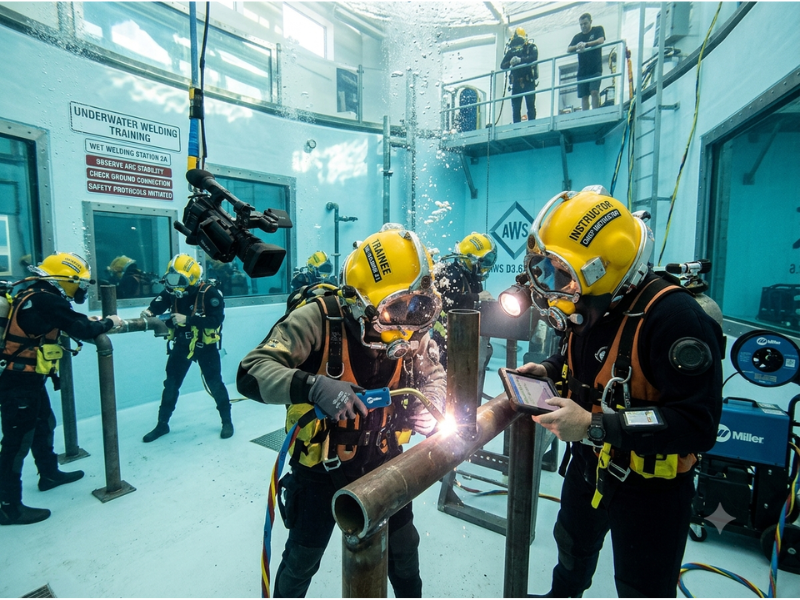
Underwater welding instruction is normally part of a broader commercial diving program. Students learn to work below the surface while using specialized welding and cutting equipment under the direction of a trained dive team.
A program may include classroom theory, confined-water practice, open-water dives, topside welding, wet welding, underwater burning, rigging, hydraulic tools, inspection, and emergency drills. The goal is not merely to strike an arc underwater. It is to develop a diver who can complete assigned work while maintaining communication, equipment control, and personal safety.
Underwater Welder vs. Commercial Diver
“Underwater welder” is a popular job title, but commercial diving is the broader occupation. Welding may be only one part of a project.
A commercial diver may also:
- Inspect concrete, steel, vessels, pipelines, or intake systems
- Install or remove structural components
- Operate hydraulic and pneumatic tools
- Cut damaged metal
- Perform rigging and lifting tasks
- Clean hulls and underwater equipment
- Document damage using video, photography, or measurements
- Support salvage and recovery operations
New graduates may begin as diver-tenders, assistants, or entry-level divers. Tending involves preparing equipment, managing the umbilical, supporting the working diver, and learning site procedures. Advancement depends on competence, employer policy, project needs, and field experience.
Wet Welding vs. Hyperbaric Welding
Wet welding is performed directly in the water. The diver uses waterproof electrodes and specialized equipment while maintaining a stable position and communicating with the surface team. It can be used for repairs, maintenance, temporary reinforcement, and selected structural work.
Hyperbaric welding, sometimes called dry underwater welding, takes place inside a pressurized enclosure around the work area. Water is displaced from the chamber, creating a more controlled environment. This work requires specialized equipment, experienced personnel, detailed procedures, and extensive planning.
Entry-level programs usually focus more on wet welding, underwater cutting, and general commercial diving skills. Hyperbaric work is commonly associated with advanced experience.
Admission Requirements for Commercial Diving School
Admission rules vary, but applicants generally need to meet educational, physical, swimming, and medical requirements.
Age and Education
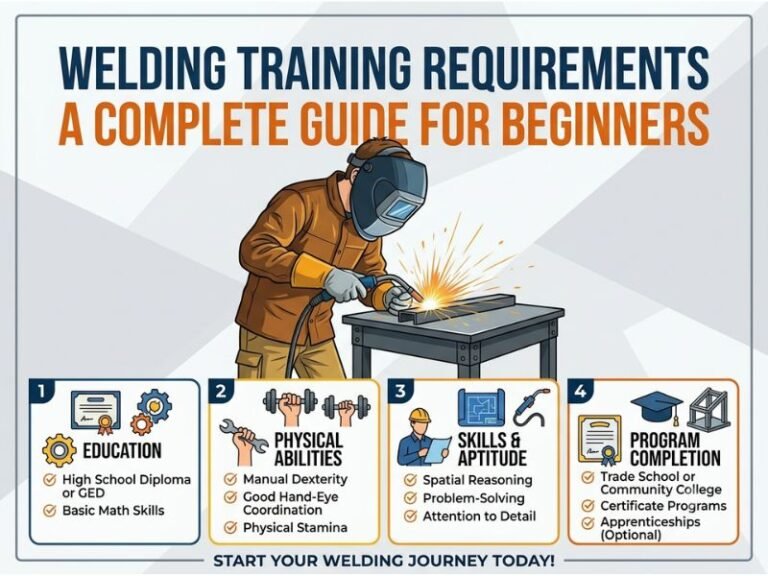
Many programs expect applicants to be at least 18 by graduation or employment. A high school diploma or GED is commonly required.
Students must understand technical instructions, complete basic calculations, read gauges, follow procedures, and communicate clearly. Commercial diving depends on precise teamwork, so poor communication can become a safety risk.
Swimming Ability and Water Confidence
Previous recreational diving experience is not always required. However, applicants usually need to be comfortable in the water and capable of passing a swimming or water-confidence assessment.
A school may test abilities such as swimming a specified distance, treading water, entering and exiting safely, remaining calm while wearing equipment, and following instructions in a pool or training tank.
Strong swimming ability alone does not make someone ready for commercial diving. The work also involves heavy equipment, limited visibility, cold water, current, noise, and restricted movement.
Commercial Diving Medical Examination
Applicants may need a medical examination confirming that they are fit for commercial diving. The evaluation can include respiratory, cardiovascular, neurological, ear, sinus, vision, and musculoskeletal health.
A medical professional may review lung function, pressure equalization, medications, previous surgery, mobility, physical strength, and conditions that could affect judgment underwater.
A school cannot guarantee medical clearance. I recommend investigating the medical requirements before paying a large nonrefundable deposit. A physician familiar with diving medicine should make the final fitness determination.
Physical and Mental Demands
Commercial diving can involve cold, fatigue, poor visibility, heavy tools, awkward positioning, and long periods of concentration. Students need enough strength and endurance to handle equipment, climb ladders, assist other divers, and complete demanding tasks.
Mental control is equally important. A diver must remain calm, follow instructions, report problems immediately, and avoid impulsive decisions.
Is Previous Welding Experience Required?
Some schools accept beginners and include topside welding fundamentals. Others recommend prior experience or offer a separate preparation course.
Topside skills can help because students already understand arc control, joint preparation, polarity, current, electrode angle, and weld defects. However, underwater conditions change visibility, heat transfer, body position, and equipment control. A strong topside welder still needs formal commercial diving instruction before attempting professional underwater work.
Underwater Welding Training Curriculum
A complete curriculum should prioritize commercial diving competence before advanced welding tasks. The most employable graduate is a versatile diver who understands life-support systems, tools, rigging, inspection, cutting, and emergency procedures.
Commercial Diving Fundamentals
Students commonly study:
- Diving physics and gas laws
- Pressure effects
- Decompression principles
- Dive planning
- Depth and time limits
- Environmental hazards
- Diving-related injuries
- Emergency response
- Recordkeeping and logbooks
Surface-Supplied Diving Equipment
Professional commercial diving often uses surface-supplied air rather than recreational scuba. Breathing gas, communication lines, and other services reach the diver through an umbilical connected to surface equipment.
Students may learn to inspect and operate commercial helmets, umbilicals, breathing-gas systems, communication equipment, harnesses, bailout cylinders, gauges, dry suits, and surface control stations.
The bailout cylinder provides an emergency breathing supply but does not replace reliable primary life-support equipment.
Dive-Team Roles and Communication
A commercial dive is a coordinated operation. The team may include a supervisor, working diver, standby diver, tender, and life-support personnel.
Students practice pre-dive briefings, communication checks, umbilical handling, emergency signals, tool transfers, depth and time recording, and injured-diver recovery. Clear communication is essential during welding and cutting because topside personnel may control electrical power.
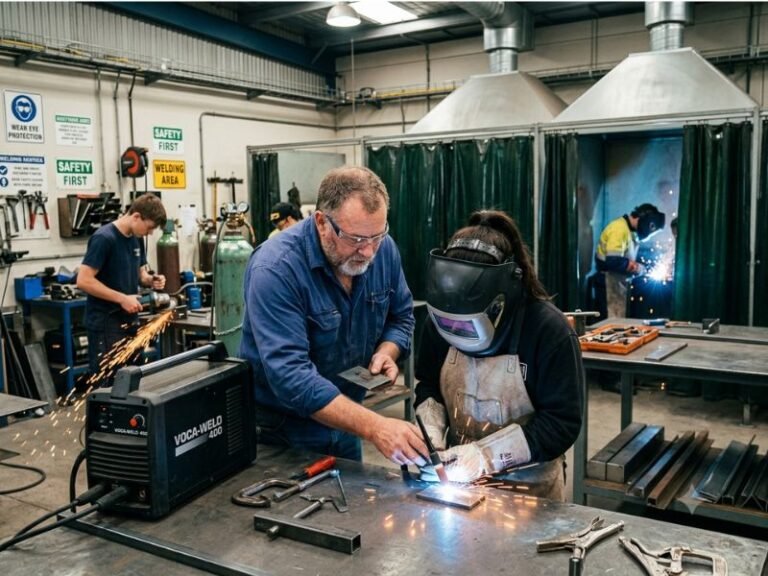
Topside Welding Fundamentals
Before welding underwater, students may practice Shielded Metal Arc Welding (SMAW) on the surface.
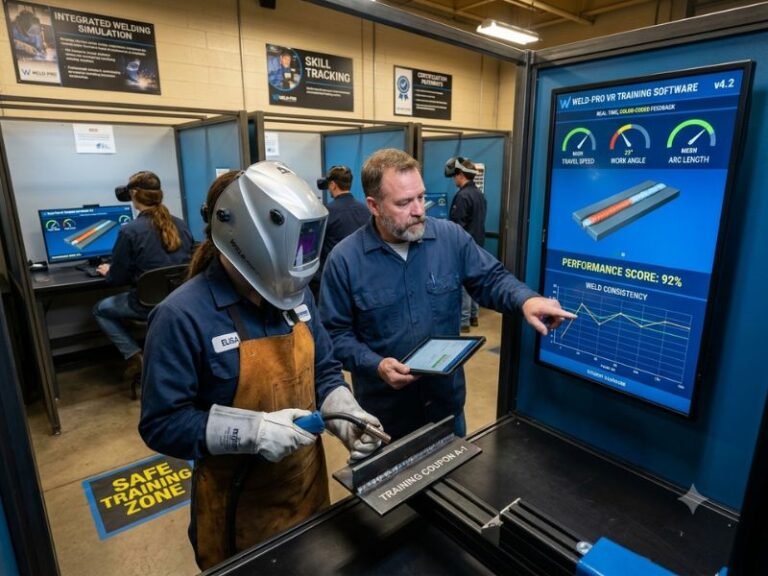
Instruction can include current, polarity, electrode selection, arc length, travel speed, joint preparation, welding positions, and visual inspection. Students also learn to recognize porosity, undercut, lack of fusion, slag inclusion, cracks, and poor bead shape.
Wet Welding Techniques
Wet welding introduces additional challenges. Water rapidly removes heat, visibility may be poor, bubbles can obscure the joint, and the diver must maintain position while handling the electrode holder and cable.
Training may cover:
- Waterproof electrodes
- Correct polarity and current
- Striking and maintaining the arc
- Electrode angle and travel speed
- Body stabilization
- Joint cleaning
- Slag removal
- Weld restarts
- Visual and tactile inspection
Students should learn to follow a Welding Procedure Specification when one applies. The procedure controls variables such as material, electrode, position, current, joint design, and acceptance criteria.
Underwater Cutting and Burning
Commercial divers may perform cutting and burning as often as welding. Training can include oxy-arc or exothermic cutting systems used to remove damaged metal, bolts, pipe, or structural components.
Students learn equipment inspection, rod positioning, surface coordination, cut control, slag removal, and safe positioning. Cutting tanks, pipelines, enclosed spaces, or unidentified structures can create severe fire and explosion hazards. These tasks require isolation, cleaning, testing, and site-specific controls.
Rigging, Tools, and Underwater Construction
A commercial diver may need to move equipment, position components, or support lifting operations. Training can include knots, slings, shackles, lifting devices, load control, hydraulic tools, drills, grinders, jetting equipment, and concrete repair.
Rigging mistakes can create crushing, entanglement, and dropped-object hazards. The diver must understand the load path and avoid pinch points.
Inspection and Documentation
Students may practice visual inspection, video, photography, crack measurement, corrosion recording, thickness testing, sketches, and dive reports.
Documentation should separate observed facts from assumptions. Structural-safety conclusions require appropriate authority and engineering evaluation.
Underwater Welding Safety and Major Risks
Underwater welding is a high-risk commercial diving activity. It should only be performed by trained personnel using appropriate life-support equipment, a qualified dive team, inspected electrical systems, and job-specific procedures.
Electrical Hazards
Electrical equipment must be grounded, insulated, and capable of carrying the required current. Connections, holders, and cables must remain serviceable.
The diver should wear insulated gloves and maintain communication with topside personnel. Current should be controlled according to the operating procedure so the circuit is energized only when required.
Drowning and Breathing-Gas Emergencies
Drowning can result from equipment failure, entanglement, loss of breathing gas, unconsciousness, current, or an uncontrolled emergency.
Controls may include a reliable breathing-gas supply, bailout cylinder, continuous communication, a ready standby diver, properly managed umbilicals, recovery equipment, and practiced rescue procedures.
Decompression Illness and Barotrauma
Pressure changes can affect the lungs, ears, sinuses, and dissolved gases in the body. Divers must follow approved depth, time, ascent, and decompression procedures.
Risks include decompression sickness, arterial gas embolism, ear or sinus injury, and lung overexpansion. Symptoms after a dive must be reported immediately.
Cold, Current, and Low Visibility
Cold water can reduce dexterity, judgment, and endurance. Currents can make positioning difficult, while poor visibility can hide cables, tools, and structural hazards.
Exposure protection may include dry suits, hot-water suits, gloves, and thermal layers. The correct system depends on water temperature, depth, contamination, and job duration.
Differential Pressure
Differential pressure, or Delta P, can occur when water moves from a high-pressure area to a lower-pressure area through an opening.
Dangerous locations include dams, intake structures, gates, pumps, drains, pipelines, and valves. The force can trap a diver. Proper isolation, lockout, engineering review, and verification are essential.
Gas Accumulation and Explosion
Welding and cutting can create gases that collect in enclosed or overhead spaces. An ignition source can cause an explosion.
The team must evaluate voids, tanks, pipelines, compartments, and structural pockets before work. Unknown contents or inadequate isolation should stop the operation.
Critical Safety Warning
Underwater welding should never be attempted with ordinary recreational scuba equipment, improvised electrical connections, or without a qualified commercial dive team. Online demonstrations do not provide the medical screening, rescue capability, or supervised experience required for professional work.
Underwater Welding Codes and Certifications
No single certificate from an underwater welding training program qualifies a person for every job. Credentials depend on the employer, diving mode, project, location, welding procedure, and governing standard.
Commercial Diver Credentials
A school may award a commercial diving certificate showing that the student completed specified training. Some programs align with industry consensus standards or employer expectations.
Before enrolling, ask:
- Which credential will I receive?
- Which employers recognize it?
- Does it cover surface-supplied diving?
- How much open-water training is included?
- Is it accepted outside the state?
- Will employers require additional tests?
A recreational scuba card does not replace a commercial diving credential.
AWS D3.6M Underwater Welding Code
The AWS D3.6M Underwater Welding Code addresses underwater welding of structures and components in wet and dry environments. It includes requirements related to procedures, qualifications, inspection, and acceptance.
Students do not need to memorize the entire code during introductory training, but they should understand that professional welding follows defined requirements rather than personal preference.
Completion Certificate vs. Welding Qualification
A completion certificate confirms that a student finished a course. A welding qualification demonstrates the ability to produce an acceptable weld under specific test conditions.
A qualification may be limited by process, electrode, material, joint design, position, water depth, procedure, and acceptance standard. Employers may require another test even when an applicant holds previous credentials.
Additional Useful Credentials
Depending on the job, useful qualifications may include first aid and CPR, diver medic training, rigging, hazardous-material training, nondestructive testing, contaminated-water diving, offshore safety courses, and employer-specific welding tests.
How Long Does Commercial Diving School Take?
Many full-time U.S. commercial diving programs last several months. Graduation, however, is only the beginning of professional development.
Program length depends on instructional hours, tank and open-water time, weather, curriculum scope, previous welding experience, medical requirements, and qualification preparation.
A realistic progression may look like this:
- Complete commercial diving education.
- Earn entry-level credentials.
- Start as a tender or junior diver.
- Build safe field experience.
- Pass employer qualifications.
- Develop welding, inspection, or offshore specialties.
A school advertising rapid access to elite offshore work without discussing entry-level progression should be evaluated carefully.
How Much Does Commercial Diving School Cost?
The total cost can be substantially higher than tuition alone. Prices vary by school, location, program length, equipment, housing, and included credentials.
Possible expenses include:
- Tuition and lab fees
- Medical examination
- Personal diving equipment
- Welding PPE
- Books and consumables
- Certification and retesting fees
- Travel and housing
- Lost income
Before enrolling, request a written estimate covering the complete program. Ask whether tuition includes open-water training, consumables, personal gear, medical testing, certifications, transportation to dive sites, and career services.
Financial aid, veterans’ benefits, workforce funding, scholarships, and payment plans may be available at eligible institutions. Availability does not mean every student or program qualifies.
How to Choose an Underwater Welding School
The best underwater welding training school is not necessarily the one with the shortest course, highest advertised salary, or most dramatic marketing footage.
Verify the Curriculum
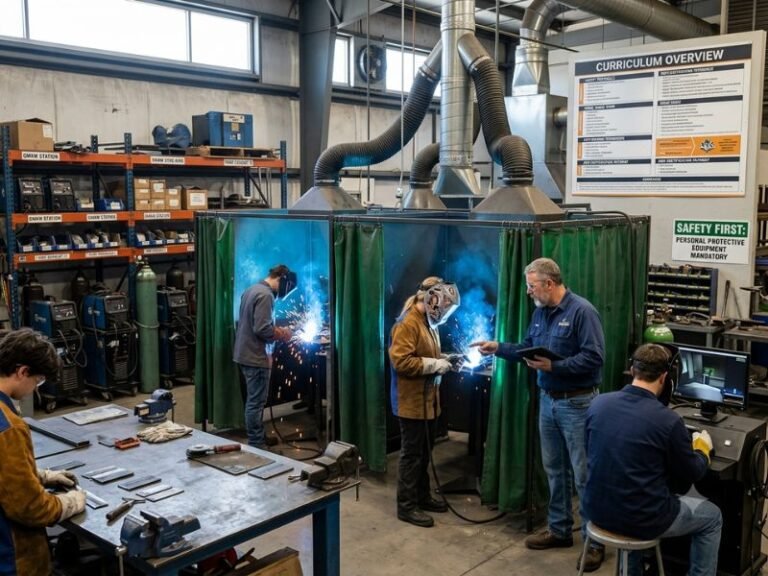
Look for balanced instruction in surface-supplied diving, dive medicine, decompression, emergency response, equipment maintenance, open-water operations, rigging, inspection, tools, cutting, and welding.
Compare Practical Training Hours
Ask how many hours are spent in classrooms, training tanks, open water, topside welding, wet welding, cutting, and emergency drills.
Program length can be misleading when individual dive time is limited.
Inspect the Facility
A tour should include diving systems, tanks, welding areas, compressors, communication equipment, helmets, and emergency equipment. Look for orderly work areas, clear procedures, maintained equipment, and instructors who answer technical questions directly.
Evaluate Recognition and Career Claims
Ask commercial diving contractors which schools and credentials they recognize. This can be more useful than relying only on school marketing.
No school can guarantee a specific salary, job location, offshore assignment, or amount of welding work. Request clear information about completion rates, graduate job titles, placement methods, and typical entry-level duties.
I recommend speaking with several employers and recent graduates before signing an enrollment agreement.
Underwater Welding Career Paths
Graduates may work in marine construction, shipyards, ports, dams, bridges, municipal water systems, offshore energy, salvage, inspection, and industrial maintenance.
Entry-Level Roles
Common starting roles include:
- Diver-tender
- Junior commercial diver
- Inland construction diver
- Marine maintenance diver
- Inspection support diver
- Underwater cutting assistant
A graduate may spend significant time preparing equipment, managing umbilicals, assisting experienced divers, cleaning, inspecting, or performing general construction before completing complex welds.
Inland vs. Offshore Work
Inland diving may involve bridges, dams, tanks, pipelines, locks, ports, and power facilities. Offshore work may involve subsea equipment, platforms, pipelines, and marine construction.
Offshore jobs can require additional training, rotational schedules, extended travel, and previous field experience. Inland work is often a more realistic starting pathway.
Salary Expectations
There is no reliable national wage category exclusively for underwater welders. Public labor data generally classifies these workers as commercial divers.
Income varies according to experience, location, project type, union status, overtime, travel, offshore assignments, diving depth, certifications, and employment consistency.
Some experienced specialists earn high incomes, but six-figure pay is not an entry-level guarantee. Project gaps, seasonal work, and unpaid travel time can affect annual earnings.
Long-Term Advancement
Experienced divers may progress into underwater welding, inspection, nondestructive testing, salvage, offshore construction, diving supervision, life-support operations, project management, or training.
Medical fitness must be maintained throughout the career.
Frequently Asked Questions
Do I Need to Be a Welder Before Attending Diving School?
Not always. Some schools teach basic topside welding, while others recommend prior experience. Existing welding skills help, but they do not replace commercial diving education.
Do I Need Recreational Scuba Certification?
Some programs accept students without previous scuba certification. Admission standards vary, so confirm the school’s swimming, medical, and water-confidence requirements.
Is Underwater Welding Dangerous?
Yes. Risks include drowning, electrical shock, decompression illness, pressure injury, hypothermia, entanglement, differential pressure, fire, explosion, and equipment failure. Formal training and team-based controls are essential.
Can I Become an Underwater Welder With Only a Welding Certificate?
No. Professional underwater work generally requires commercial diving training, medical fitness, employer-recognized credentials, and practical qualifications.
Is Commercial Diving the Same as Scuba Diving?
No. Commercial diving is occupational work performed under professional procedures, often using surface-supplied breathing gas, communication systems, a standby diver, tenders, and surface supervision.
Can Underwater Welders Make Six Figures?
Some experienced specialists may reach high annual earnings through offshore, hazardous, overtime-heavy, or highly technical work. It is not a typical guarantee for new graduates.
How Long Does It Take to Become Job-Ready?
A school program may last several months, but field competence develops over time. Many graduates begin in support or entry-level roles and progress after demonstrating safe, reliable performance.
What Should I Ask a School Before Enrolling?
Ask about medical requirements, total cost, open-water hours, individual dive time, credentials, equipment, instructor experience, graduate job titles, employer recognition, and refund policies.
Conclusion
Underwater welding training is best understood as comprehensive commercial diving education with welding and cutting included as specialized skills. A credible program should teach surface-supplied diving, emergency procedures, equipment control, rigging, inspection, open-water operations, and safe electrical practices.
Before committing to a school, confirm your medical eligibility, compare complete costs, speak with employers, and review the exact credentials awarded. I recommend choosing practical training quality and industry recognition over dramatic salary promises.
With realistic expectations, disciplined safety habits, and continued field experience, this career path can lead to work in marine construction, inspection, repair, salvage, and other commercial diving operations.