MIG Welding Training: Courses, Skills, Costs, and Certification
MIG welding training teaches you how to safely set up welding equipment, control the welding arc, prepare metal, create strong joints, identify defects, and complete practical welding projects. It can prepare beginners for entry-level jobs, help experienced workers expand their skills, or give hobbyists a safer and more structured way to learn.
In this guide, I will explain what MIG welding courses typically cover, how long training may take, what it can cost, and how welding qualifications work in the United States. I will also cover the differences between trade schools, community colleges, short courses, apprenticeships, and online programs.
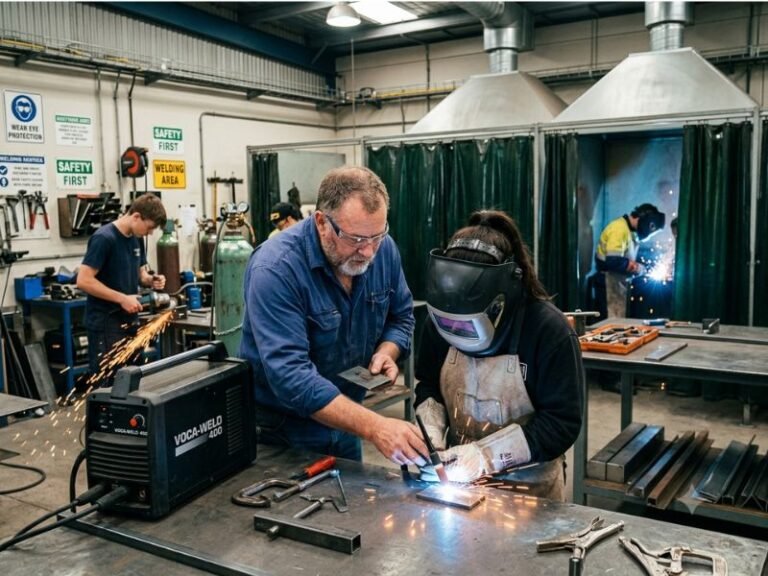
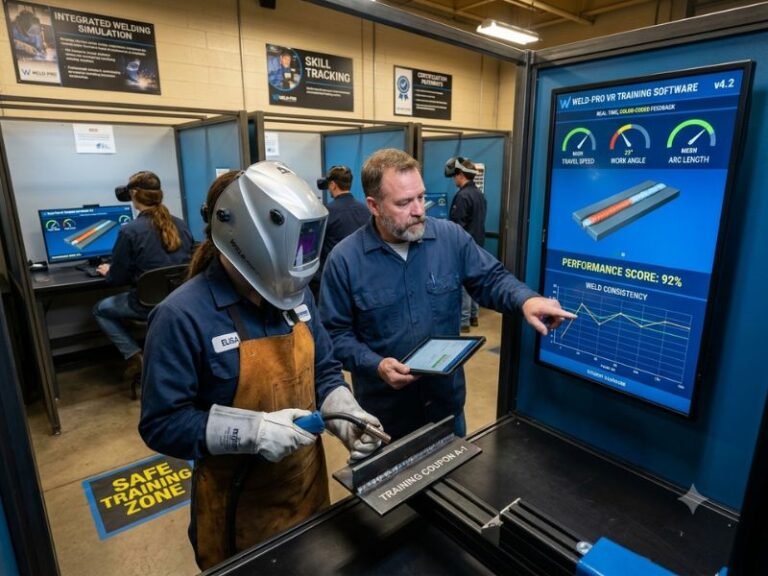
The right program should provide more than classroom theory. It should give you sufficient hands-on welding practice, direct instructor feedback, proper safety instruction, and opportunities to work with equipment commonly used in fabrication and manufacturing.
What Is MIG Welding Training?
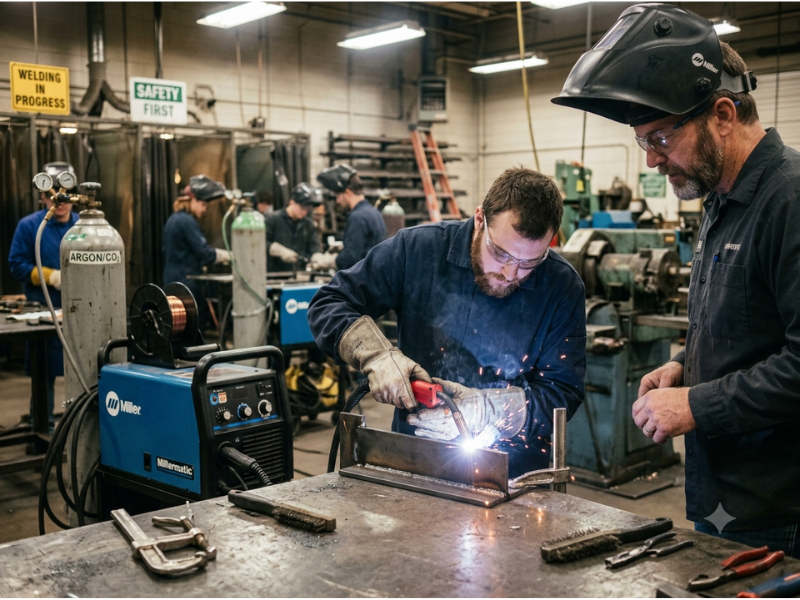
MIG welding training is structured instruction in Gas Metal Arc Welding, commonly abbreviated as GMAW. The process creates an electric arc between a continuously fed wire electrode and the workpiece. The wire melts into the joint while shielding gas protects the weld pool from atmospheric contamination.
A training program usually combines classroom instruction, demonstrations, supervised shop practice, weld inspection, and practical assessments. Depending on the program, students may work with mild steel, stainless steel, aluminum, or multiple materials.
MIG Welding vs. GMAW
MIG welding and GMAW are often used to describe the same general welding process.
GMAW is the formal technical name. MIG originally referred to Metal Inert Gas welding, where an inert shielding gas protects the arc. However, many modern applications use active gas mixtures containing carbon dioxide.
In everyday use, schools, employers, equipment manufacturers, and welders commonly use “MIG welding” as the familiar name for GMAW.
Who Is MIG Welding Training For?
MIG welding instruction can benefit:
- Complete beginners with no previous welding experience
- Career changers interested in skilled trades
- Manufacturing and fabrication workers
- Automotive repair and customization students
- Maintenance technicians
- Construction-related fabrication workers
- Hobbyists who want supervised instruction
- Experienced welders adding another welding process
- Job seekers preparing for a performance qualification test
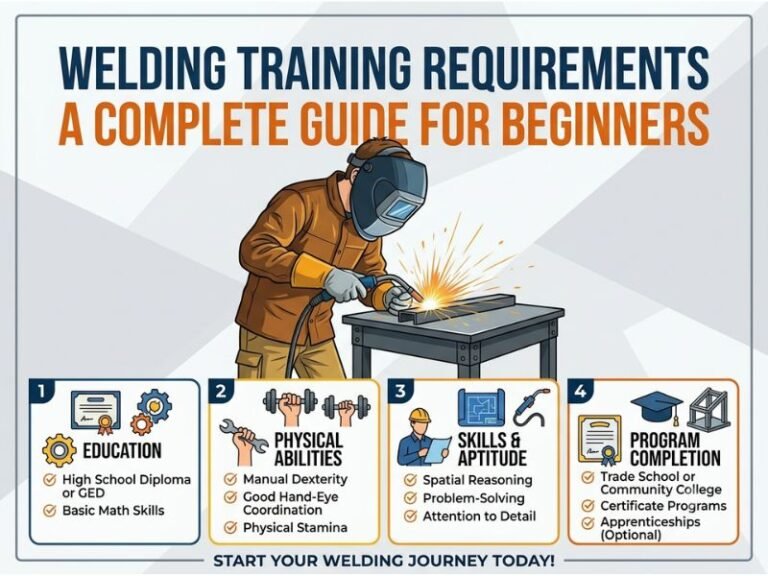
A beginner does not normally need advanced technical knowledge before starting an introductory course. However, basic math, measurement, mechanical awareness, and the ability to follow safety procedures are valuable.
Why MIG Welding Is Commonly Taught to Beginners
MIG welding is often considered approachable because the machine continuously feeds the electrode wire. The welder does not need to manually feed a separate filler rod while maintaining the arc.
Other advantages include:
- Relatively fast welding speeds
- Straightforward equipment controls
- Broad use in manufacturing and fabrication
- Suitability for many material thicknesses
- Compatibility with automation and production systems
- Ability to weld steel, stainless steel, and aluminum with the correct setup
Basic machine operation can be learned quickly, but producing repeatable, structurally sound welds requires practice. A student must learn how equipment settings, travel speed, gun position, metal preparation, and shielding gas affect weld quality.
What Does MIG Welding Training Include?
A comprehensive MIG welding training program should teach safety, equipment setup, material preparation, welding technique, joint design, defect correction, inspection, and practical fabrication skills.
The exact curriculum varies by school and course level. Introductory workshops may focus on safety and basic beads, while career programs may include multiple positions, blueprint reading, welding symbols, qualification testing, and several welding processes.
Welding Safety and Personal Protective Equipment
Safety should be taught before students begin welding.
MIG welding creates intense light, ultraviolet and infrared radiation, hot metal, sparks, fumes, electrical hazards, and fire risks. Students must understand how to control these hazards before entering a welding booth.
Common personal protective equipment includes:
- A properly rated welding helmet
- Safety glasses with side protection
- Welding gloves
- Flame-resistant clothing
- Leather or suitable protective footwear
- Hearing protection
- Respiratory protection when required
- Protective sleeves or a welding jacket
Students should also learn about:
- Welding fume control
- Local exhaust ventilation
- Fire prevention
- Electrical safety
- Gas cylinder storage
- Regulator inspection
- Hot-metal handling
- Safe grinding practices
- Emergency shutdown procedures
Synthetic clothing can melt when exposed to heat or sparks. Many training facilities require cotton, leather, or purpose-made flame-resistant garments.
MIG Welder Components and Machine Setup
Before creating a weld, students should understand the main parts of the welding system.
These commonly include:
- Power source
- Wire feeder
- Electrode wire spool
- Welding gun
- Gun liner
- Contact tip
- Gas nozzle
- Drive rolls
- Work lead and clamp
- Shielding-gas cylinder
- Regulator and flowmeter
Machine setup may involve installing the wire, selecting the correct drive rolls, adjusting drive-roll pressure, checking polarity, attaching the work clamp, setting the gas flow, and selecting initial voltage and wire feed settings.
Incorrect setup can produce unstable feeding, excessive spatter, poor penetration, porosity, or an inconsistent arc.
Voltage and Wire Feed Speed
Voltage and wire feed speed are two major MIG welding controls.
Voltage influences arc length, bead profile, and overall arc behavior. Settings that are too high can create a wide, flat bead, excessive spatter, or undercut. Settings that are too low may produce an unstable arc or poor bead shape.
Wire feed speed affects how quickly electrode wire enters the arc. In many constant-voltage MIG systems, increasing wire feed speed also increases welding current.
Beginners are commonly taught to start with the machine manufacturer’s recommended settings and then make small adjustments based on:
- Material thickness
- Wire diameter
- Joint type
- Welding position
- Shielding gas
- Travel speed
- Desired penetration
Changing several settings at once makes troubleshooting difficult. I recommend changing one variable at a time and recording the result.
Shielding Gas and Welding Wire
Shielding gas prevents oxygen, nitrogen, and moisture in the surrounding air from contaminating the molten weld pool.
Common shielding-gas options for steel include carbon dioxide and argon-carbon dioxide mixtures. The selected gas can affect arc stability, penetration, spatter, transfer mode, and bead appearance.
Students may also learn how to select:
- Wire type
- Wire classification
- Wire diameter
- Gas mixture
- Gas flow rate
- Contact tip size
- Drive-roll style
A solid wire such as ER70S-6 is commonly associated with mild-steel applications. However, wire selection should always match the base material, equipment, procedure, and required mechanical properties.
Outdoor welding creates an additional challenge because wind can blow shielding gas away from the weld area. Barriers, process changes, or alternative consumables may be needed.
Base-Metal Preparation and Joint Fit-Up
Clean, properly fitted metal is easier to weld than contaminated or poorly aligned material.
Training should cover how to remove:
- Oil
- Grease
- Paint
- Rust
- Mill scale
- Moisture
- Protective coatings
- Dirt and debris
Students should also practice:
- Measuring material
- Marking cut lines
- Cutting metal
- Grinding edges
- Creating a root opening
- Aligning components
- Clamping workpieces
- Applying tack welds
- Controlling distortion
Poor joint fit-up can lead to uneven penetration, excessive gaps, misalignment, burn-through, and dimensional errors.
Essential MIG Welding Techniques
Successful welding depends on controlling the gun and weld puddle consistently.
Important techniques include:
- Maintaining the correct work angle
- Maintaining an appropriate travel angle
- Controlling travel speed
- Keeping a consistent wire stickout
- Stabilizing the welding gun
- Watching the leading edge of the puddle
- Starting and stopping correctly
- Filling the end crater
- Keeping the gun cable positioned for smooth wire feeding
The work angle describes how the gun is positioned relative to the joint. The travel angle describes how the gun is tilted in the direction of travel.
Students may also compare push and pull techniques. Pushing generally directs the gun away from the completed weld, while pulling points the gun back toward the completed bead. The appropriate method depends on the process, material, procedure, position, and desired result.
Common Weld Joints
A strong course should give students practice with several joint configurations.
Butt Joints
A butt joint connects the edges of two pieces positioned in approximately the same plane. Students may practice square-groove joints, prepared grooves, root openings, and single-pass or multipass techniques.
Lap Joints
A lap joint is formed when one piece overlaps another. Students commonly create fillet welds along the overlapping edge.
T-Joints
A T-joint places one component approximately perpendicular to another. It is frequently used in structural fabrication, frames, brackets, and assemblies.
Corner Joints
Corner joints connect materials at an outside or inside corner. Heat control is especially important when welding thinner material.
Edge Joints
Edge joints connect adjacent edges. They are generally used in specific sheet-metal or low-load applications and may not be suitable for every structural requirement.
Welding Positions
Training may begin in the flat position before progressing to more difficult positions.
Common plate positions include:
- Flat
- Horizontal
- Vertical
- Overhead
As students move away from the flat position, gravity has a greater effect on the molten metal. Vertical and overhead welding normally require closer control of heat, travel speed, gun angle, and puddle size.
Position designations such as 1G, 2G, 3G, and 4G may be introduced in career-focused programs.
Metal Transfer Modes
Metal transfer describes how molten electrode metal moves across the arc into the weld pool.
Short-Circuit Transfer
During short-circuit transfer, the wire repeatedly contacts the weld pool and separates as current melts the wire. It is widely used for thinner materials and out-of-position applications.
Globular Transfer
Globular transfer produces relatively large molten droplets. It can create more spatter and may offer less control than other transfer modes.
Spray Transfer
Spray transfer sends small droplets across the arc at a high rate. It can provide high deposition rates, smooth arc characteristics, and strong penetration, but it generally requires suitable gas, current, equipment, material thickness, and welding position.
Pulsed-Spray Transfer
Pulsed spray alternates between higher and lower current levels. This can provide controlled droplet transfer while reducing average heat input compared with conventional spray transfer.
Advanced processes may require more capable equipment and additional training.
Welding Symbols and Blueprint Reading
Production welders often work from drawings rather than verbal instructions.
A career-oriented program may teach:
- Basic welding symbols
- Fillet weld symbols
- Groove weld symbols
- Weld dimensions
- Weld length
- Intermittent welds
- Arrow-side and other-side notation
- Reference lines
- Joint details
- Material dimensions
- Fabrication tolerances
Blueprint reading helps welders understand how individual parts fit into a finished assembly. It also reduces mistakes related to orientation, dimensions, joint location, and weld size.
Weld Inspection and Quality Control
Students should learn to evaluate a weld rather than judging it only by appearance.
Visual inspection may include:
- Bead uniformity
- Weld size
- Surface profile
- Cracks
- Undercut
- Porosity
- Overlap
- Incomplete fill
- Arc strikes
- Distortion
- Excessive spatter
A professional welding environment may also use destructive or nondestructive testing. The applicable inspection method depends on the product, code, customer requirement, and Welding Procedure Specification.
Common MIG Welding Defects and Solutions
| Defect | Possible Cause | Corrective Action |
| Porosity | Contaminated metal, poor gas coverage, drafts, or leaks | Clean the metal, inspect gas connections, and verify gas flow |
| Undercut | Excessive voltage, incorrect angle, or excessive travel speed | Reduce heat, correct the gun angle, or slow down |
| Lack of fusion | Low heat, poor joint preparation, or incorrect gun placement | Increase appropriate heat input and direct the arc into the joint |
| Burn-through | Excessive heat on thin metal or a large joint gap | Reduce heat, increase travel speed, or improve fit-up |
| Excessive spatter | Incorrect settings, polarity issues, or unstable wire feeding | Verify machine settings, polarity, wire, gas, and feeding components |
| Irregular wire feeding | Worn contact tip, damaged liner, poor spool setup, or incorrect drive pressure | Inspect the entire wire path and replace worn components |
| Incomplete penetration | Low heat, fast travel, poor joint design, or a small root opening | Adjust the procedure and improve joint preparation |
| Overlap | Low travel speed, poor angle, or excessive deposited metal | Increase travel speed and improve gun control |
MIG Welding Training Options in the United States
Students in the United States can choose from trade schools, technical institutes, community colleges, short workshops, employer programs, apprenticeships, online courses, and hybrid training.
The best MIG welding training format depends on your goal, schedule, budget, previous experience, and desired credential.
Trade Schools and Technical Institutes
Trade schools usually provide career-focused instruction with substantial shop time.
Programs may include:
- MIG welding
- TIG welding
- Stick welding
- Flux-cored welding
- Thermal cutting
- Blueprint reading
- Fabrication
- Welding safety
- Qualification-test preparation
Trade schools can be useful for students who want an intensive program with a structured schedule. However, tuition, equipment costs, and living expenses should be evaluated carefully.
Community College Programs
Community colleges may offer:
- Individual welding classes
- Short-term certificates
- Technical diplomas
- Associate degrees
- Continuing education courses
- Evening or weekend classes
A community college may be a practical option for students seeking lower local tuition, academic credit, financial aid eligibility, or a broader education.
Some programs include general education courses in addition to welding classes. This can increase the time required to complete a degree compared with a short technical certificate.
Short MIG Welding Courses
Short courses may last from one day to several weeks.
They are often designed for:
- Hobbyists
- Complete beginners
- Maintenance workers
- Employees receiving process-specific training
- Experienced welders needing a refresher
- Individuals evaluating welding before entering a longer program
A short workshop can introduce safety, setup, and basic technique, but it may not provide enough arc time for job-ready proficiency.
Apprenticeships and Employer Training
An apprenticeship combines paid work experience with related instruction.
Possible benefits include:
- Earning income while learning
- Working with experienced tradespeople
- Learning employer-specific procedures
- Developing production experience
- Building workplace references
- Progressing through defined skill levels
Apprenticeships can be competitive and may require an application, interview, aptitude assessment, physical capability, drug screening, or other employer requirements.
Employer training may also be available for production workers moving into welding roles. This training can be highly practical but may focus on a limited set of materials, joints, machines, or procedures.
Online MIG Welding Courses
Online courses can teach:
- Welding theory
- Safety principles
- Equipment selection
- Machine setup
- Transfer modes
- Welding symbols
- Common defects
- Troubleshooting concepts
However, an online course cannot physically correct your gun angle, body position, travel speed, or work distance. It also cannot independently verify that your welding environment is safe.
Online instruction works best as a supplement to supervised shop practice, not as a complete replacement.
Hybrid Training
Hybrid programs combine online theory with in-person laboratory sessions.
This format may be useful for working adults because students can complete technical lessons remotely and attend scheduled shop sessions for practical training.
Before enrolling, verify how many supervised lab hours are included. A hybrid program should still provide sufficient time to practice joints, positions, machine setup, and defect correction.
Training Options Comparison
| Training Option | Best For | Hands-On Practice | Common Outcome | Main Limitation |
| Short workshop | Hobbyists and new beginners | Limited | Completion certificate | Limited career preparation |
| Trade school | Career-focused students | Extensive | Diploma or certificate | Higher total cost |
| Community college | Students seeking credit or a broader program | Extensive | Certificate or degree | Longer completion time |
| Apprenticeship | Students seeking paid work-based learning | Extensive | Occupational credential or job experience | Competitive entry |
| Employer training | Current employees | Job-specific | Internal qualification | Skills may not transfer broadly |
| Online course | Theory and refresher learning | None unless arranged separately | Course certificate | No direct physical coaching |
| Hybrid program | Working adults | Moderate to extensive | Varies | Requires access to an in-person lab |
How Long Does MIG Welding Training Take?
MIG welding course length can range from a single-day introductory class to a multi-month career program.
The appropriate length depends on what you want to accomplish.
Introductory Training
A short introductory class may cover:
- Safety
- Machine components
- Basic setup
- Straight beads
- Simple fillet welds
- Basic inspection
This format can help you decide whether welding is a skill you want to pursue. It is not normally enough to prepare someone for every production or code-based welding job.
Process-Specific Career Training
A course focused primarily on GMAW may last several weeks or longer.
It may include:
- Multiple wire sizes
- Different material thicknesses
- Various joints
- Flat, horizontal, and vertical welding
- Several transfer modes
- Blueprint reading
- Inspection
- Practical testing
An intensive program with daily shop practice may develop skills faster than a part-time program with limited weekly lab access.
Comprehensive Welding Programs
A comprehensive program may last several months because it covers multiple welding processes and supporting skills.
Students may learn:
- GMAW
- FCAW
- SMAW
- GTAW
- Oxyfuel cutting
- Plasma cutting
- Fabrication
- Layout
- Welding symbols
- Blueprint reading
- Inspection
- Workplace safety
These programs can provide broader career preparation, but students should confirm how much time is specifically devoted to MIG welding.
Factors That Affect Learning Time
Skill development depends on:
- Previous mechanical experience
- Practice frequency
- Instructor feedback
- Material thickness
- Joint complexity
- Welding position
- Quality requirements
- Physical coordination
- Ability to identify and correct defects
- Access to equipment outside scheduled classes
I recommend comparing programs by demonstrated competencies and supervised lab hours rather than relying only on the advertised completion time.
How Much Does MIG Welding Training Cost?
The cost of training varies widely by school, program length, location, credential, equipment, and included materials.
There is no single national price that applies to every student.
Common Training Expenses
Your total cost may include:
- Tuition
- Registration fees
- Lab fees
- Books
- Online learning materials
- Welding wire
- Shielding gas
- Practice metal
- Safety equipment
- Hand tools
- Certification testing
- Retesting
- Transportation
- Housing
- Lost work time
A low advertised tuition price may not include consumables, tools, protective clothing, testing, or administrative fees.
Short Courses vs. Full Programs
Short workshops generally have a lower total price because they provide fewer training hours.
Process-specific courses may cost more but provide concentrated instruction in GMAW.
Comprehensive trade-school or college programs typically have the highest total cost because they include multiple processes, extensive shop time, career services, academic support, and additional technical subjects.
The most expensive program is not automatically the best. The least expensive option may also provide poor value if students receive limited booth time or must purchase costly materials separately.
Financial Assistance Options
Depending on the institution and student, possible assistance may include:
- Federal financial aid
- State workforce funding
- Workforce development grants
- Veterans’ education benefits
- Scholarships
- Employer reimbursement
- Union training support
- Payment plans
- Paid apprenticeships
Eligibility varies. Confirm funding directly with the school, sponsoring organization, or appropriate government program.
Questions to Ask Before Paying
Ask each provider:
- How many supervised welding hours are included?
- How many students share each booth or machine?
- Are welding wire, gas, and practice metal included?
- Is personal protective equipment included?
- Are tools included or purchased separately?
- Does tuition include qualification testing?
- Are retesting fees separate?
- Can students use the lab outside scheduled class hours?
- What credential is awarded?
- Do local employers recognize the program?
- Can I tour the facility before enrolling?
- What is the refund or withdrawal policy?
Request a written breakdown of the total expected cost before making a payment.
MIG Welding Certification and Qualifications
A school certificate, diploma, industry credential, and employer qualification are not necessarily the same thing.
Understanding the difference can prevent confusion when evaluating programs.
Course Completion Certificate
A completion certificate generally confirms that a student attended and completed a course.
It may show that the student received instruction in certain topics, but it does not always prove that the student passed a code-based welding performance test.
Welder Performance Qualification
A welding performance qualification evaluates whether a welder can produce an acceptable weld under defined test conditions.
The test may specify:
- Welding process
- Base material
- Filler metal
- Joint design
- Material thickness
- Pipe diameter
- Welding position
- Backing
- Procedure
- Acceptance criteria
Passing one test does not automatically qualify a welder for every material, position, process, or code.
AWS Certified Welder Program
The American Welding Society offers a performance-based Certified Welder program.
Testing is completed using an applicable procedure and acceptance standard. A test may be administered through an accredited testing facility or another approved arrangement, depending on the credential and employer requirement.
Formal classroom attendance and practical ability are different issues. A student may not always need to attend a particular school before attempting a performance test, but sufficient training and practice are usually necessary to produce an acceptable test weld.
AWS SENSE Programs
AWS SENSE provides standards and guidelines that welding education programs may use to structure instruction and evaluate student competencies.
A school’s participation can be one factor to consider, but it should not replace a complete evaluation of:
- Lab hours
- Instructor access
- Equipment
- Curriculum
- Safety
- Testing opportunities
- Graduate outcomes
Employer Qualifications
Many employers require new welders to complete an internal test, even when the applicant already has a school certificate or external qualification.
The employer’s test may reflect:
- Specific products
- Production speed
- Company procedures
- Material type
- Joint configuration
- Visual standards
- Code requirements
A qualification can also require continuity documentation or retesting after certain changes or periods of inactivity. Requirements depend on the governing standard, employer, and type of work.
How to Choose a MIG Welding Training Program
Choosing a program should involve more than comparing tuition and course length.
Use the following process to evaluate your options.
1. Define Your Goal
Decide whether you want to:
- Complete home projects
- Enter manufacturing
- Work in fabrication
- Learn automotive welding
- Improve maintenance skills
- Prepare for an apprenticeship
- Pass a qualification test
- Add GMAW to existing welding skills
A weekend course may be appropriate for a hobbyist but insufficient for someone seeking a full-time welding career.
2. Review the Curriculum
Look for instruction in:
- Safety
- Machine setup
- Polarity
- Wire and gas selection
- Material preparation
- Joint fit-up
- Fillet and groove welds
- Multiple positions
- Transfer modes
- Blueprint reading
- Welding symbols
- Defect correction
- Inspection
- Qualification-test preparation
A course description that only says “learn MIG welding” may not provide enough detail.
3. Compare Hands-On Lab Hours
Practical skill requires arc time.
Ask about:
- Total lab hours
- Scheduled booth time
- Open-lab availability
- Student-to-instructor ratio
- Number of students per machine
- Material limits
- Instructor demonstrations
- Individual feedback
A longer program with limited shop access may provide less practical value than a shorter program with intensive daily welding.
4. Evaluate the Instructors
Strong instructors should be able to explain not only what to do but also why a weld failed.
Consider:
- Industry experience
- Teaching experience
- Knowledge of current equipment
- Familiarity with applicable codes
- Ability to demonstrate techniques
- Availability for individual coaching
- Relevant professional credentials
Avoid assuming that technical ability automatically makes someone an effective teacher.
5. Inspect the Facility
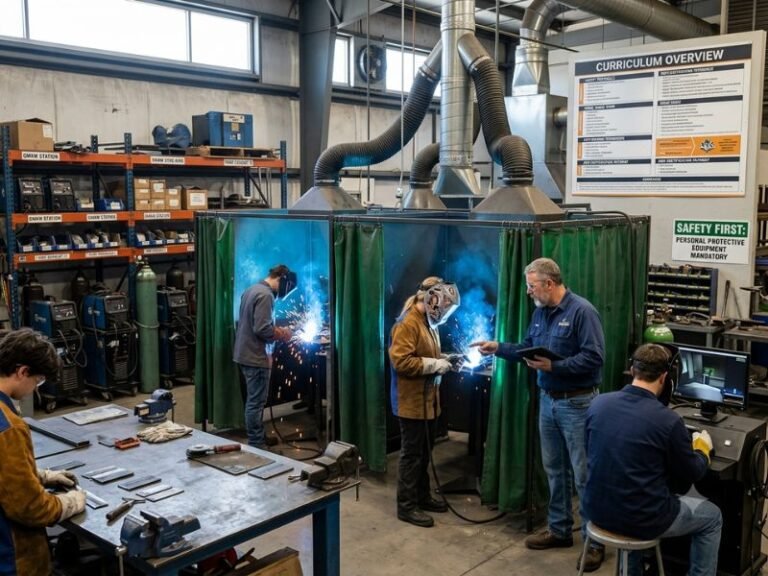
A welding lab should be organized, properly ventilated, and equipped for the advertised curriculum.
Look for:
- Functional welding machines
- Adequate booths
- Fume extraction
- Gas-cylinder storage
- Fire protection
- Material-preparation tools
- Grinding areas
- Clean workspaces
- Suitable lighting
- Safe electrical connections
- Accessible emergency equipment
A facility tour can reveal details that are not visible in marketing materials.
6. Verify the Credential
Ask exactly what you will receive after completing the program.
Possible outcomes include:
- Attendance certificate
- Course completion certificate
- Technical diploma
- College certificate
- Associate degree
- Industry credential
- Performance qualification
- Employer-recognized certificate
Request a clear explanation of any testing process and additional fees.
7. Review Career Support Carefully
Career services may include:
- Resume assistance
- Interview preparation
- Employer introductions
- Apprenticeship referrals
- Job-search support
- Welding-test preparation
Ask how employment outcomes are calculated. Training can improve your skills, but no responsible provider should guarantee a specific job or wage.
8. Calculate the Complete Cost
Add all expected expenses, including:
- Tuition
- Fees
- Tools
- PPE
- Consumables
- Testing
- Transportation
- Housing
- Childcare
- Lost income
Compare the complete cost rather than the advertised tuition alone.
9. Tour the Program
I recommend visiting the lab, meeting an instructor, and asking current students about booth availability, consumable limits, feedback, and equipment condition.
Equipment Needed for MIG Welding Practice
Students practicing outside a training facility need appropriate equipment, consumables, protective gear, and a safe workspace.
Owning a welder does not replace instruction, ventilation, fire prevention, or proper hazard control.
Essential Welding Equipment
Common equipment includes:
- MIG welding power source
- Welding gun
- Work clamp
- Electrode wire
- Shielding-gas cylinder
- Regulator or flowmeter
- Gas hose
- Correct drive rolls
- Replacement contact tips
- Replacement nozzles
- Wire-cutting pliers
The equipment must be compatible with the material, wire, electrical supply, and intended welding range.
Personal Protective Equipment
Typical PPE includes:
- Welding helmet
- Safety glasses
- Flame-resistant jacket
- Welding gloves
- Protective pants
- Leather boots
- Hearing protection
- Respiratory protection when required
Do not weld near flammable liquids, combustible materials, gas containers, or unprotected people.
Metal-Preparation Tools
Useful tools may include:
- Angle grinder
- Grinding wheels
- Flap discs
- Dedicated wire brushes
- Clamps
- Welding magnets
- Combination square
- Tape measure
- Marking tools
- Files
- Deburring tools
- Pliers
Stainless steel and aluminum may require dedicated cleaning tools to avoid contamination.
A Beginner MIG Welding Practice Roadmap
A structured practice sequence helps beginners build control before attempting complex joints or positions.
Step 1: Learn Safety Procedures
Before striking an arc, learn:
- PPE requirements
- Fire prevention
- Fume control
- Electrical safety
- Gas-cylinder handling
- Hot-metal identification
- Safe grinding procedures
Step 2: Identify the Machine Components
Locate and understand:
- Wire spool
- Drive system
- Gun liner
- Contact tip
- Nozzle
- Work connection
- Gas regulator
- Polarity connections
- Voltage and wire feed controls
Step 3: Practice Machine Setup
Under qualified supervision:
- Install the correct wire.
- Select appropriate drive rolls.
- Set drive-roll tension.
- Feed wire through the gun.
- Install the correct contact tip.
- Connect the shielding gas.
- Confirm polarity.
- Attach the work clamp.
- Select initial machine settings.
- Test the gas and wire feeding.
Step 4: Run Straight Beads
Begin with straight beads on clean plate.
Focus on:
- Stable hand position
- Consistent travel speed
- Correct work distance
- Smooth starts and stops
- Uniform bead width
- Consistent reinforcement
Do not rush into joining parts before you can produce reasonably consistent beads.
Step 5: Practice Basic Joints
Progress to:
- Lap joints
- T-joints
- Butt joints
- Corner joints
Inspect each weld and compare the result with the expected profile.
Step 6: Practice Different Positions
Move from flat welding to horizontal and vertical work after developing basic control.
Overhead practice should be completed with appropriate supervision, PPE, clothing, and fire protection.
Step 7: Record Your Results
Keep a welding practice log containing:
- Date
- Material
- Material thickness
- Wire type
- Wire diameter
- Shielding gas
- Voltage
- Wire feed speed
- Position
- Joint type
- Observed defects
- Corrective adjustments
Photographs can help you compare progress over time.
Step 8: Prepare for Qualification Testing
Before attempting a formal performance test:
- Obtain the applicable procedure
- Confirm the exact test position
- Use the required material
- Practice the correct joint
- Follow the specified settings
- Complete mock tests
- Inspect each test coupon
- Request qualified feedback
Do not assume that general practice automatically prepares you for every qualification test.
Common MIG Welding Training Mistakes
Avoiding common training mistakes can save time, money, and materials.
Choosing a Course Based Only on Price
A low-cost course may provide limited lab time, outdated equipment, large classes, or additional consumable fees.
Compare value rather than price alone.
Assuming Course Completion Equals Certification
Completing a class does not necessarily mean you are qualified for every welding job.
Ask whether the course includes a performance test, which procedure is used, and what qualification range applies.
Relying Only on Online Videos
Videos can demonstrate technique and explain theory, but they cannot confirm your safety conditions or physically correct your movements.
Use online instruction as a supplement to hands-on coaching.
Ignoring Metal Preparation
Paint, rust, oil, moisture, and coatings can affect arc stability and weld quality.
Develop a consistent preparation routine before changing machine settings.
Changing Too Many Settings
If you change voltage, wire feed speed, gas flow, travel speed, and angle simultaneously, you may not know which adjustment improved or damaged the weld.
Change one major variable at a time.
Practicing Without Feedback
Repeating the same incorrect technique can reinforce bad habits.
Ask an instructor or qualified welder to review your:
- Gun angle
- Travel speed
- Work distance
- Body position
- Bead placement
- Weld profile
- Machine settings
Advancing Too Quickly
Build consistent flat-position beads and fillet welds before attempting difficult positions or test coupons.
A strong foundation usually produces faster long-term progress.
MIG Welding Career Paths in the United States
MIG welding skills are used in manufacturing, fabrication, automotive work, equipment production, maintenance, construction-related fabrication, agriculture, transportation, and repair.
Common Entry-Level Job Titles
Possible job titles include:
- MIG welder
- Production welder
- Fabrication welder
- Welder-fitter
- Manufacturing welder
- Maintenance welder
- Assembly welder
- Automotive fabrication technician
- Welding apprentice
- Structural fabrication trainee
Job titles and duties vary by employer.
Industries That Use MIG Welding
Common industries include:
- Metal fabrication
- Machinery manufacturing
- Automotive production
- Automotive repair
- Agricultural equipment
- Material-handling equipment
- Rail equipment
- Shipbuilding
- Furniture manufacturing
- Trailer manufacturing
- Maintenance and repair
- Construction-related fabrication
Production welding may involve repetitive joints and specified machine settings. Custom fabrication may require broader skills in layout, fitting, cutting, measurement, and blueprint interpretation.
Factors That Affect Welder Pay
Compensation can vary based on:
- Location
- Industry
- Experience
- Shift
- Overtime
- Union status
- Certification
- Welding process
- Material
- Position
- Travel requirements
- Working conditions
- Ability to fit and fabricate
A training provider should not guarantee a specific salary. Local job postings can give you a more realistic view of current employer expectations and pay ranges in your area.
Skills That Can Expand Career Options
Additional skills may include:
- Flux-cored welding
- Stick welding
- TIG welding
- Pipe welding
- Blueprint reading
- Layout and fitting
- Plasma cutting
- Oxyfuel cutting
- Robotic welding
- CNC equipment operation
- Welding inspection
- Basic metallurgy
- Quality documentation
Employers often value welders who can do more than run a single bead. Measurement, fit-up, troubleshooting, attendance, communication, and consistent quality can be equally important.
Frequently Asked Questions
How long does it take to learn MIG welding?
A beginner may learn basic machine operation and straight beads in a short course, but developing consistent, job-ready skills normally requires repeated hands-on practice over several weeks or months.
The exact time depends on training frequency, instructor access, material, joint type, position, and required quality level.
How much does MIG welding training cost?
The cost can range from a relatively inexpensive short workshop to a more expensive multi-month career program.
Compare tuition, fees, PPE, tools, consumables, practice metal, testing, transportation, and other required expenses before enrolling.
Can I learn MIG welding online?
You can learn welding theory, equipment basics, safety concepts, and troubleshooting principles online, but online instruction alone cannot replace supervised physical practice.
Hands-on feedback is important for correcting gun position, travel speed, work distance, and weld-puddle control.
Is MIG welding difficult for beginners?
Basic MIG welding operation is relatively approachable, but producing repeatable, structurally acceptable welds requires practice.
Beginners must learn to coordinate machine settings, travel speed, gun angle, stickout, preparation, and joint fit-up.
Do I need welding school to become certified?
Not every performance qualification requires attendance at a specific welding school. However, you must possess the practical skill needed to pass the required test.
A structured course can provide equipment access, safety instruction, practice materials, and instructor feedback.
What certification should a MIG welder get?
The appropriate qualification depends on the job, employer, welding process, material, position, procedure, and governing code.
Ask potential employers which tests or credentials they require before paying for certification.
Can MIG welding training help me get a job?
Training can help you develop relevant skills and prepare for employer welding tests, but it cannot guarantee employment.
Employers may also evaluate attendance, safety awareness, blueprint reading, fabrication ability, productivity, and workplace behavior.
What should I bring to my first welding class?
Follow the school’s equipment list. Common requirements include:
- Safety glasses
- Appropriate welding helmet
- Welding gloves
- Flame-resistant clothing
- Leather work boots
- Hearing protection
- Notebook
- Required hand tools
Some schools provide helmets, jackets, gloves, and tools, while others require students to purchase them.
Conclusion
Effective MIG welding training combines safety instruction, machine setup, material preparation, supervised practice, defect correction, and realistic qualification preparation.
Before selecting a program, compare the curriculum, total lab hours, student-to-instructor ratio, equipment, facility safety, total cost, and credential value. A short workshop may be suitable for a hobbyist, while a career-focused student may need a longer course, apprenticeship, or comprehensive welding program.
I recommend comparing at least three training providers and requesting a written breakdown of tuition, lab hours, consumables, equipment, testing fees, and credentials. Choosing a program based on practical training quality—not marketing claims alone—will give you a stronger foundation for developing safe, consistent, and employable welding skills.