ASME Welding Training: Section IX, WPS, PQR & Qualification
ASME welding training teaches welding professionals how to understand and apply the qualification requirements of ASME Boiler and Pressure Vessel Code (BPVC) Section IX. The training focuses on welding procedures, procedure qualification, welder and welding-operator performance qualification, essential variables, testing, and the documentation needed for code-controlled work.
For engineers, supervisors, inspectors, and QA/QC personnel, this type of training is different from a conventional welding-school course. It does not primarily teach someone how to strike an arc or develop basic hand skills. Instead, it explains how welding procedures and personnel are qualified when ASME Section IX applies.
As of August 2026, the current published edition of ASME BPVC Section IX is the 2025 edition. ASME describes Section IX as containing rules for qualification of welding, brazing, and fusing procedures required by other BPVC sections.
What Is ASME Welding Training?
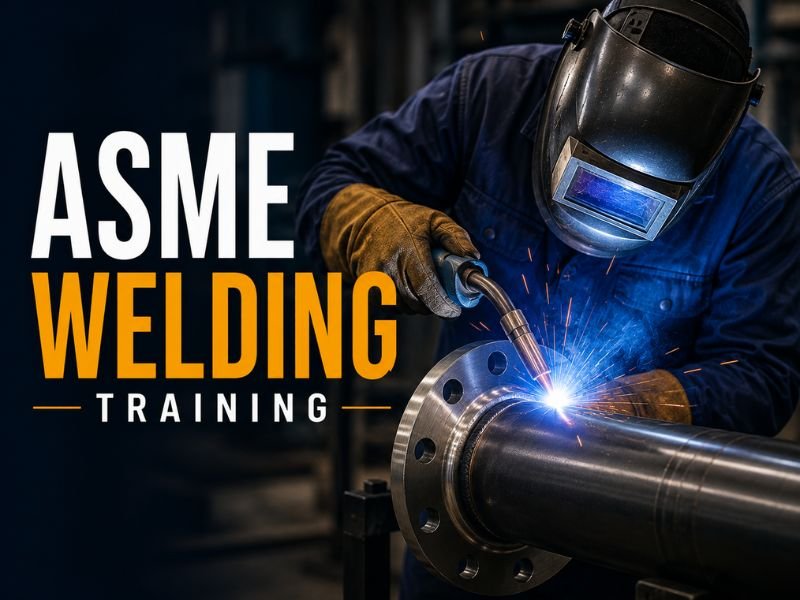
ASME welding training is code-focused technical education centered on the rules used to qualify welding procedures and welding personnel.
ASME’s current Section IX training covers the layout, scope, and use of the Code and explains how procedure and personnel qualification requirements work. It also addresses how Section IX is used together with applicable construction codes rather than treating Section IX as a complete fabrication code by itself.
Typical subjects include:
- Welding processes
- Basic welding metallurgy
- Welding Procedure Specifications
- Procedure Qualification Records
- Welder performance qualification
- Essential variables
- Nonessential variables
- Supplementary essential variables
- Testing
- Qualification documentation
- Section IX interaction with construction codes
The goal is to understand both the rules and the reasoning behind them.
What Is ASME BPVC Section IX?
ASME BPVC Section IX is titled Welding, Brazing, and Fusing Qualifications.
Its welding provisions address two major qualification areas:
- Welding procedure qualification
- Welder and welding-operator performance qualification
Section IX provides qualification rules that are referenced by other parts of the ASME Boiler and Pressure Vessel Code.
That distinction is important because Section IX should not be treated as a general welding technique handbook. It tells organizations how procedures and personnel are qualified under its rules; other applicable construction codes establish additional product-specific requirements.
Who Should Take ASME Welding Training?
Section IX training is particularly useful for technical personnel who work with code-controlled welded construction.
ASME identifies its current course as suitable for:
- Engineers
- Welding supervisors
- Quality assurance personnel
- Quality control personnel
- Auditors
- Other technical staff working under Section IX requirements
ASME specifically points to industries such as boiler and pressure-vessel manufacturing, petrochemical work, biopharmaceutical applications, and other operations where welding qualification is governed by Section IX.
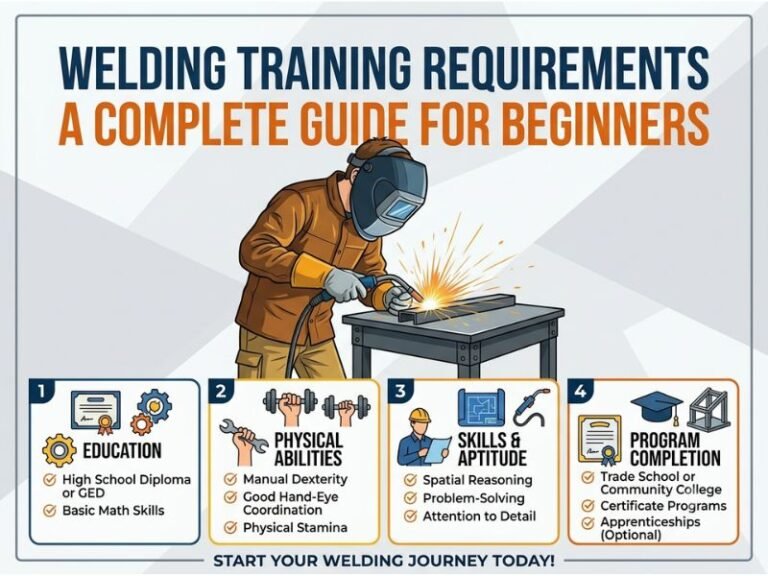
Is ASME Welding Training for Beginner Welders?
Not primarily.
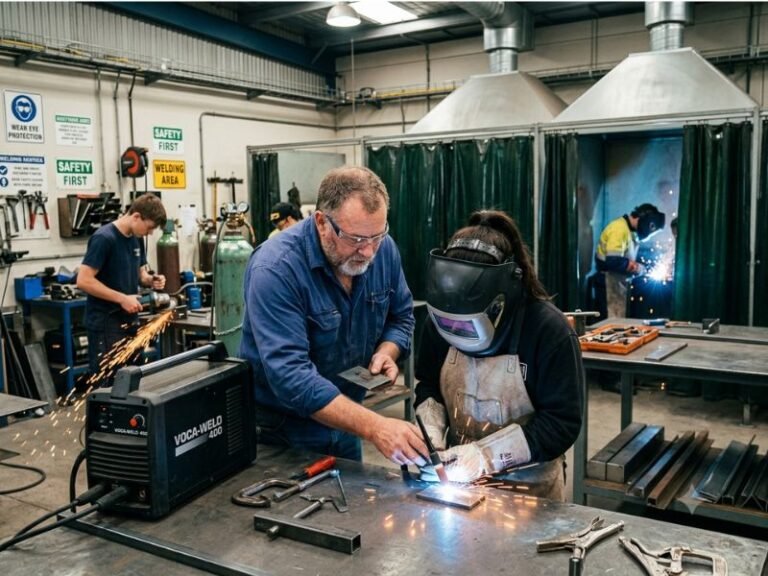
A beginner who wants to become a welder normally needs practical instruction in arc control, electrode or torch manipulation, joint preparation, welding positions, and shop safety.
A Section IX course has a different purpose.
ASME’s current instructor-led course states that participants should have an introductory background in Section IX. The emphasis is on understanding qualification requirements rather than developing beginner welding technique.
A welder preparing for a Section IX performance qualification may still need substantial hands-on practice, but that practical preparation is different from taking a technical course about the Code.
Understanding WPS, PQR, and WPQ
Three abbreviations appear repeatedly in ASME welding work: WPS, PQR, and WPQ.
Understanding the difference among them is one of the most useful outcomes of ASME welding training.
What Is a Welding Procedure Specification?
A Welding Procedure Specification (WPS) provides the instructions and conditions used to make a production weld.
Depending on the process and applicable requirements, a WPS can address items such as:
- Welding process
- Joint configuration
- Base metal
- Filler metal
- Position
- Preheat
- Postweld heat treatment
- Electrical characteristics
- Welding technique
ASME’s Section IX training specifically teaches participants how essential and nonessential variables are identified and how information is used to prepare or modify a WPS.
A WPS is therefore an instruction document rather than simply a record of what happened during one test weld.
What Is a Procedure Qualification Record?
A Procedure Qualification Record (PQR) documents the actual variables used when a welding procedure qualification coupon was made and records the applicable test results.
In simple terms, the WPS tells production personnel how the weld should be made, while the PQR records the data from the qualification test that supports the procedure where Section IX requires procedure qualification.
ASME’s current training uses procedure-qualification examples to teach how PQR and WPS documentation is prepared from underlying welding data.
What Is a Welder Performance Qualification?
A Welder Performance Qualification (WPQ) addresses the ability of the individual welder rather than the capability of the welding procedure.
ASME’s suggested QW-484A WPQ record includes information such as:
- Welder identity
- WPS followed
- Welding process
- Manual or semiautomatic method
- Backing
- Plate or pipe
- Pipe diameter
- Base-metal P-Number
- Filler-metal F-Number
- Weld-metal thickness
- Position
- Vertical progression
- Process-specific variables
- Examination results
This illustrates why a procedure qualification and a welder qualification should never be treated as the same test.
Procedure Qualification in ASME Section IX
A welding procedure qualification demonstrates that a particular combination of variables can produce a weld meeting the applicable Section IX qualification requirements.
The organization prepares a test coupon using selected variables, records the actual conditions, and performs the required tests.
The resulting information becomes part of the PQR.
A qualified procedure can then support an appropriate WPS within the ranges permitted by Section IX. ASME’s current course specifically teaches procedure qualification, preparation of WPS/PQR documentation, and the responsibilities involved in these activities.
The specific qualification range cannot safely be determined from a simple rule of thumb. It depends on the welding process and the relevant Section IX variables.
Essential Variables
An essential variable is a variable for which a change beyond the applicable Section IX rules can require procedure requalification.
Exactly which variables are essential depends on the welding process.
That process-specific nature is important.
For example, a variable relevant to GTAW may not have the same qualification significance for SMAW. ASME’s current training therefore first reviews common welding processes before teaching how essential-variable rules apply.
Nonessential Variables
Nonessential variables are still part of the WPS requirements where applicable, but changing them does not, by itself, require a new procedure qualification under the applicable Section IX rules.
“Nonessential” should not be interpreted as “unimportant.”
A variable may still be important for production quality even when Section IX does not require PQR requalification for a particular change. ASME’s Section IX training specifically teaches candidates how to distinguish essential and nonessential variables when preparing welding documentation.
Supplementary Essential Variables
Supplementary essential variables become relevant when notch-toughness requirements apply.
ASME’s current Section IX course includes instruction on how supplementary essential variables are addressed when impact toughness is required.
This is another reason welding personnel should avoid copying a WPS from a different project without confirming the applicable construction-code and toughness requirements.
Base Metals and P-Numbers
Section IX uses P-Numbers as part of its system for organizing base metals for welding qualification purposes.
P-Number concepts help determine procedure and personnel qualification variables, but belonging to the same P-Number should not be interpreted as meaning two materials are identical for every design, fabrication, or service requirement.
ASME’s current training combines Section IX variable rules with basic metallurgy, including carbon-equivalent and hardenability concepts, to help participants understand why material changes can matter.
Filler Metals and F-Numbers
Filler metals also appear in qualification documentation.
ASME’s suggested QW-484A form includes fields for filler-metal specification, classification, and F-Number when documenting welder performance qualification.
F-Numbers help organize filler metals for qualification purposes, particularly when determining welder qualification ranges.
They should not be treated as proof that every filler metal within a grouping is interchangeable for every WPS or construction application.
Welding Processes Covered in ASME Training
Section IX training requires some understanding of how common welding processes differ because qualification variables are process dependent.
ASME’s course materials address commonly used processes such as:
- Oxyfuel Welding
- Shielded Metal Arc Welding
- Gas Metal Arc Welding
- Flux-Cored Arc Welding
- Gas Tungsten Arc Welding
- Submerged Arc Welding
- Plasma Arc Welding
- Other applicable processes
The purpose is not to turn every participant into a practical expert in each process. It is to provide enough technical understanding to interpret the qualification variables correctly.
Welder and Welding-Operator Qualification
Procedure qualification asks whether the welding procedure is capable of producing acceptable results.
Performance qualification asks whether welding personnel can demonstrate the required ability under the test conditions.
Those personnel can include welders and welding operators, depending on the welding method.
The actual qualification range is determined from the variables and conditions recorded during testing—not simply from a statement that someone “passed an ASME welding test.”
ASME’s WPQ format records information including welding process, backing, pipe or plate, diameter, thickness, position, vertical progression, filler metal, and several process-specific variables.
Welding Positions and 6G Qualification
Pipe and plate position can affect performance qualification.
ASME’s QW-484A suggested record specifically provides for recording qualified positions such as 2G, 6G, and 3F, among others.
For pipe welding, a 6G test is commonly associated with a fixed pipe placed at an incline, requiring the welder to work through changing orientations around the joint.
However, passing a 6G test should not be described as an unlimited welding license. The complete qualification scope depends on all applicable Section IX variables, not position alone.
Vertical Welding Progression
Vertical progression is another variable documented for welder performance qualification.
ASME’s QW-484A form records whether vertical progression was uphill or downhill.
That means a qualification statement should include more detail than process and position when progression is relevant.
The production welder must also follow the applicable WPS rather than changing progression because another technique is personally preferred.
Testing Used for Welder Qualification
A performance test must be evaluated according to the applicable Section IX requirements.
ASME’s suggested WPQ documentation provides for several types of examination and testing.
Visual Examination
The completed weld can undergo visual examination before additional testing. The QW-484A form specifically records the visual examination result.
Bend Testing
Depending on the qualification, mechanical tests can include:
- Face bends
- Root bends
- Side bends
- Longitudinal bend specimens
These tests help evaluate the soundness of the welded qualification coupon.
Volumetric Examination
The ASME WPQ format also includes fields for alternative volumetric examination by:
- Radiographic Testing (RT)
- Ultrasonic Testing (UT)
Whether a particular examination method is permitted for a specific qualification must be determined from the applicable Section IX provisions.
Fillet-Weld Testing
For applicable fillet-weld qualifications, Section IX documentation can include fracture testing, macro examination, and fillet dimensions.
Welding Metallurgy in ASME Training
ASME Section IX training includes basic metallurgy because many qualification rules make more sense when participants understand how materials respond to welding.
Current ASME training addresses concepts such as:
- Steel metallurgy
- Carbon equivalent
- Hardenability
- Welding metallurgy
- Mechanical testing
- Impact toughness
The objective is not necessarily to create a metallurgist. It is to help participants understand the technical reasoning behind variables involving base metals, heat treatment, filler metals, and toughness.
Section IX and Construction Codes
One of the most important points in ASME welding training is that Section IX does not operate alone.
ASME specifically teaches how Section IX is used in conjunction with other construction codes.
Section IX provides qualification rules, while the applicable construction code can establish additional requirements for matters such as design, fabrication, inspection, heat treatment, or acceptance.
This is why saying a weld is simply “ASME compliant” can be incomplete without identifying the code and project requirements involved.
Why Welding Documentation Matters
Code-controlled welding requires traceable qualification records.
Important documents can include:
- WPS
- PQR
- WPQ records
- Supporting test reports
- Welder identification
- Applicable revisions
ASME’s QW-484A suggested record demonstrates the level of information that may be documented for welder performance qualification, including both actual test variables and the resulting qualification ranges.
Good records help demonstrate why a procedure or welder is qualified for the work being performed.
How Long Does ASME Welding Training Take?
There is no universal duration because “ASME welding training” can describe different types of instruction.
ASME’s current instructor-led virtual Section IX course runs over four scheduled days and awards 30 professional development hours and 3.0 CEUs.
ASME also currently offers an on-demand Section IX course worth 30.5 PDHs and 3.0 CEUs. The self-study version provides 365 days of access from purchase and allows participants to complete the material on their own schedule.
Practical preparation for a welder performance test is different. The time required can vary considerably depending on the process, position, material, and welder’s existing skill.
Can You Take ASME Welding Training Online?
Yes.
As of August 2026, ASME offers Section IX instruction in both virtual instructor-led and on-demand formats. The current virtual schedule includes courses beginning August 17–20, October 19–22, and November 16–19, 2026, with additional 2027 dates listed.
The on-demand version is self-paced and includes video-based instruction covering Section IX layout, qualification rules, welding processes, metallurgy, WPS development, personnel qualification, supplementary essential variables, brazing, and fusing.
ASME also maintains an in-person version, although the current page states that no in-person session is presently available.
ASME Training vs. Welder Qualification
This distinction is especially important.
Completing an ASME Section IX training course does not, by itself, make someone a qualified production welder under Section IX.
The on-demand ASME course can issue a Certificate of Completion to participants who successfully complete the course and meet its final-exam requirement. That certificate documents completion of the educational course.
A Welder Performance Qualification is different. It documents an actual welding performance test and the resulting qualification variables and ranges, as shown by ASME’s QW-484A format.
Training builds code knowledge.
Performance qualification demonstrates welding ability under defined test conditions.
What Should You Know After ASME Welding Training?
A useful Section IX course should leave participants able to:
- Navigate the layout and scope of Section IX
- Understand procedure qualification
- Understand personnel qualification
- Distinguish WPS, PQR, and WPQ
- Recognize essential variables
- Recognize nonessential variables
- Understand supplementary essential variables
- Understand common welding-process characteristics
- Review qualification documentation
- Understand basic metallurgy supporting Section IX rules
- Recognize how Section IX works with construction codes
These outcomes closely match the objectives ASME currently lists for its official Section IX training.
Frequently Asked Questions
What Is ASME Welding Training?
ASME welding training generally refers to technical education on ASME BPVC Section IX and related welding qualification requirements. It teaches how welding procedures and welding personnel are qualified and documented when Section IX applies.
What Is ASME Section IX?
ASME BPVC Section IX is the part of the Boiler and Pressure Vessel Code addressing qualification of welding, brazing, and fusing procedures and personnel as required by other BPVC sections. The current published edition is the 2025 edition.
What Is the Difference Between WPS and PQR?
A WPS provides the welding instructions and applicable variables for production. A PQR records the actual variables and test results from the procedure-qualification test supporting the procedure where required. ASME’s training specifically teaches development and modification of WPS and PQR documentation.
What Is a Welder Performance Qualification?
A Welder Performance Qualification documents a welder’s demonstrated ability under specified test conditions. The record can include process, material, thickness, pipe diameter, position, filler metal, progression, and examination results.
Does ASME Section IX Cover 6G Welding?
Yes, 6G can be used as a pipe performance-qualification position under Section IX. ASME’s suggested QW-484A form specifically includes 6G among the positions that may be documented.
Can ASME Section IX Training Be Done Online?
Yes. ASME currently offers instructor-led virtual and self-paced on-demand Section IX training.
Does Completing an ASME Course Make You an ASME-Certified Welder?
No. A course Certificate of Completion demonstrates completion of the educational course, while a welder performance qualification requires an actual welding test under the applicable qualification requirements.
Who Should Take ASME Section IX Training?
The course is particularly relevant to engineers, welding supervisors, QA/QC personnel, auditors, and technical personnel working in industries where welding procedure or personnel qualifications are governed by Section IX.
Conclusion
ASME welding training gives technical personnel the knowledge needed to understand welding procedure and personnel qualification under ASME BPVC Section IX. Rather than focusing mainly on manual welding technique, Section IX training concentrates on WPSs, PQRs, welder performance qualification, essential variables, testing, metallurgy, and qualification documentation.
One of the most important lessons is the distinction between the procedure and the person performing it. A WPS provides production instructions, a PQR supports procedure qualification where required, and a WPQ records a welder’s performance qualification under defined conditions.
The applicable construction code and project requirements also matter because Section IX provides qualification rules rather than every requirement for the finished product. For engineers, QA/QC professionals, supervisors, auditors, and welding personnel involved in code-controlled fabrication, understanding those relationships is the central purpose of ASME welding training. As of August 2026, users applying the Code should work from the current applicable edition—currently the 2025 edition of BPVC Section IX—along with the construction code and contractual requirements governing the job.