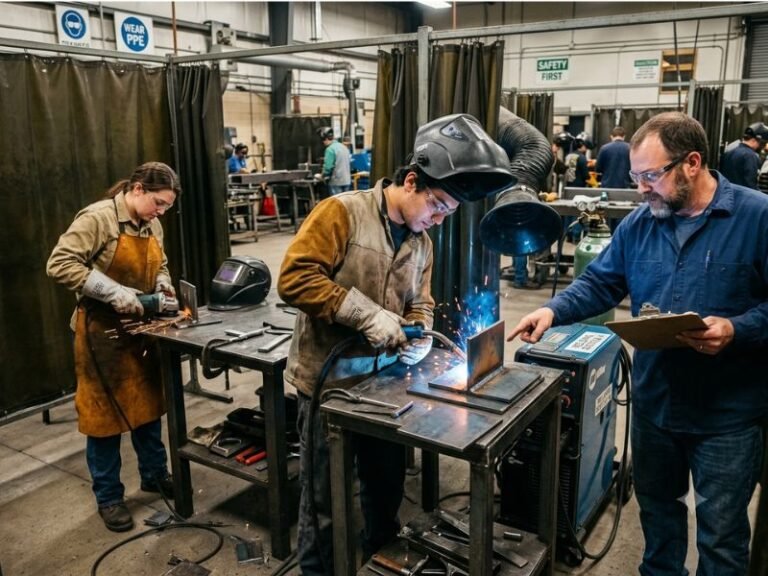
Welding Training Programs for Women: A Beginner’s Career Guide
Welding can provide a practical route into manufacturing, construction, fabrication, transportation, energy, and equipment repair. It is a skill-based occupation in which performance, accuracy, safety, and reliability matter more than gender.
However, women remain underrepresented in welding. According to 2025 U.S. Bureau of Labor Statistics data, women represented approximately 5.8% of welding, soldering, and brazing workers. That low percentage does not reflect a lack of ability. It shows that many women have historically had less exposure to trade careers, apprenticeships, suitable equipment, mentorship, and supportive workplace environments.
Good welding training programs for women address the same technical standards required of every professional welder while also considering barriers that women may encounter. These can include poorly fitting protective equipment, limited access to mentors, workplace culture concerns, and uncertainty about entering a male-dominated occupation.
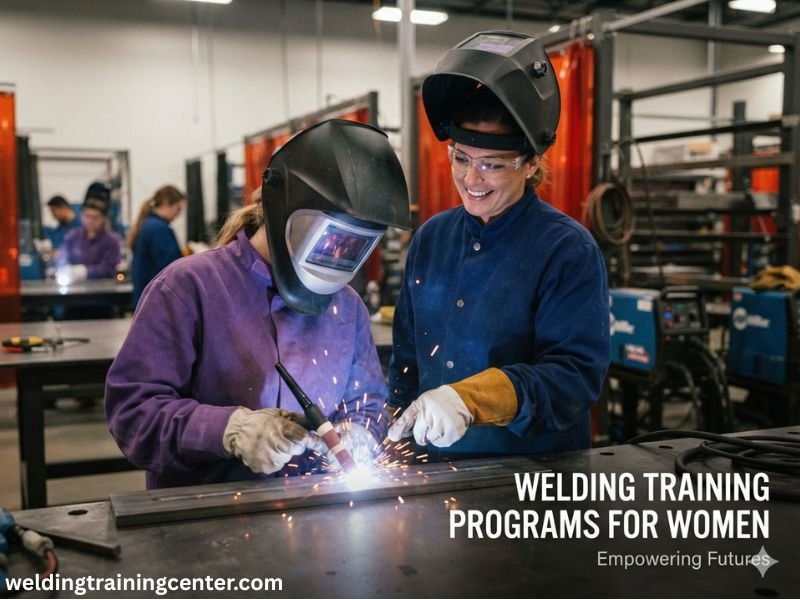
A suitable program should provide substantial hands-on practice, qualified instructors, effective safety systems, realistic employment support, and clear information about tuition and certification. This guide explains the available training routes, the skills students learn, funding possibilities, and how to choose a program that prepares beginners for real welding work.
What Are Welding Training Programs for Women?
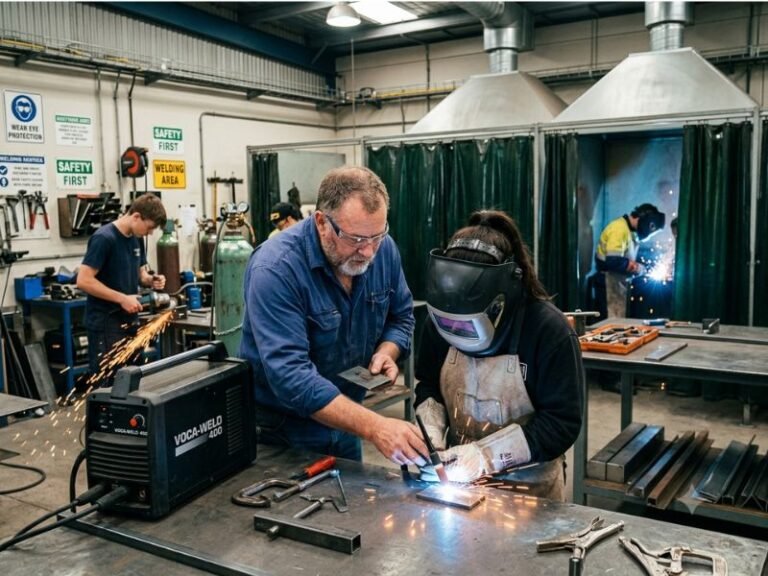
Welding programs designed for women teach the technical and practical skills needed to work safely and competently in welding-related occupations.
Some programs are open only to women, while others are standard welding courses that offer mentoring, scholarships, support groups, or recruitment initiatives for women. A program does not need to be women-only to provide a positive learning environment.
The technical curriculum should remain industry focused. Students generally need to learn:
- Welding safety and personal protective equipment
- Machine setup and maintenance
- Metal preparation and joint fit-up
- MIG, stick, TIG, or flux-cored welding
- Blueprint and welding-symbol reading
- Shop mathematics and measurement
- Weld-defect identification
- Cutting, grinding, and fabrication
- Workplace communication
- Preparation for practical welding tests
The goal is not to create a simplified version of welding training. Women entering the trade must be prepared to meet the same job specifications, production requirements, and qualification tests as other welders.
A strong program provides appropriate support without lowering technical expectations.
Why Women-Focused Training Support Can Matter
Many beginners enter welding without previous shop experience. This is true for both women and men, but women may be less likely to have been encouraged to use tools, take technical education classes, or consider welding as a career.
Women-focused outreach can make training routes easier to discover. It may also connect students with mentors who understand what it is like to work in a field where relatively few coworkers are women.
Supportive programs may provide assistance with:
- Understanding apprenticeship applications
- Finding properly fitting protective equipment
- Preparing for physical job requirements
- Building confidence with tools and machinery
- Responding to inappropriate workplace behavior
- Connecting with women already working in trades
- Locating scholarships or childcare resources
- Preparing for employer welding tests
The U.S. Department of Labor’s Women in Apprenticeship and Nontraditional Occupations program supports organizations that help recruit, train, and retain women in apprenticeships and industries where women have traditionally been underrepresented. WANTO funding goes to eligible organizations rather than directly to individual students, but funded organizations may operate local pre-apprenticeship and support programs.
Main Types of Welding Training Programs for Women
Several training routes can lead to a welding career. The best choice depends on your location, finances, schedule, and preferred industry.
Trade and Vocational Schools
Trade schools usually provide concentrated welding instruction. Programs may last several months or longer, depending on the number of processes, materials, and positions included.
This route can work well for career changers and students who want focused training without completing a traditional academic degree.
Before enrolling, determine how much time students spend actively welding. A program may advertise several welding processes but provide limited practice in each one.
Private trade-school tuition can also be high. Request a written breakdown that includes registration charges, equipment fees, consumables, protective clothing, books, testing costs, and other expenses.
Community College Programs
Community colleges may offer welding certificates, diplomas, or associate degrees.
A short certificate usually focuses on practical entry-level skills. An associate degree may include general education, technical mathematics, metallurgy, manufacturing technology, inspection, or management-related courses.
Community colleges may offer:
- Financial-aid assistance
- Evening classes
- Academic tutoring
- Career counseling
- Connections with local employers
- Student organizations
- Access to broader technical courses
This route may be especially useful for students who want to begin as welders and later move toward inspection, supervision, education, or manufacturing technology.
Pre-Apprenticeship Programs
A pre-apprenticeship program prepares beginners to apply for a formal apprenticeship or entry-level trade position.
These programs may cover basic welding, tool use, construction mathematics, job-site safety, physical conditioning, résumé preparation, and interview skills.
Some pre-apprenticeship programs specifically recruit women and provide mentoring or support services. They can be valuable for someone interested in welding but unsure whether she is ready to enter an apprenticeship immediately.
Participation does not always guarantee placement. Ask how many graduates enter Registered Apprenticeships or paid trade employment.
Registered Apprenticeships
An apprenticeship combines paid employment with structured instruction. Apprentices develop skills under the supervision of experienced workers while completing classroom or technical training.
The principal advantage is that apprentices earn wages while learning. They also gain experience with actual schedules, safety procedures, quality requirements, and workplace expectations.
Apprenticeship opportunities may be available through:
- Unions
- Manufacturers
- Fabrication companies
- Shipyards
- Construction contractors
- Industrial maintenance employers
- Government workforce agencies
Some apprenticeships accept applicants without welding experience, while others prefer candidates who have already completed technical training. BLS recognizes employer-based apprenticeships, vocational schools, community colleges, and private welding schools as common preparation routes.
Employer-Based Training
Some employers hire production workers, helpers, or trainees and provide welding instruction on the job.
This can reduce the cost of formal education, but the quality of employer training varies. A well-organized program should include qualified supervision, documented safety instruction, structured skill progression, and regular performance evaluation.
Ask whether the training prepares employees for portable welding skills or only one repetitive task used by that company.
Skills a Beginner Welding Program Should Teach
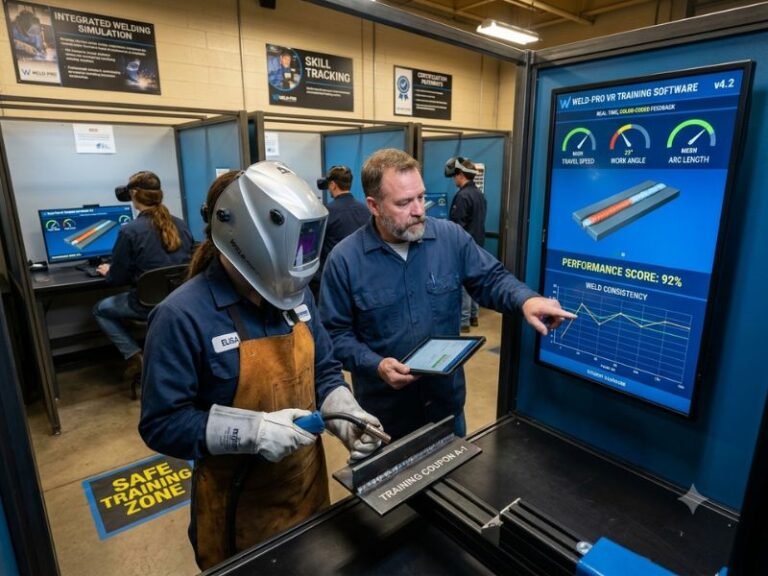
Welding requires a combination of manual skill and technical understanding. A useful course should teach students why a weld behaves a certain way instead of asking them to memorize machine settings.
Core Welding Processes
Programs may introduce one or more of the following processes:
Gas Metal Arc Welding, or MIG, uses continuously fed wire and external shielding gas. It is common in production, automotive, and general fabrication work.
Shielded Metal Arc Welding, or stick welding, uses flux-coated electrodes. It is frequently used in construction, maintenance, repair, and outdoor work.
Gas Tungsten Arc Welding, or TIG welding, uses a nonconsumable tungsten electrode. It provides precise control and is often used on stainless steel, aluminum, and thinner materials.
Flux-Cored Arc Welding uses tubular wire containing flux. It is common in structural fabrication and heavy manufacturing.
A program does not need to teach every process to be valuable. It should, however, explain which local industries use the processes included in the curriculum.
Supporting Skills
Employers need workers who can complete more than the final weld. Students should also practice:
- Reading drawings and specifications
- Calculating and measuring dimensions
- Preparing metal surfaces
- Cutting and fitting components
- Selecting suitable filler materials
- Adjusting voltage, amperage, and wire-feed speed
- Controlling distortion
- Cleaning welds between passes
- Identifying cracks, porosity, undercut, and poor fusion
- Maintaining equipment
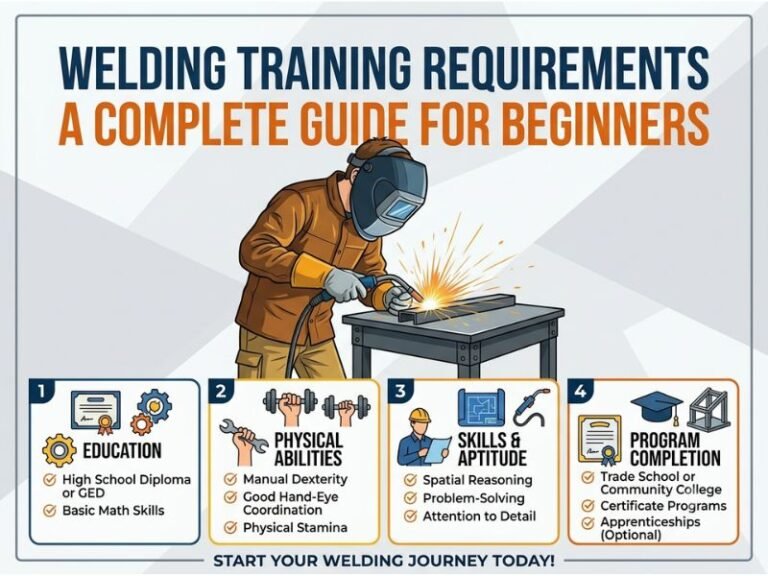
BLS describes these as central welding duties and notes that attention to detail, manual dexterity, physical stamina, spatial awareness, and hand-eye coordination are important occupational qualities.
How to Choose a Supportive Welding Program
A program’s advertising may show modern machines and successful graduates, but a campus visit usually provides more useful information.
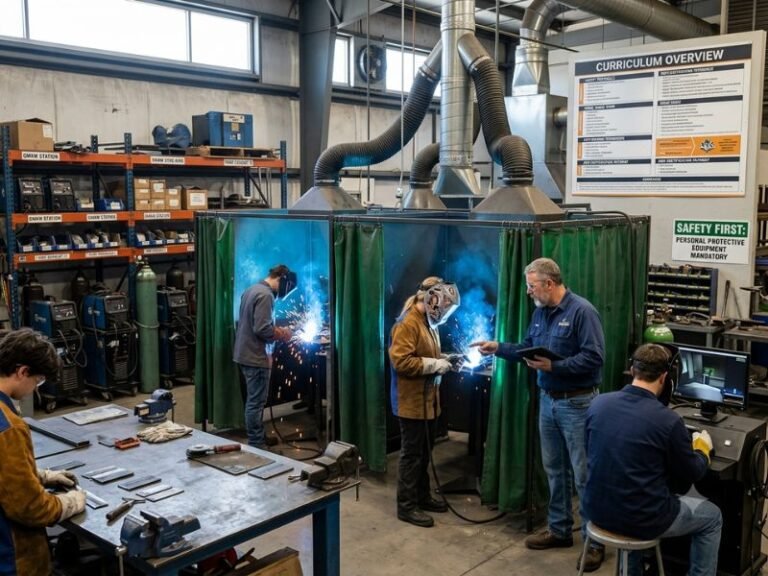
Examine the Workshop
Ask to tour the actual welding lab while classes are operating.
Look for:
- Functional ventilation and fume extraction
- Clean and organized work areas
- Maintained welding machines
- Enough booths for the class size
- Clearly marked gas cylinders
- Fire-prevention equipment
- Properly used protective clothing
- Instructors actively supervising students
A school that does not follow its own safety rules should be treated cautiously.
Ask About Hands-On Hours
Find out how many hours per week students spend actively welding rather than watching demonstrations or waiting for equipment.
Ask whether students:
- Prepare their own materials
- Set up machines independently
- Practice multiple welding positions
- Repeat unsuccessful welds
- Receive individual feedback
- Perform visual or destructive tests
Welding ability develops through repetition. A program with limited booth time may not provide enough practice to prepare students for employment tests.
Evaluate the Learning Environment
Ask whether women are currently enrolled and whether women have completed the program recently. The presence of women instructors or mentors can be useful, but it is not the only indicator of a supportive environment.
More important questions include:
- How does the school address harassment?
- Is inappropriate behavior documented and handled?
- Do instructors apply the same performance standards consistently?
- Are changing and restroom facilities appropriate?
- Is protective equipment available in multiple sizes?
- Can students report concerns without retaliation?
- Are mentoring or student-support services available?
A supportive program should not isolate women or assume they need easier assignments. It should provide fair instruction, safe equipment, and equal access to practice.
Verify Instructor Experience
Instructors should understand both welding technique and teaching.
A highly skilled welder is not automatically an effective instructor. Beginners need someone who can observe technique, explain why a defect occurred, and provide a practical correction.
Ask about instructors’ industry backgrounds, credentials, class responsibilities, and availability during shop sessions.
Review Employment Claims
Ask which companies hired recent graduates and what jobs they received.
Request explanations for published placement statistics. Some schools may count any employment rather than welding-related employment.
Useful career services may include:
- Résumé assistance
- Interview preparation
- Employer visits
- Apprenticeship referrals
- Practice welding tests
- Job fairs
- Connections with local manufacturers
No responsible school can guarantee that every student will receive a high-paying welding job.
PPE Fit and Safety Considerations for Women
Welding protective equipment must fit the individual worker. Oversized gloves, loose clothing, poorly positioned respirators, and unstable harnesses can reduce protection or create additional hazards.
OSHA’s construction PPE rule explicitly requires personal protective equipment to fit workers properly. The agency has noted that poorly fitting equipment can be ineffective and may create hazards; the rule applies to all affected construction workers and is particularly relevant where standard equipment has not accommodated different body sizes.
Women should be able to obtain properly fitting:
- Flame-resistant jackets and pants
- Welding gloves
- Safety boots
- Welding helmets
- Safety glasses
- Respirators
- Fall-protection harnesses
- Hearing protection
Protective clothing should cover exposed skin without hanging loosely near rotating machinery or creating a tripping hazard.
A training program should teach students how to inspect, adjust, clean, and store PPE. It should not expect every student to use one standard size.
Welding hazards include fumes, ultraviolet radiation, burns, flying particles, electrical shock, and fire. Proper PPE is essential, but it must be combined with ventilation, equipment inspection, fire control, and safe work procedures.
Paying for Welding Training
The total cost of welding education can include more than tuition.
Potential expenses include:
- Registration and laboratory fees
- Welding helmet
- Flame-resistant clothing
- Gloves and safety glasses
- Work boots
- Hand and measuring tools
- Books or digital materials
- Certification testing
- Transportation
- Childcare
- Reduced work hours
Request the complete cost in writing before enrolling.
AWS Scholarships
The AWS Foundation offers welding-related financial assistance. Its Welder Training Scholarship provides $1,000 awards for eligible students entering short-term certificate programs of less than two years. AWS states that up to 800 of these awards may be available annually.
AWS also offers donor-funded national scholarships for associate and bachelor’s degree students in welding and related fields. Current scholarship information lists more than 130 awards totaling over $700,000, with individual awards generally ranging from $2,500 to more than $10,000. Eligibility, deadlines, and available awards can change each year.
Some AWS scholarship funds are specifically connected with women in welding, while others are open to broader groups of welding students. Review the current criteria rather than assuming that every award applies to your program.
Other Funding Sources
Students may also investigate:
- Federal financial aid
- State workforce-development funding
- Community foundation scholarships
- Union or employer sponsorship
- Veteran education benefits
- School payment plans
- Local women-in-trades organizations
- Apprenticeship wages
- Childcare or transportation assistance
Remember that WANTO grants are awarded to organizations. Students do not normally apply to the Department of Labor for an individual WANTO scholarship. Instead, look for local organizations operating programs with WANTO or similar workforce funding.
Career Opportunities After Training
Welding skills can lead to work in:
- Metal fabrication
- Manufacturing
- Construction
- Structural steel
- Equipment repair
- Transportation manufacturing
- Shipbuilding
- Industrial maintenance
- Agricultural equipment
- Energy projects
- Custom fabrication
Possible career progression may include production welder, fabricator, structural welder, pipe welder, maintenance welder, robotic welding operator, team leader, instructor, supervisor, or welding inspector.
A beginner should not expect to qualify immediately for every specialty. Pipe, pressure-vessel, aerospace, and code-regulated work may require additional training, experience, and performance qualifications.
BLS reported a median annual wage of $51,000 for welders, cutters, solderers, and brazers in May 2024. The lowest 10% earned under $38,130, while the highest 10% earned more than $75,850. Pay varies by industry, location, experience, overtime, shift, and skill level.
Employment is projected to grow 2% from 2024 to 2034. BLS nevertheless projects approximately 45,600 openings each year on average, largely because workers leave the occupation or transfer to other careers.
These figures describe the occupation as a whole. Completing a training program does not guarantee a particular starting wage.
Common Concerns Women Have About Welding
Do Welders Need Exceptional Physical Strength?
Welding can involve lifting, standing, bending, climbing, or working in awkward positions. Physical conditioning and safe material-handling techniques are useful.
However, welding quality depends heavily on control, accuracy, preparation, positioning, and problem-solving. Mechanical lifting equipment, adjustable work tables, carts, cranes, and team lifting should be used when appropriate.
Unsafe manual lifting is not proof of skill.
Will I Be the Only Woman in the Class?
Possibly. Women remain a small percentage of the occupation, and enrollment varies by location.
Being the only woman does not mean you cannot succeed. Before enrolling, evaluate how instructors manage the class and whether the school has clear standards for respectful behavior.
Do Women Take Different Certification Tests?
No. A welding performance test is based on the required process, joint, material, position, and acceptance standard.
The test does not become easier or harder based on the candidate’s gender. Training should prepare every student to meet the applicable requirements.
Can Women Work in Heavy Industrial Welding?
Yes. Women work in manufacturing, construction, shipbuilding, pipelines, repair, inspection, and other welding-related fields.
Each job has its own physical, travel, schedule, and qualification requirements. Students should evaluate the actual position rather than relying on stereotypes about the entire trade.
Steps to Begin Welding Training
Start by deciding what type of work interests you. Compare manufacturing, fabrication, construction, repair, artistic metalwork, and industrial maintenance.
Next, review local job advertisements. Note which processes, certifications, shifts, and experience levels appear repeatedly.
Contact trade schools, community colleges, apprenticeships, and workforce organizations. Tour at least two or three facilities when possible.
For each program, compare:
- Total tuition and equipment costs
- Weekly hands-on welding hours
- Processes and positions taught
- Class size and instructor availability
- PPE and ventilation standards
- Support for women and other underrepresented students
- Certification-test preparation
- Graduate employment results
- Scholarship or funding assistance
- Schedule and transportation requirements
Select a program based on training quality and career relevance, not solely on convenience or advertising.
Frequently Asked Questions
Are there welding schools only for women?
Some nonprofit organizations and pre-apprenticeship programs specifically serve women. Most welding schools are open to all students but may offer women-focused scholarships, mentorship, support groups, or recruitment programs.
Is welding a good career for women?
Welding can be a suitable career for women who enjoy practical work, problem-solving, tools, and building or repairing metal products. Job quality varies by employer, industry, schedule, safety culture, and compensation.
Do women need previous tool experience?
No. Beginner programs should teach basic tool use, measurement, safety, and equipment setup. Previous experience may make the first few classes easier, but it is not required for a properly designed introductory course.
How long does welding training take?
Short introductory programs may last several weeks. Certificate programs may take several months, while diplomas, degrees, and apprenticeships take longer. Compare supervised practice hours rather than only the number of calendar months.
Can a single mother attend welding school?
It may be possible with a suitable class schedule and support system. Look for evening, part-time, or flexible programs and investigate childcare, transportation, financial aid, and workforce-development assistance before enrolling.
Is certification required?
Requirements vary by employer and job. A school completion certificate is not the same as a performance qualification. Employers may require AWS-related credentials, code-specific tests, or their own practical welding examination.
What should a woman wear during welding training?
Students generally need flame-resistant clothing, suitable gloves, safety boots, safety glasses, and a correctly fitted welding helmet. Additional PPE may be required for grinding, fumes, noise, or construction work.
Can welding lead to careers outside production work?
Yes. With additional experience and training, welders may progress into inspection, supervision, teaching, robotic welding, quality control, sales, estimating, or welding technology.
Conclusion
Welding training programs for women can provide a realistic path into skilled manufacturing, construction, repair, and fabrication careers.
The best programs teach the same technical standards expected throughout the welding industry while also providing properly fitting PPE, fair access to equipment, respectful instruction, mentoring, and practical career support.
Compare trade schools, community colleges, pre-apprenticeships, apprenticeships, and employer-based programs before committing. Examine hands-on practice hours, total costs, instructor availability, safety systems, scholarship opportunities, and graduate outcomes.
Women do not need a separate standard of welding skill. They need access to effective training, safe equipment, accurate career information, and workplaces where performance is evaluated fairly.