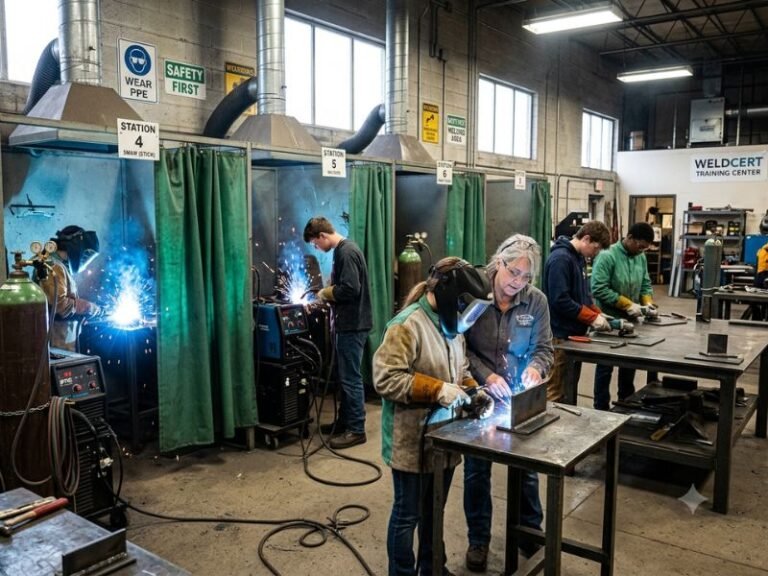
Welding Training Requirements: A Complete Guide for Beginners
When someone decides to build a career in welding, one of the first questions they usually ask is: What are the welding training requirements? Understanding these requirements helps new students prepare properly before entering a welding program, apprenticeship, or technical training course.
I have seen many beginners assume that welding only requires the ability to operate a welding machine. In reality, professional welding requires a combination of technical knowledge, safety awareness, physical ability, and hands-on practice. A successful welder needs to understand different welding processes, follow workplace safety standards, read technical drawings, and produce strong, high-quality welds.
In the United States, welding training requirements can vary depending on the training center, employer, industry, and certification goals. A person preparing for structural welding may have different training needs compared to someone interested in manufacturing, pipe welding, automotive repair, or shipbuilding.
In this guide, I will explain the common welding training requirements in the USA, including education, age requirements, physical skills, safety knowledge, practical training, certifications, and other important factors beginners should know before starting their welding journey.
What Are Welding Training Requirements?
Welding training requirements are the basic qualifications, skills, knowledge, and preparation needed to become trained as a welder. These requirements help students develop the ability to safely operate welding equipment and perform professional welding work.
Most welding programs focus on several key areas:
- Basic education and technical understanding
- Welding safety procedures
- Equipment operation
- Metal preparation techniques
- Welding process knowledge
- Blueprint reading
- Hands-on welding practice
- Quality inspection methods
Unlike some careers that require a traditional college degree, welding is a skill-based profession. Many welders begin their careers through technical schools, vocational programs, community colleges, apprenticeship programs, or employer-based training.
However, completing a welding course is only the beginning. Professional welders continue developing their skills throughout their careers because welding technology, materials, and industry standards continue to change.
Basic Education Requirements for Welding Training
One of the most common questions I receive from beginners is whether they need a specific educational background before starting welding training.
In most cases, welding programs in the United States have basic education requirements rather than advanced academic requirements.
High School Diploma or GED
Many welding schools prefer applicants to have a high school diploma or GED. This educational foundation helps students understand basic mathematics, measurements, workplace communication, and technical instructions.
Some entry-level welding programs may accept students without a diploma, especially through vocational programs or workforce development opportunities. However, having a GED or high school diploma can improve career opportunities because many employers consider education history during hiring.
Basic Math Skills
Mathematics plays an important role in welding. Welders regularly use measurements, angles, dimensions, and calculations while preparing materials and interpreting drawings.
Important math skills for welders include:
- Fractions and decimals
- Measurements
- Geometry basics
- Understanding angles
- Reading dimensions on blueprints
Strong math skills help welders improve accuracy and reduce material waste.
Reading and Communication Skills
Welders need to understand written instructions, safety procedures, job specifications, and technical documents.
Good reading skills help welders:
- Follow workplace safety rules
- Understand welding procedures
- Read welding symbols
- Complete inspection reports
- Communicate with supervisors and team members
Age Requirements for Welding Training
Age requirements are another important part of welding training requirements.
In the United States, many welding schools accept students who are at least 18 years old. Some programs may allow younger students through high school career and technical education programs with appropriate supervision.
Age requirements may depend on:
- State regulations
- School policies
- Type of welding work
- Workplace safety rules
Because welding involves heat, electricity, fumes, and industrial equipment, training programs must ensure students can safely participate in practical welding activities.
For younger students interested in welding, vocational programs can provide an excellent introduction before entering the professional workforce.
Physical Requirements for Welding Training
Welding is a physically demanding profession. Before beginning training, students should understand the physical abilities required for successful welding work.
A welder may spend long periods standing, bending, kneeling, lifting materials, and working in different positions.
Common physical welding training requirements include:
Hand-Eye Coordination
Welding requires precise control of the welding torch, electrode, or welding gun. Good hand-eye coordination helps maintain consistent weld quality.
Manual Dexterity
A welder must control tools carefully while maintaining proper movement, speed, and positioning.
Physical Stamina
Professional welders often work in industrial environments where they may need to:
- Stand for several hours
- Work in awkward positions
- Handle metal components
- Wear protective equipment for extended periods
Vision Requirements
Good vision is important because welders must observe weld pools, joint alignment, and surface conditions.
Depth perception and attention to detail help welders identify problems before they affect weld quality.
Ability to Work Safely Around Hazards
Welders regularly work around:
- Heat
- Sparks
- Bright welding arcs
- Metal fumes
- Heavy equipment
- Electrical systems
Understanding these hazards is an essential part of welding education.
Safety Training Requirements for Welders
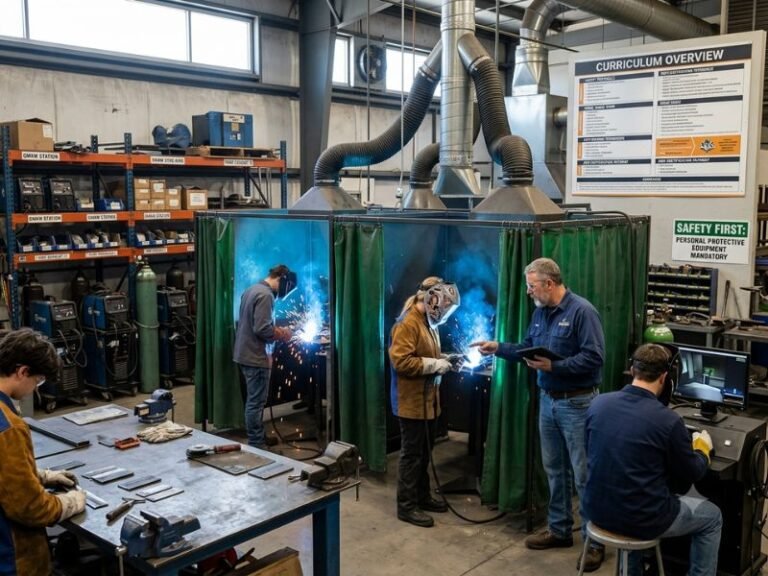
Safety is one of the most important parts of welding training. Before students begin advanced welding techniques, they must understand how to work safely.
A quality welding program teaches students how to prevent injuries and maintain a safe working environment.
Important safety topics include:
Personal Protective Equipment (PPE)
Welders must learn how to select and properly use protective equipment, including:
- Welding helmets
- Safety glasses
- Welding gloves
- Flame-resistant clothing
- Safety boots
- Hearing protection
Protective equipment helps reduce exposure to sparks, heat, ultraviolet radiation, and flying particles.
Fire Prevention
Because welding creates extreme heat and sparks, fire safety is essential.
Training typically covers:
- Identifying fire hazards
- Proper workspace preparation
- Safe storage of flammable materials
- Emergency procedures
Ventilation and Fume Control
Welding produces fumes and gases that can be harmful without proper ventilation.
Students learn:
- Why ventilation matters
- How to reduce exposure
- When respiratory protection may be necessary
Electrical Safety
Many welding processes involve electrical equipment. Students must understand:
- Proper machine operation
- Cable inspection
- Grounding procedures
- Electrical hazard prevention
Hands-On Training Requirements
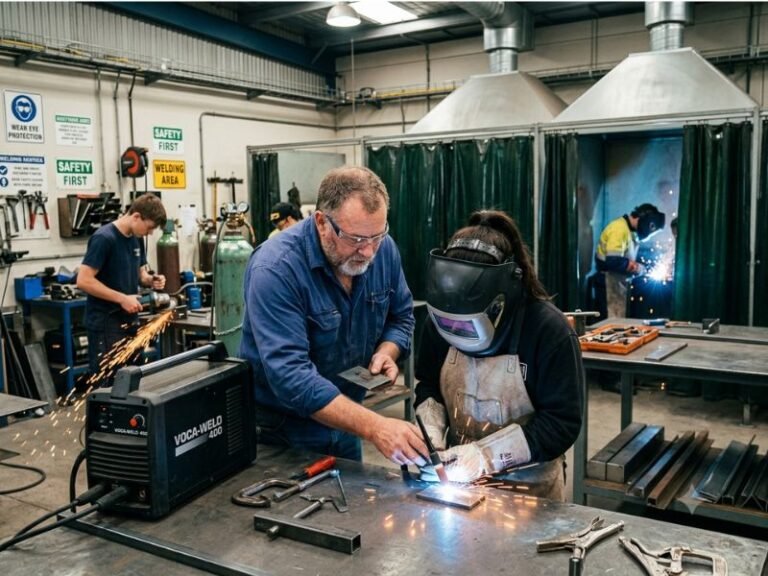
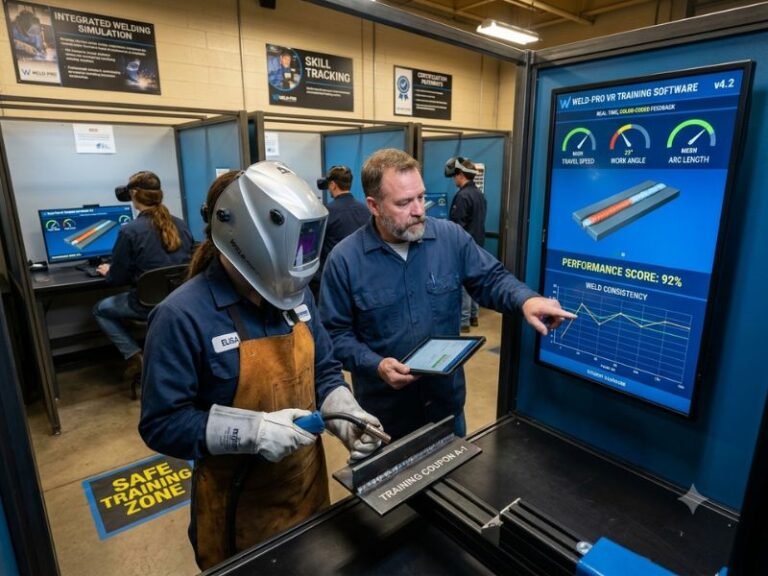
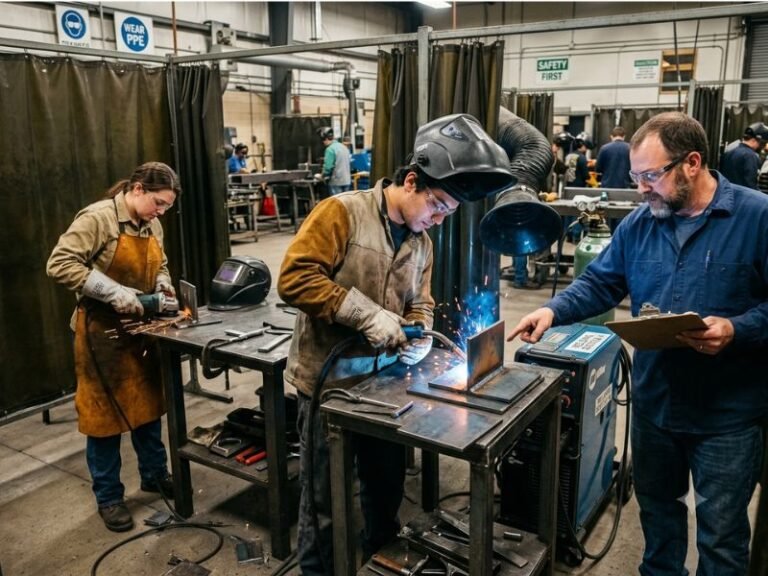
Welding is a practical skill, so hands-on experience is one of the most important parts of training.
A strong welding program combines classroom instruction with practical lab experience.
During hands-on training, students learn how to:
- Set up welding machines
- Adjust welding parameters
- Prepare metal surfaces
- Create different weld joints
- Control welding techniques
- Inspect completed welds
Practical training allows students to develop muscle memory and confidence before entering a professional workplace.
Welding Processes Students Learn During Training
Modern welding careers involve several different welding processes. The specific processes taught depend on the training program and career goals.
Shielded Metal Arc Welding (SMAW)
Also known as stick welding, SMAW is commonly used in construction, repair work, and industrial applications.
Students learn:
- Electrode selection
- Arc control
- Welding positions
- Joint preparation
Gas Metal Arc Welding (GMAW)
Often called MIG welding, GMAW is widely used in manufacturing and fabrication.
Training includes:
- Wire selection
- Gas settings
- Machine adjustments
- Welding techniques
Gas Tungsten Arc Welding (GTAW)
Also known as TIG welding, GTAW requires precision and is commonly used for stainless steel, aluminum, and high-quality weld applications.
Students develop skills in:
- Torch control
- Filler metal handling
- Heat management
Flux-Cored Arc Welding (FCAW)
FCAW is commonly used in construction and heavy manufacturing because it provides strong welds and high productivity.
Blueprint Reading and Technical Skills
A professional welder needs more than welding ability. Understanding technical information is also a major part of welding training.
Students commonly learn:
Welding Symbols
Welding drawings use specific symbols to communicate:
- Weld type
- Weld size
- Weld location
- Joint requirements
Blueprint Interpretation
Blueprint reading helps welders understand project specifications before starting work.
Important skills include:
- Reading dimensions
- Understanding measurements
- Identifying materials
- Following welding instructions
Metal Preparation
Proper preparation directly affects weld quality.
Training includes:
- Cleaning metal surfaces
- Cutting materials
- Grinding edges
- Preparing joints
Certification Requirements for Welders
Certification is an important topic within welding training requirements.
Training completion and certification are not always the same thing. A student may complete a welding course but still need additional testing to become qualified for specific welding jobs.
In the United States, many welders pursue certifications through organizations such as the American Welding Society (AWS).
Certification testing may evaluate:
- Welding technique
- Material handling
- Weld appearance
- Structural quality
- Ability to meet industry standards
Some employers require certified welders because certification demonstrates that a welder can produce work according to specific requirements.
How Long Does Welding Training Take?
The length of welding training depends on the program type and career goals.
Common options include:
Short-Term Welding Programs
These programs may take several weeks or months and focus on basic welding skills.
Technical School Programs
Many technical programs provide more comprehensive training, including:
- Multiple welding processes
- Safety instruction
- Blueprint reading
- Hands-on practice
Apprenticeship Programs
Apprenticeships combine classroom learning with paid workplace experience.
The time required depends on the employer, industry, and program structure.
Welding Training Requirements for Different Industries
Different industries may have different expectations for welders.
Construction Welding
Construction welders often need strong skills in structural welding, blueprint interpretation, and safety procedures.
Manufacturing Welding
Manufacturing environments may focus on productivity, precision, and consistent weld quality.
Pipe Welding
Pipe welding requires advanced skills because weld quality is critical in industries such as energy, manufacturing, and industrial construction.
Automotive Welding
Automotive welding often involves specialized techniques for different metals and repair applications.
Understanding the industry you want to enter can help you choose the right training path.
How to Choose the Right Welding Training Program
Choosing the right program is an important decision for anyone starting a welding career.
When evaluating a welding school or training center, I recommend looking at:
Experienced Instructors
Qualified instructors can provide practical knowledge that goes beyond textbooks.
Hands-On Practice Time
Welding is learned through repetition. Programs should provide enough lab time for students to build confidence.
Modern Equipment
Training with updated equipment helps students become familiar with workplace technology.
Safety Focus
A good program should prioritize safe welding practices from the beginning.
Certification Preparation
Programs that prepare students for industry testing can help improve career opportunities.
Common Mistakes Beginners Make Before Welding Training
Many new students make avoidable mistakes when starting their welding journey.
Common mistakes include:
- Choosing a program based only on price
- Ignoring safety training
- Expecting instant welding skills
- Avoiding practice time
- Not learning blueprint reading
- Focusing on only one welding process
A successful welder develops both technical ability and professional discipline.
Welding Training Requirements Checklist
Before starting welding training, beginners should prepare for:
✓ Basic education requirements
✓ Safety training
✓ Proper protective equipment
✓ Physical readiness
✓ Basic mathematics knowledge
✓ Technical learning ability
✓ Hands-on practice
✓ Welding process knowledge
✓ Certification goals
✓ Career planning
Frequently Asked Questions About Welding Training Requirements
Do I need experience before starting welding training?
No. Many welding programs are designed for beginners with little or no previous welding experience.
Do I need a college degree to become a welder?
No. Welding is primarily a skill-based career. Technical training, practice, and certification are often more important than a college degree.
Is welding training difficult?
Welding requires practice and dedication. Learning proper techniques takes time, but consistent training helps students improve.
Do all welders need certification?
Certification requirements depend on the employer, industry, and type of welding work.
What is the most important welding skill?
Safety awareness, proper technique, and attention to detail are among the most important skills for professional welders.
Conclusion
Understanding welding training requirements is the first step toward building a successful welding career in the United States. While requirements can vary depending on the program, employer, and industry, most successful welders develop a strong foundation in safety, technical knowledge, and hands-on practice.
From basic education and physical readiness to welding techniques, blueprint reading, and certification preparation, each part of training helps create skilled professionals who can meet industry expectations.
I believe welding is a career where continuous learning makes a major difference. The best welders continue improving their skills, adapting to new technology, and maintaining strong safety habits throughout their careers. By understanding the training requirements and preparing properly, beginners can create a solid path toward becoming professional welders.