Aerospace Welding Training: Practical Guide and Important Details
Imagine a massive jetliner, hundreds of feet long, soaring through the sky at nearly the speed of sound. Or perhaps a rocket, a marvel of engineering, defying gravity as it propels a satellite into orbit. What you might not immediately consider is the intricate network of welds holding these incredible machines together, each one a critical point of structural integrity and safety. These aren’t just any welds; they are precision bonds formed under the most stringent conditions, often in exotic materials, and they demand an exceptionally skilled hand.
The aerospace industry operates with zero tolerance for error. A faulty weld isn’t just a minor defect; it can have catastrophic consequences. This extreme demand for perfection translates directly into the need for highly specialized training for anyone aspiring to work in this field. It’s a career path that offers immense satisfaction and a vital role in pushing the boundaries of human achievement.
If you’re considering a career where your craftsmanship directly contributes to the safety and success of air and space travel, understanding the path to becoming an aerospace welder is crucial. This article will guide you through the essential aspects of aerospace welding training, from the unique demands of the industry to the specific skills and certifications you’ll need to succeed.
I will explain the types of welding processes involved, the materials you’ll encounter, and the rigorous quality standards that define aerospace manufacturing. My goal is to provide a comprehensive overview that helps you navigate your options and make informed decisions about pursuing this challenging and rewarding profession.
The Unique Demands of Aerospace Welding
Aerospace welding stands apart from other welding disciplines due to its unparalleled requirements for precision, material knowledge, and adherence to strict regulations. Unlike structural welding for buildings or general fabrication, where a certain degree of imperfection might be acceptable, aerospace components are often subjected to extreme temperatures, pressures, vibrations, and corrosive environments. This necessitates a level of craftsmanship and quality control that few other industries can match.
Criticality of Components
Every weld in an aerospace application, whether it’s on an engine component, a fuselage section, or a spacecraft frame, is considered critical. The failure of even a small weld can compromise the entire structure, leading to catastrophic outcomes. This inherent criticality drives the need for highly trained and certified welders who understand the immense responsibility that comes with their work.
Exotic Materials and Alloys
Aerospace engineers frequently specify exotic materials and advanced alloys to meet performance requirements. These materials often possess unique properties that make them challenging to weld. Common examples include:
- Titanium and Titanium Alloys: Known for their high strength-to-weight ratio and corrosion resistance, but highly reactive with atmospheric gases during welding.
- Nickel-Based Superalloys (e.g., Inconel, Hastelloy): Excellent strength at high temperatures, crucial for jet engine components, but prone to cracking and distortion.
- Aluminum Alloys: Lightweight and strong, but require precise heat control and often specialized techniques to prevent porosity and hot cracking.
- Stainless Steels (e.g., 300 series, PH grades): Used for various applications, but specific grades require careful interpass temperature control and filler metal selection.
Working with these materials demands specialized knowledge of their metallurgical properties, proper shielding gas techniques, and precise heat input control to maintain their desired characteristics and prevent defects.
Rigorous Quality Standards and Inspections
Aerospace welding is governed by an extensive set of industry standards and specifications, such as those from the American Welding Society (AWS), the Society of Automotive Engineers (SAE), and specific company standards like Boeing (BAC) or Airbus (AI). These standards dictate everything from welding procedures and welder qualifications to inspection methods and documentation requirements.
After welding, components undergo rigorous non-destructive testing (NDT) to ensure their integrity. Common NDT methods include:
- Visual Inspection (VT): The first line of defense, looking for surface defects.
- Dye Penetrant Inspection (PT): Detects surface-breaking discontinuities.
- Magnetic Particle Inspection (MT): Reveals surface and near-surface flaws in ferromagnetic materials.
- Ultrasonic Testing (UT): Uses sound waves to detect internal flaws.
- Radiographic Testing (RT): Employs X-rays or gamma rays to find internal defects.
Welders in aerospace must not only produce high-quality welds but also understand these inspection methods and how their work impacts the inspectability of a component.
Essential Welding Processes for Aerospace Applications
While many welding processes exist, a select few are predominantly used in aerospace manufacturing due to their precision, control, and ability to work with specialized materials. Aspiring aerospace welders should focus their training on mastering these key processes.
Gas Tungsten Arc Welding (GTAW/TIG)
Gas Tungsten Arc Welding (GTAW), commonly known as TIG welding, is arguably the most critical process for aerospace applications. It offers unparalleled control over the weld puddle, heat input, and filler metal deposition, making it ideal for thin materials and exotic alloys. I find that its precision is unmatched, allowing for extremely clean and high-quality welds.
Why GTAW is Preferred in Aerospace:
- Precision and Control: Allows for very fine control over the arc and molten puddle, crucial for delicate components and thin gauges.
- Clean Welds: Produces welds with minimal spatter and no slag, reducing post-weld cleaning and the risk of inclusions.
- Versatility: Can weld a wide range of materials, including stainless steels, aluminum, titanium, and nickel alloys.
- High Quality: Consistently produces high-integrity welds with excellent mechanical properties.
- Autogenous Welding Capability: Can be used without filler metal for certain applications, further reducing potential contamination.
Training in GTAW for aerospace will involve mastering techniques for various joint configurations, pulse welding, and working in inert gas environments, often with specialized purge setups for reactive metals like titanium.
Plasma Arc Welding (PAW)
Plasma Arc Welding (PAW) is an advanced variation of GTAW that uses a constricted arc to achieve higher energy density and deeper penetration. It can be used for both keyhole and melt-in welding techniques. I see PAW as a step up in capability for certain applications, offering advantages over traditional TIG.
Advantages of PAW in Aerospace:
- Deeper Penetration: Can weld thicker materials than GTAW in a single pass.
- Faster Travel Speeds: Increases productivity while maintaining weld quality.
- Narrower Welds: Reduces distortion and heat-affected zone (HAZ).
- Improved Arc Stability: Less sensitive to arc length variations compared to GTAW.
PAW training often builds upon GTAW skills, focusing on the specific equipment and parameter adjustments required for plasma welding.
Electron Beam Welding (EBW)
Electron Beam Welding (EBW) is a highly specialized process performed in a vacuum chamber. It uses a focused beam of high-velocity electrons to generate heat and melt the material. The vacuum environment prevents contamination, making it ideal for reactive and refractory metals. I consider EBW to be at the forefront of precision welding for critical aerospace components.
Key Features and Benefits of EBW:
- High Purity: Vacuum environment eliminates atmospheric contamination, crucial for reactive metals.
- Deep Penetration and Narrow Welds: Produces very deep, narrow welds with minimal distortion.
- High Precision: Excellent control over beam placement and energy.
- Dissimilar Material Joining: Can often join materials that are difficult to weld by other methods.
While welders typically operate EBW machines rather than performing manual welds, understanding the principles and capabilities of EBW is valuable for aerospace professionals.
Laser Beam Welding (LBW)
Laser Beam Welding (LBW) utilizes a concentrated laser beam as a heat source. Like EBW, it offers high precision and low heat input, making it suitable for delicate components and thin materials. LBW can be performed in atmospheric conditions or with shielding gas, depending on the application.
Advantages of LBW in Aerospace:
- High Speed: Can achieve very fast welding speeds.
- Minimal Distortion: Low heat input reduces thermal distortion.
- Non-Contact Process: No physical contact with the workpiece, reducing tool wear.
- Automation Potential: Easily integrated into automated systems.
As with EBW, LBW is often an automated process, but understanding its application and limitations is important for aerospace manufacturing.
Choosing the Right Aerospace Welding Training Program
Selecting the appropriate training program is a pivotal step toward a successful career in aerospace welding. The options range from vocational schools to specialized certification centers, and each has its merits. I advise prospective students to carefully evaluate programs based on several key factors.
Vocational Schools and Community Colleges
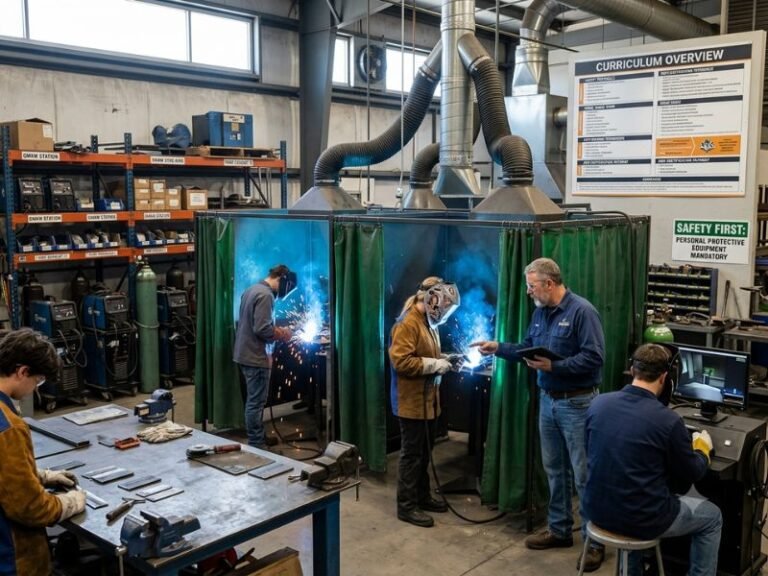
Many vocational schools and community colleges offer welding programs that include foundational skills applicable to aerospace. These programs often provide a broad introduction to various welding processes, safety, and basic metallurgy.
What to Look For:
- Accreditation: Ensure the institution is accredited.
- Curriculum: Check if the curriculum includes advanced GTAW, blueprint reading, and NDT principles.
- Instructor Experience: Look for instructors with industry experience, ideally in aerospace.
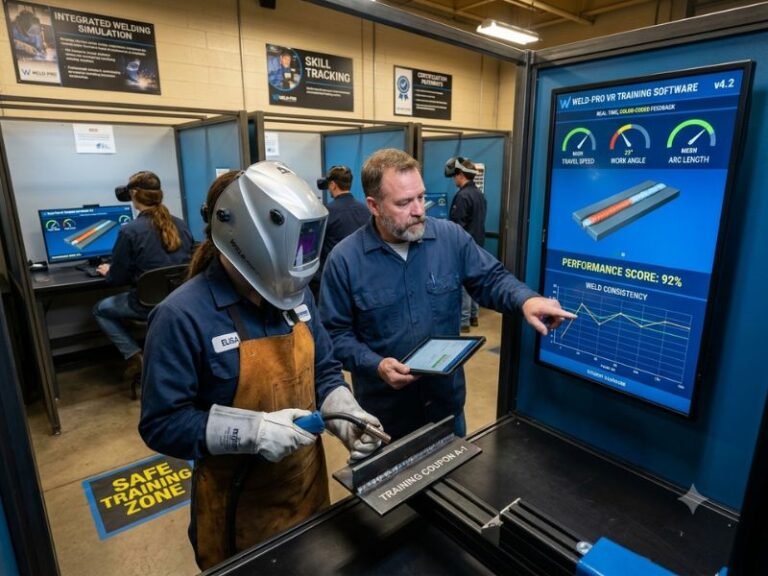
- Equipment: Access to modern welding equipment, including pulse TIG machines and specialized fixtures.
- Certifications Offered: Does the program prepare you for AWS certifications like D17.1 (Specification for Fusion Welding for Aerospace Applications)?
While these programs provide a strong base, they may require additional specialized training or on-the-job experience to meet specific aerospace employer requirements.
Specialized Welding Schools and Training Centers
Some private welding schools and dedicated training centers focus specifically on advanced welding techniques, often with programs tailored for the aerospace, nuclear, or pipeline industries. These can be excellent choices for direct entry into aerospace welding.
Advantages of Specialized Centers:
- Industry-Specific Curriculum: Courses are often designed in collaboration with aerospace companies.
- Advanced Techniques: Focus on exotic materials, complex joint designs, and stringent quality control.
- Direct Certification Prep: Programs are often structured to directly prepare students for specific aerospace welding certifications (e.g., AWS D17.1, NADCAP).
- Job Placement Assistance: Many have strong industry connections and assist with job placement.
These programs can be more intensive and potentially more expensive, but they often offer a faster track to meeting aerospace industry standards.
Apprenticeships and On-the-Job Training
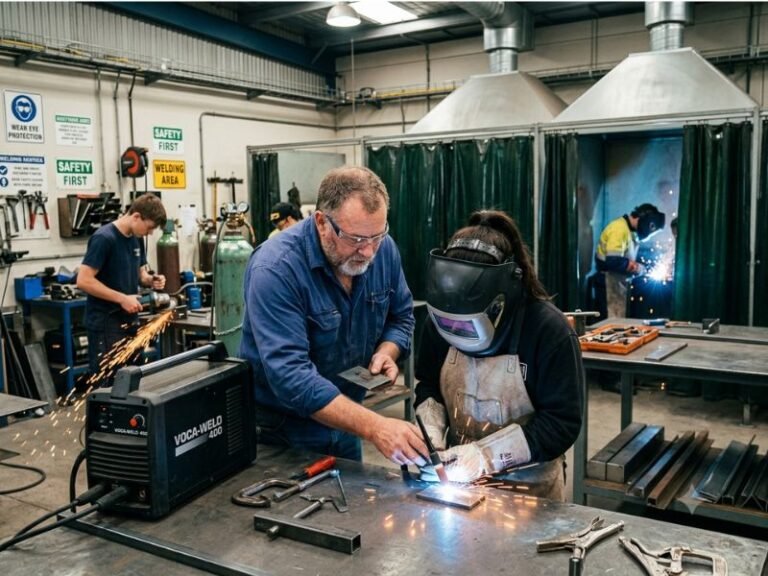
An apprenticeship combines classroom instruction with paid on-the-job training under the guidance of experienced welders. This is an invaluable path, as it provides real-world experience and allows you to earn while you learn. Many aerospace manufacturers offer their own apprenticeship programs.
Benefits of Apprenticeships:
- Practical Experience: Hands-on work on actual aerospace components.
- Mentorship: Learning directly from seasoned professionals.
- Company-Specific Skills: Training tailored to the employer’s specific processes, materials, and quality systems.
- Guaranteed Employment: Often leads to full-time employment upon successful completion.
Finding an aerospace apprenticeship can be competitive, but the experience gained is often unparalleled. I believe this is one of the most effective ways to truly master the craft.
Key Skills and Certifications for Aerospace Welders
Beyond mastering specific welding processes, a successful aerospace welder needs a comprehensive skill set and the right certifications to prove their proficiency. These elements are non-negotiable in an industry where safety and quality are paramount.
Fundamental Welding Skills
Before specializing, a strong foundation in general welding principles is essential. This includes:
- Blueprint Reading: The ability to accurately interpret complex engineering drawings, symbols, and specifications.
- Metallurgy Basics: Understanding how different metals behave under heat and how welding affects their properties.
- Joint Preparation: Precision in cutting, grinding, and fitting components to exact tolerances.
- Welding Safety: Thorough knowledge of personal protective equipment (PPE), ventilation, and hazardous material handling.
- Troubleshooting: Identifying and correcting common welding defects like porosity, lack of fusion, and distortion.
I always emphasize that these foundational skills are the bedrock upon which all advanced aerospace welding techniques are built.
Advanced Aerospace Welding Skills
Once the basics are solid, aerospace welders must develop specialized skills:
- Precision GTAW Techniques: Mastering pulse welding, hot wire TIG, and orbital welding for consistent, high-quality welds on thin-gauge materials and complex geometries.
- Exotic Material Handling: Proficiency in welding titanium, nickel alloys, and aluminum, including understanding their unique shielding gas requirements and thermal management.
- Purging Techniques: Expertise in creating inert environments for reactive metals, often involving complex back purging and gas flow control.
- Fixture and Tooling Setup: Skill in setting up and using specialized fixtures to maintain alignment and control distortion.
- Visual Inspection: The ability to perform thorough self-inspection of welds to identify potential defects before formal NDT.
- Documentation and Traceability: Understanding the critical importance of documenting every aspect of the welding process for traceability and quality assurance.
Industry Certifications
Certifications are crucial for demonstrating competence and are often required by employers. The most recognized certification for aerospace welding in the United States is from the American Welding Society (AWS).
AWS D17.1: Specification for Fusion Welding for Aerospace Applications
This is the primary certification for aerospace welders. It covers the requirements for fusion welding of aerospace hardware using various processes, materials, and joint types. Obtaining this certification demonstrates that a welder has met stringent industry standards. I consider this certification to be a gold standard for anyone serious about an aerospace welding career.
Other Relevant Certifications:
- AWS Certified Welder (CW): While broader, specific CW certifications for GTAW on certain materials can be a good starting point.
- Company-Specific Certifications: Many large aerospace manufacturers (e.g., Boeing, Lockheed Martin, SpaceX) have their own internal qualification tests and certifications that welders must pass to work on their specific products. These often build upon AWS D17.1 principles but are tailored to their unique processes and materials.
- NADCAP Accreditation: While not a welder certification, understanding NADCAP (National Aerospace and Defense Contractors Accreditation Program) requirements is vital. Companies that perform special processes like welding for aerospace must be NADCAP accredited, meaning their procedures and personnel (including welders) meet rigorous standards.
Maintaining certifications often requires periodic re-testing or proof of continuous work in the certified process, emphasizing the need for ongoing skill development.
The Career Path of an Aerospace Welder
A career in aerospace welding is often characterized by continuous learning, specialization, and opportunities for advancement. It’s a demanding field but one that offers significant rewards for those who commit to excellence.
Entry-Level Positions
New graduates from aerospace welding training programs or those with foundational certifications typically start in entry-level positions. These roles might involve:
- Welding non-critical components or sub-assemblies.
- Performing repetitive welds under close supervision.
- Assisting senior welders with setup and preparation.
- Learning company-specific procedures and quality systems.
During this phase, I encourage welders to absorb as much knowledge as possible, ask questions, and focus on consistency and precision.
Mid-Level and Senior Roles
As experience grows, welders can advance to more complex and critical tasks. Mid-level welders might work on:
- Primary structural components.
- Engine parts or hydraulic systems.
- Repair and overhaul of existing components.
- Mentoring junior welders.
Senior aerospace welders are highly skilled artisans often responsible for the most challenging welds, developing new procedures, and acting as subject matter experts. They may also be involved in:
- Research and development of new welding techniques.
- Quality assurance and inspection roles.
- Training and certification of other welders.
- Supervisory or management positions within a welding department.
Specialization and Niche Areas
The aerospace industry is vast, offering opportunities for specialization. Some welders might focus exclusively on:
- Rocket Propulsion Systems: Working with exotic alloys for combustion chambers and nozzles.
- Aircraft Structural Repair: Performing highly specialized repairs on damaged aircraft components.
- Spacecraft Fabrication: Welding components for satellites, probes, and manned spacecraft.
- Additive Manufacturing (3D Printing): While not traditional welding, understanding the principles of metal additive manufacturing can open doors to related roles.
Geographic Considerations
Aerospace manufacturing hubs are concentrated in specific regions. In the United States, major areas include:
- Pacific Northwest (e.g., Seattle, WA): Home to Boeing and numerous suppliers.
- Southern California (e.g., Los Angeles, San Diego): A long history of aerospace and defense, with companies like Northrop Grumman, SpaceX, and various smaller firms.
- Texas (e.g., Houston, Dallas-Fort Worth): Major players like Lockheed Martin, Bell Helicopter, and NASA facilities.
- Florida (e.g., Cape Canaveral, Orlando): Space launch industry, with companies like SpaceX, Blue Origin, and United Launch Alliance.
- Midwest (e.g., Wichita, KS; St. Louis, MO): Aircraft manufacturing and defense contractors.
- Northeast (e.g., Connecticut): Engine manufacturers like Pratt & Whitney.
Considering these geographic concentrations can be important when planning your training and job search. I often advise students to explore opportunities in these regions for the best career prospects.
Challenges and Rewards of Aerospace Welding
Like any highly skilled profession, aerospace welding comes with its unique set of challenges and equally significant rewards. Understanding these can help you determine if this career path is the right fit for you.
Challenges
- High Pressure and Zero Tolerance for Error: The stakes are incredibly high. A single mistake can have severe consequences, leading to intense pressure to perform perfectly every time.
- Continuous Learning: The industry is constantly evolving with new materials, processes, and standards. Welders must commit to lifelong learning and adapting to new technologies.
- Physical Demands: Welding can be physically demanding, requiring precision, steady hands, and often working in confined or awkward positions.
- Rigorous Inspections: Every weld is scrutinized, and passing stringent NDT is a constant challenge. This requires meticulous attention to detail and a deep understanding of defect mechanisms.
- Strict Documentation: Aerospace welding involves extensive documentation and traceability requirements, which can be time-consuming but essential for quality assurance.
- Repetitive Tasks: While some welds are complex, others can be highly repetitive, requiring sustained focus and consistency over long periods.
Rewards
- High Earning Potential: Aerospace welders are among the highest-paid skilled trades professionals due to their specialized skills and the critical nature of their work.
- Job Security: The demand for skilled aerospace welders remains consistently high, offering excellent job security in a vital industry.
- Sense of Accomplishment: Knowing that your work contributes directly to the safety and success of advanced aircraft and spacecraft provides an immense sense of pride and accomplishment.
- Working with Cutting-Edge Technology: Being at the forefront of manufacturing, working with advanced materials and state-of-the-art equipment.
- Professional Respect: Aerospace welders are highly respected for their precision, skill, and dedication to quality.
- Opportunities for Specialization and Advancement: The field offers numerous paths for growth, from becoming a master welder to moving into supervisory, engineering, or quality control roles.
I find that the satisfaction of seeing an aircraft take flight or a rocket launch, knowing your hands played a direct role in its construction, is a powerful motivator for many in this field.
Preparing for Your Aerospace Welding Career
Beyond formal training, there are several steps you can take to enhance your readiness and increase your chances of success in aerospace welding.
Develop a Strong Work Ethic and Attention to Detail
Aerospace welding is not for the faint of heart or those who cut corners. Cultivate a meticulous approach to every task, understanding that even the smallest detail can have significant implications. Punctuality, reliability, and a commitment to continuous improvement are highly valued.
Practice, Practice, Practice
Welding is a skill that improves with repetition. Spend as much time as possible in the booth, practicing different joint configurations, materials, and positions. Focus on consistency, bead appearance, and penetration. I always tell my students that muscle memory and a steady hand are developed through relentless practice.
Network Within the Industry
Attend industry trade shows, join professional organizations like the AWS, and connect with experienced welders and recruiters. Networking can open doors to job opportunities, mentorships, and valuable insights into the industry’s evolving needs.
Stay Updated on Technology and Standards
The aerospace industry is dynamic. Regularly review new welding techniques, material advancements, and updates to industry standards (e.g., AWS D17.1 revisions). Subscribing to industry publications and attending workshops can help you stay current.
Consider Related Skills
While welding is central, having complementary skills can make you a more valuable candidate. These might include:
- Machining: Basic understanding of milling, turning, and grinding.
- Robotics and Automation: As automated welding becomes more prevalent, familiarity with robotic systems can be an asset.
- CAD/CAM Software: Basic knowledge of computer-aided design and manufacturing can be helpful for understanding complex parts.
- Lean Manufacturing Principles: Understanding efficiency and waste reduction in production processes.
By proactively developing these attributes and skills, you can position yourself for a highly successful and fulfilling career in aerospace welding.
FAQ About Aerospace Welding Training
What is the typical duration of aerospace welding training?
The duration varies significantly. Vocational programs can range from 6 months to 2 years for an associate’s degree. Specialized aerospace welding programs might be shorter, from a few weeks to several months, focusing intensely on specific certifications. Apprenticeships typically last 3-5 years, combining classroom learning with extensive on-the-job training.
Do I need prior welding experience to enroll in aerospace welding training?
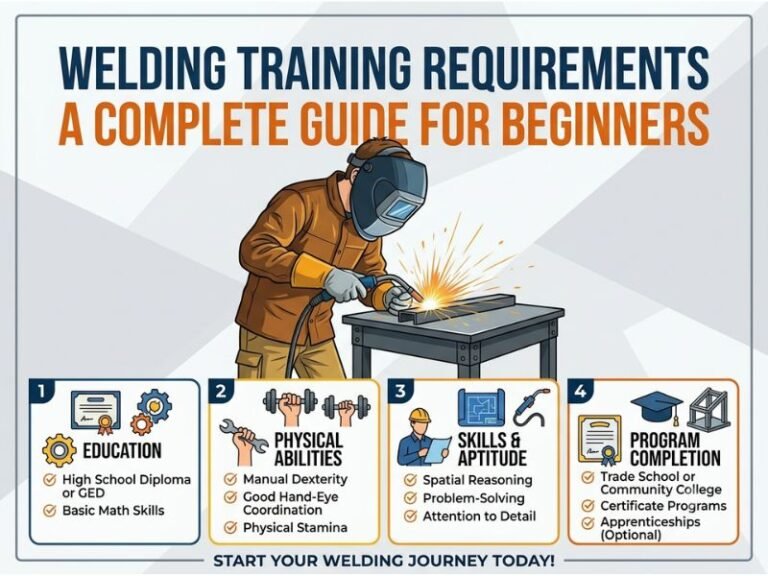
While some specialized aerospace programs might require foundational welding skills, many vocational schools and community colleges offer entry-level programs that assume no prior experience. These programs start with basic welding principles before progressing to advanced aerospace-specific techniques.
What are the most important certifications for an aerospace welder?
The most important certification in the United States is typically the AWS D17.1, “Specification for Fusion Welding for Aerospace Applications.” Additionally, many aerospace companies require their welders to pass internal qualification tests specific to their products, materials, and procedures.
What materials will I learn to weld in aerospace training?
Aerospace welding training will focus heavily on exotic and advanced alloys, including various grades of titanium, nickel-based superalloys (like Inconel and Hastelloy), aluminum alloys, and stainless steels. You will learn the specific techniques and precautions required for each material.
Is aerospace welding a dangerous job?
Like all welding, aerospace welding involves inherent risks from heat, fumes, UV radiation, and electrical hazards. However, with proper training, adherence to strict safety protocols, and the use of appropriate personal protective equipment (PPE), the risks are significantly mitigated. Aerospace facilities often have some of the highest safety standards in the industry.
What is the salary potential for an aerospace welder?
Aerospace welders are among the highest-paid skilled trades professionals. Entry-level salaries can vary, but experienced and certified aerospace welders, especially those working with specialized materials or in critical applications, can earn well above the national average for welders. Factors like location, specific industry segment (e.g., commercial aircraft vs. space exploration), and years of experience heavily influence earning potential.
Can I transition from other welding fields to aerospace welding?
Yes, it is possible. Welders with strong foundational skills in processes like GTAW (TIG) can transition into aerospace. However, they will need to undergo specialized aerospace welding training to learn about the unique materials, stringent quality standards, and specific certifications required by the industry. This often involves taking advanced courses or pursuing an aerospace-specific apprenticeship.
Conclusion
Embarking on a career in aerospace welding is a commitment to precision, excellence, and continuous learning. It’s a field that demands the highest level of skill and dedication, but in return, it offers immense satisfaction and a vital role in shaping the future of air and space travel. From mastering exotic materials and advanced welding processes like GTAW and EBW to adhering to rigorous quality standards, every aspect of aerospace welding training is designed to cultivate a craftsman capable of contributing to some of the most complex and critical machines ever built.
By choosing the right training program, diligently practicing your craft, and pursuing the necessary certifications, you can forge a path to a rewarding and secure career. The journey to becoming an aerospace welder is challenging, but for those who embrace its demands, the opportunity to contribute to humanity’s reach into the skies and beyond is an unparalleled reward.