Oxy Acetylene Welding Training: Skills, Costs, and Career Guide
Oxy Acetylene Welding training teaches students how to join, cut, heat, bend, and braze metal using a controlled flame produced by oxygen and acetylene. The process is commonly included in welding, fabrication, automotive repair, HVAC, plumbing, and industrial maintenance programs throughout the United States.
Although electric arc processes dominate many modern production environments, oxy-acetylene remains valuable because it develops precise heat control and teaches students how metal responds as its temperature changes. The equipment can also perform several tasks that would otherwise require separate machines.
Professional instruction involves more than lighting a torch and melting metal. Students must learn cylinder handling, regulator operation, leak testing, flame adjustment, filler-metal selection, joint preparation, distortion control, shutdown procedures, and emergency response.
In this guide, I will explain what a quality course should cover, how long training may take, what it can cost, how qualifications work, and how to select a suitable program in the United States.
What Is Oxy-Acetylene Welding?
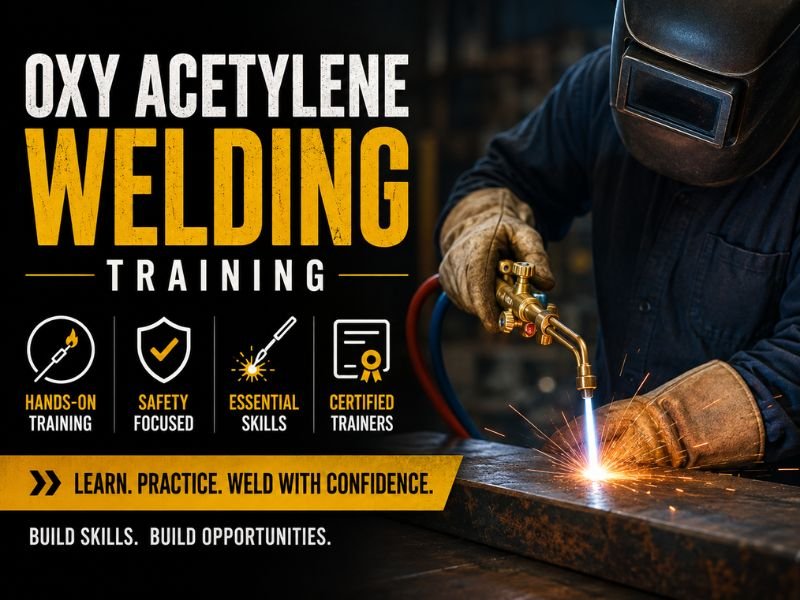
Oxy-acetylene welding is an oxyfuel gas welding process that uses the combustion of oxygen and acetylene to produce a concentrated, high-temperature flame. The flame heats the edges of the base metal until a molten weld pool forms. A separate filler rod may then be added to complete the joint.
The process does not use an electric arc. Heat comes entirely from the torch flame, allowing the welder to control the rate at which the workpiece heats and cools.
An oxy-acetylene system can perform several related operations. By changing the torch attachment, tip, pressure settings, and operating technique, trained workers may use the system for welding, brazing, soldering, heating, straightening, and cutting.
That versatility is one reason many welding schools continue to teach the process. It helps students develop an understanding of heat input, molten metal, joint fit-up, filler addition, and flame chemistry before moving into more specialized work.
Why Learn Oxy-Acetylene Welding?
Oxy-acetylene welding is no longer the primary joining method in many high-volume manufacturing facilities. Processes such as MIG, TIG, resistance welding, and automation are often faster for repetitive production. However, oxy-acetylene skills remain useful in repair, maintenance, restoration, and specialized fabrication.
The process gives the welder direct visual control over the heat source and weld pool. There is no continuously fed wire or automated current adjustment. The student must watch the metal, recognize when it reaches the correct condition, and coordinate the torch with the filler rod.
This develops skills that can transfer to Gas Tungsten Arc Welding, particularly coordination between the heat source and separately added filler material. Oxyfuel instruction also helps students understand preheating, postheating, thermal expansion, and distortion.
The equipment does not require an electrical welding power source. That can be useful for field heating, cutting, and repair work, although the cylinders and related equipment still require careful transportation and storage.
What Does Oxy Acetylene Welding Training Include?
A complete course should combine safety instruction, equipment identification, supervised setup, flame control, welding practice, cutting, heating, brazing, and weld evaluation.
Students should not begin practical torch work until they understand compressed-gas hazards and the purpose of each component. Small mistakes involving oxygen, fuel gas, pressure, contamination, or ignition sources can lead to fire, flashback, equipment damage, or serious injury.
The most effective programs use demonstrations followed by closely supervised practice. Students should learn the correct procedure for the specific equipment in the training facility rather than copying a generic online sequence.
Safety and Personal Protective Equipment
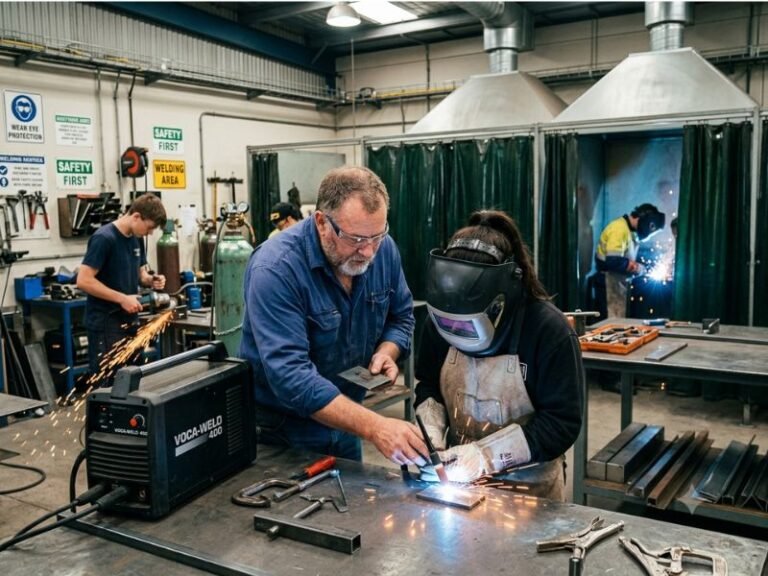
Oxy-acetylene equipment involves fuel gas, oxygen under high pressure, open flame, sparks, hot metal, fumes, and fire hazards. Safety must therefore be the first part of training rather than a short discussion added after equipment setup.
Students normally wear safety glasses beneath properly shaded welding goggles or a suitable welding face shield. Gloves, flame-resistant clothing, and protective footwear help reduce exposure to heat, sparks, and hot metal. Additional face, hearing, or respiratory protection may be required for cutting, grinding, coated materials, or poorly ventilated work.
The work area must be free from uncontrolled combustible materials. Fire-resistant screens may be needed to protect nearby people, while suitable extinguishing equipment should remain accessible.
Students should also learn that oxygen is not a substitute for compressed air and must never be used to clean clothing, tools, or work surfaces. Oxygen-enriched materials can ignite more easily and burn more aggressively.
Cylinder Storage and Handling
Oxygen and acetylene cylinders contain compressed gases and must be handled according to applicable regulations, equipment instructions, and facility procedures.
Cylinders should be protected from falling, impact, excessive heat, and damage to their valves. When moved, suitable caps and carts should be used where required. Dragging, dropping, or lifting a cylinder by its valve protection can damage critical components.
Acetylene cylinders are generally kept upright during use so the internal material and solvent remain properly contained. If a cylinder has been transported incorrectly, the supplier’s or manufacturer’s instructions should be followed before use.
Oxygen cylinders and fuel-gas cylinders may require separation during storage or an approved protective barrier, depending on the workplace and applicable requirements. A training course should clearly distinguish temporary use arrangements from storage requirements.
Regulators, Hoses, and Torch Components
The regulator reduces high cylinder pressure to a controlled working pressure suitable for the torch and tip. Oxygen and fuel-gas regulators are not interchangeable. Each must be designed, labeled, and maintained for the gas it controls.
A typical system also includes color-coded hoses, a torch handle, mixing chamber, welding tips, check valves, and flashback arrestors. Protective devices help reduce hazards associated with reverse gas flow and flame traveling into the system.
Students should learn how to inspect hoses for burns, cracks, wear, loose fittings, and contamination. Equipment that has been damaged or involved in a flashback should be removed from service and evaluated according to workplace procedures.
Oil, grease, and other petroleum-based substances must be kept away from oxygen equipment. Oxygen can react violently with incompatible contaminants, particularly under pressure.
Leak Testing and Equipment Inspection
Every practical session should begin with equipment inspection. The student checks cylinders, valves, regulators, hoses, fittings, torch components, protective devices, and tip condition before introducing gas into the system.
Connections should be tested using an approved leak-detection method. An open flame must never be used to locate a gas leak.
If a connection leaks, the system should be shut down and corrected before work continues. Tightening fittings while the equipment is pressurized or ignoring a minor leak can create unnecessary risk.
Students should also recognize signs of equipment malfunction, including regulator creep, unusual pressure changes, damaged gauges, popping, backfire, flashback, or excessive tip heating.
Understanding Oxy-Acetylene Flame Types
Flame adjustment is one of the most important practical skills in Oxy Acetylene Welding training. The ratio of oxygen to acetylene changes the flame’s appearance, chemistry, and effect on the workpiece.
Neutral Flame
A neutral flame has an approximately balanced oxygen-to-acetylene mixture at the torch. It normally has a clearly defined inner cone without a visible acetylene feather.
The neutral flame is commonly used for welding mild steel and for many general-purpose operations because it does not intentionally add excess oxygen or carbon to the weld pool.
Students often begin with neutral-flame adjustment because it provides a clear reference point for understanding the other flame conditions.
Carburizing or Reducing Flame
A carburizing flame contains excess acetylene. It generally shows a visible feather extending beyond the inner cone.
This flame can create a reducing atmosphere and may be used for selected materials, brazing operations, or specialized procedures. Excess acetylene is not appropriate for every welding application because it can affect weld chemistry and produce soot.
Students should use this flame only when the procedure, instructor, or manufacturer specifically calls for it.
Oxidizing Flame
An oxidizing flame contains excess oxygen and usually has a shorter, sharper inner cone accompanied by a more pronounced sound.
It may be used for particular copper alloys or other specialized operations, but it is generally unsuitable for ordinary steel welding because excess oxygen can affect the molten metal.
The appropriate flame depends on the base material, filler metal, and procedure. Students should not assume that a hotter or sharper flame automatically produces a better weld.
Torch Lighting and Shutdown Training
Torch operation should be learned directly from a qualified instructor using the manufacturer-approved procedure for the specific equipment.
During training, students learn how to position themselves safely, confirm that the torch valves are closed, open cylinder valves correctly, set working pressures, purge lines when required, ignite the fuel gas with an approved striker, and adjust the flame.
The exact sequence may vary with equipment design and workplace policy. Generic instructions should never override the equipment manufacturer’s guidance.
Shutdown training is equally important. Students must learn how to extinguish the flame, close cylinder valves, relieve system pressure, close torch valves, release regulator adjusting screws, and store the equipment safely.
Leaving a pressurized system unattended or shutting it down incorrectly can create leaks, regulator stress, and fire hazards.
Torch Control and Puddle Development
Oxy-acetylene welding requires coordination between the torch, filler rod, and molten pool. Students must maintain a consistent distance between the inner flame cone and the workpiece without allowing the tip to contact the molten metal.
If the torch is held too close, the tip may overheat or become contaminated. If it is held too far away, heat becomes less concentrated and the joint may not reach the correct welding temperature.
The torch angle affects how heat is distributed. Thicker sections may require greater heat concentration, while thinner sheet requires a softer, more controlled approach to prevent warping or burn-through.
Students first practice forming small, consistent puddles before attempting complete joints. This allows them to recognize the point at which the metal surface changes from heated solid material to a controllable liquid pool.
Filler-Rod Coordination
Filler metal should be compatible with the base material and the intended application. The rod is added to the leading edge of the weld pool while remaining within the protective area of the flame.
The student must coordinate torch movement and filler addition so that the pool remains consistent. Adding too much filler can cool the puddle and create an oversized bead. Adding too little can leave an underfilled joint or insufficient reinforcement.
The filler rod should remain clean. Oil, rust, moisture, paint, or other contaminants may enter the weld and contribute to porosity or inclusions.
Forehand and Backhand Techniques
Training may introduce forehand and backhand welding methods. The selected technique influences heat distribution, travel direction, penetration, and visibility.
The appropriate method depends on material thickness, joint design, instructor guidance, and established procedure. Beginners should avoid switching techniques randomly before developing control with one approved method.
Metal Preparation and Joint Fit-Up
Oxy-acetylene welding is sensitive to contamination and poor fit-up. Before heating begins, students should learn to identify the material, clean the surfaces, remove coatings when appropriate, prepare edges, and secure the components.
Rust, paint, oil, moisture, plating, and unknown coatings can interfere with weld quality or release hazardous fumes. Coated or unidentified materials require a proper hazard evaluation before work begins.
Joint fit-up influences penetration and distortion. Gaps that are too wide may be difficult to bridge, while an overly tight joint may prevent adequate penetration in some applications.
Students may practice butt joints, lap joints, T-joints, edge joints, and corner joints. Thin sheet metal is frequently used because oxy-acetylene offers fine heat control, but it also reveals poor technique quickly through warping and burn-through.
Controlling Heat and Distortion
One of the most valuable skills developed during oxyfuel instruction is heat management.
As metal heats, it expands. As it cools, it contracts. Uneven heating and cooling can pull a welded assembly out of alignment, creating angular distortion, buckling, or dimensional error.
Students learn to manage distortion through joint preparation, tack-weld placement, clamping, balanced welding sequences, controlled travel speed, and limited heat input.
A larger flame or slower travel does not always improve fusion. Excessive heat may enlarge the heat-affected area, weaken thin edges, or create severe warping.
This understanding is useful beyond gas welding. Thermal distortion also affects arc welding, brazing, cutting, and metal-straightening operations.
Oxyfuel Cutting, Heating, and Brazing
Many training programs teach related torch operations because the same basic equipment can support several metalworking tasks.
Oxyfuel Cutting
Oxyfuel cutting uses a preheat flame to bring steel to an appropriate temperature. A separate oxygen stream then supports rapid oxidation and removes the resulting material from the cut.
Cutting performance depends on tip selection, gas pressure, preheat adjustment, torch height, travel speed, and material condition. Students may practice straight cuts, bevels, piercing, and removing defective metal.
Not every metal can be cut effectively through the same oxyfuel reaction. The process is mainly associated with suitable ferrous materials.
Heating and Straightening
Heating tips can apply broader heat for bending, loosening components, preheating, or controlled straightening.
This work requires careful planning because heating a pressurized, sealed, coated, or unknown component can create an explosion or toxic-exposure hazard. Students must be taught to identify the part and understand the consequences before applying heat.
Brazing
Brazing joins components using a filler metal that melts below the melting temperature of the base materials. The base metal is heated but not melted in the same way as fusion welding.
Brazing is used in HVAC, plumbing, repair, fabrication, and selected mechanical applications. Joint cleanliness, fit-up, filler selection, flux use, and temperature control are critical.
Students should understand that welding and brazing are different joining methods and may have different qualification, code, and service requirements.
Common Oxy-Acetylene Welding Problems
Training should teach students to evaluate the cause of a problem rather than hiding it beneath additional filler metal.
Porosity may result from dirty material, contaminated filler rod, incorrect flame adjustment, or poor technique. Lack of fusion may occur when the joint is not heated evenly or the student moves too quickly.
Burn-through is common on thin sheet when the flame is too large, travel is too slow, or the joint gap is excessive. Excessive reinforcement may result from adding too much filler or failing to maintain a suitable puddle.
Oxidation can appear when the flame chemistry is inappropriate or the hot metal is exposed incorrectly. Distortion develops when heat is applied unevenly or allowed to build in a small area.
A useful instructor observes the student’s torch position, flame setting, puddle control, and filler timing before recommending corrections.
Oxy Acetylene Welding Training Options in the United States
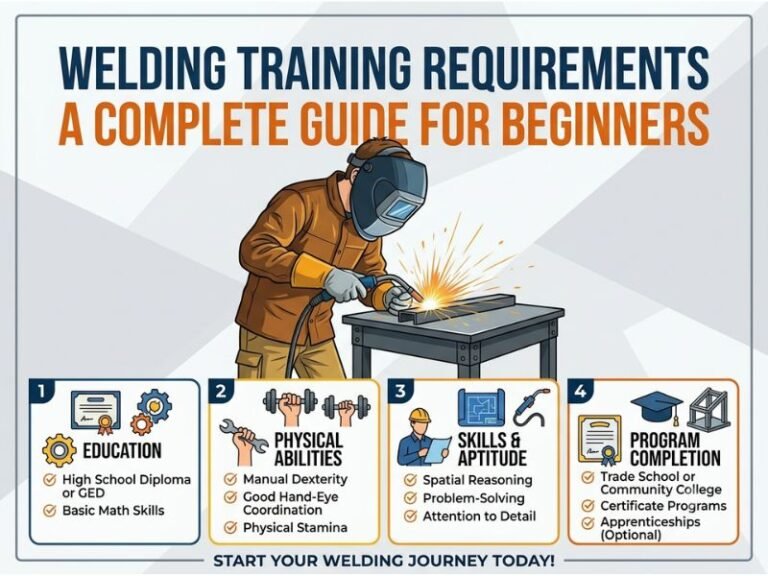
Students can learn oxyfuel processes through trade schools, technical institutes, community colleges, apprenticeships, union programs, employer training, and short continuing-education courses.
Comprehensive welding programs often teach oxy-acetylene alongside SMAW, GMAW, FCAW, GTAW, plasma cutting, blueprint reading, and fabrication. This option can provide broader preparation for entry-level employment.
Short courses may focus on torch safety, welding, cutting, brazing, or automotive sheet-metal work. They can benefit hobbyists and maintenance workers, but limited practice time may not produce job-ready skill.
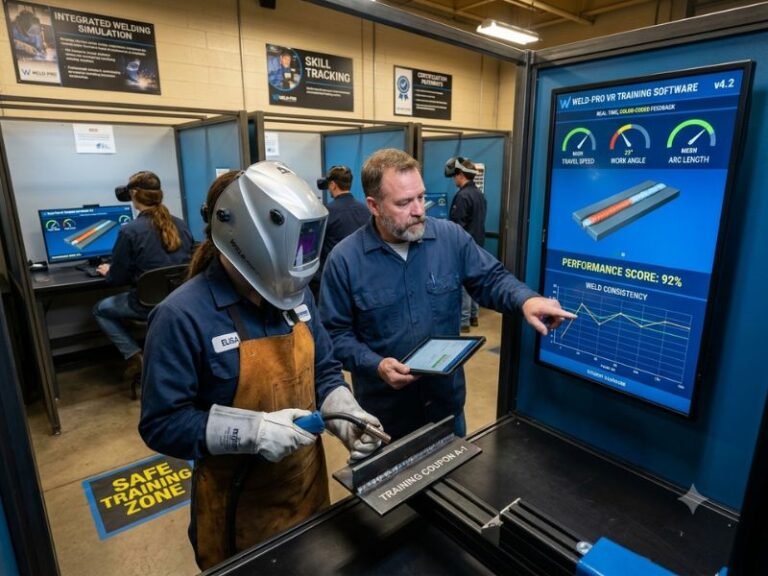
Online courses can explain safety concepts, flame theory, equipment components, and terminology. They cannot provide supervised cylinder handling, leak testing, flame adjustment, or physical correction. Hands-on instruction remains necessary.
How Long Does Oxy-Acetylene Training Take?
An introductory workshop may last one or two days, while a process-specific course may continue for several weeks. Comprehensive welding programs may include oxyfuel training as one module within a program lasting several months.
The time required depends on the student’s goals. Learning to set up equipment and produce basic beads takes less time than developing consistent sheet-metal welds, cutting accuracy, brazing ability, and workplace-level safety habits.
Progress also depends on practice frequency, class size, instructor access, material variety, and available booth time.
I recommend comparing programs by supervised practical hours and demonstrated competencies rather than choosing the shortest advertised course.
How Much Does Oxy-Acetylene Training Cost?
There is no standard national price. Cost depends on the school, program length, location, credential, included materials, and equipment.
Beyond tuition, students may pay registration or laboratory fees, PPE expenses, books, filler rods, practice metal, fuel-gas charges, cutting consumables, transportation, and testing fees.
Before enrolling, request a written cost estimate. Confirm whether the school supplies goggles, gloves, torches, cylinders, filler material, practice plate, and open-lab access.
Eligible programs and students may qualify for financial aid, workforce funding, veterans’ benefits, scholarships, employer assistance, or payment plans.
Course Certificates and Welding Qualifications
Completing a course does not automatically qualify a person for every oxyfuel welding job.
A completion certificate normally confirms attendance and successful completion of the school’s curriculum. A welder performance qualification demonstrates that a welder produced an acceptable test joint using a defined procedure.
Qualification variables may include the process, base metal, filler metal, thickness, joint design, welding position, and applicable code. Employers may require an internal test even when an applicant has previous training.
Oxyfuel cutting, brazing, plumbing, HVAC, aviation, or pressure-related work may involve separate standards, licenses, credentials, or employer requirements.
Students should ask exactly what credential a course provides and whether practical testing is included.
How to Choose a Training Program
Start by defining the skill you need. A general welding program may be appropriate for a career beginner, while a short brazing or cutting class may better serve an experienced technician.
Review the curriculum and confirm that it includes compressed-gas safety, equipment inspection, leak testing, flame adjustment, welding, cutting, and emergency shutdown procedures.
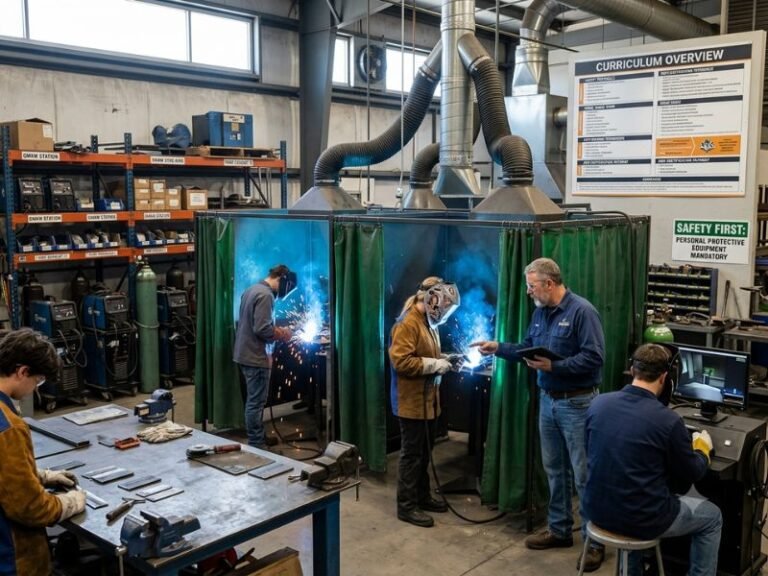
Compare class size and practical hours. Each student should receive enough direct equipment time and instructor observation to develop safe habits.
I recommend visiting the facility before enrolling. Examine cylinder storage, ventilation, fire controls, equipment condition, and general organization. Ask instructors how they handle equipment malfunctions and emergency drills.
Avoid programs that promise universal certification, guaranteed employment, or professional skill after only a few hours of practice.
Career Applications and Related Opportunities
Oxy-acetylene skills can support work in fabrication, industrial maintenance, automotive restoration, HVAC, plumbing, metal repair, construction, agriculture, shipyards, and mechanical service.
However, many employers do not hire someone solely as an “oxy-acetylene welder.” Torch skills are commonly one part of a broader position that may also require arc welding, brazing, cutting, fitting, blueprint reading, or equipment repair.
A maintenance technician may use a torch for heating and removal. An automotive restorer may use controlled heat on thin sheet. A fabricator may perform brazing, cutting, and occasional repair welding. An HVAC technician may use related torch skills for brazed piping connections.
Career options generally improve when oxyfuel ability is combined with MIG, TIG, stick welding, fabrication, measurement, and mechanical troubleshooting.
Frequently Asked Questions
Is Oxy-Acetylene Welding Difficult to Learn?
The basic concept is straightforward, but controlling the flame, puddle, filler rod, and heat at the same time requires practice. Thin material can be particularly challenging because it heats and distorts quickly.
Is Oxy-Acetylene Welding Still Used?
Yes. It remains useful for repair welding, cutting, brazing, heating, straightening, restoration, and education. It is less common as a primary high-volume production welding method.
Can I Learn Oxy-Acetylene Welding Online?
Online instruction can explain equipment and theory, but safe cylinder handling, leak testing, torch operation, and welding technique require supervised practical training.
Is Gas Welding the Same as Oxy-Acetylene Welding?
Oxy-acetylene is a type of gas welding. Gas welding is a broader category that may use different fuel gases, although acetylene is commonly selected when fusion welding temperatures are required.
Do I Need Certification to Use an Oxy-Acetylene Torch?
Requirements depend on the employer, application, location, and industry. Workplace training and demonstrated competence are essential, while some regulated work may require additional qualifications or licenses.
What PPE Is Required?
Typical protection includes safety glasses, properly shaded welding goggles or a suitable face shield, gloves, flame-resistant clothing, and protective footwear. Additional protection depends on the task and hazard assessment.
Can Oxy-Acetylene Equipment Cut Every Metal?
No. Traditional oxyfuel cutting relies on a chemical oxidation process that works best with suitable ferrous materials. Other metals may require plasma, mechanical, or alternative cutting methods.
Conclusion
Oxy Acetylene Welding training provides a practical foundation in torch safety, flame control, heat management, filler-metal coordination, cutting, brazing, and metal behavior.
A strong course should emphasize compressed-gas safety and supervised equipment handling before production skills. It should also provide enough practical time for students to set up the system, adjust flames, control weld pools, recognize defects, and complete shutdown procedures correctly.
I recommend comparing programs by instructor experience, practical hours, safety standards, equipment condition, total cost, and the exact credential offered. With structured instruction and continued practice, oxy-acetylene skills can support work in welding, fabrication, maintenance, repair, HVAC, automotive restoration, and other metalworking fields.