Welding Training Classes: Courses, Skills & Career Guide
Welding is one of the most important skilled trades used across industries such as construction, manufacturing, automotive, shipbuilding, energy, and metal fabrication. As demand for qualified welders continues to grow, proper welding education has become essential for individuals who want to develop professional skills and build a successful career.
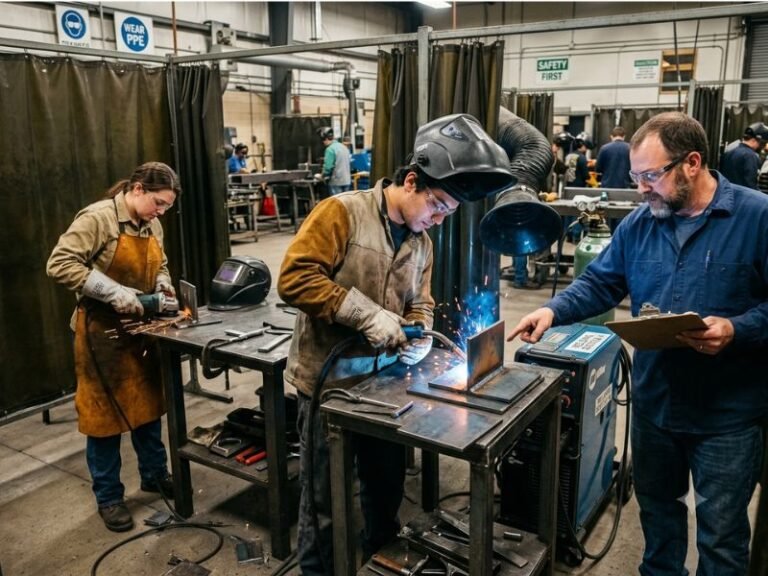
Welding training classes provide a structured way to learn welding techniques, equipment operation, safety procedures, and industry standards. These classes combine theoretical lessons with practical workshop experience, allowing students to understand welding concepts and apply them in real working environments.
For beginners, welding classes provide a strong foundation by teaching basic welding processes, machine handling, material preparation, and workplace safety. Experienced welders can also benefit from advanced classes that focus on specialized techniques, new technologies, and certification preparation.
Choosing the right welding training class is important because the quality of instruction and practical experience can directly affect skill development. Factors such as instructor experience, training equipment, course curriculum, hands-on practice hours, and certification support should be considered before enrolling.
In this guide, we will explore different types of welding training classes, what students learn, available welding processes, training costs, duration, certification options, and career opportunities. Whether you are starting from the beginning or improving existing welding skills, professional training classes can help you become more confident and prepared for the welding industry.
What Are Welding Training Classes?
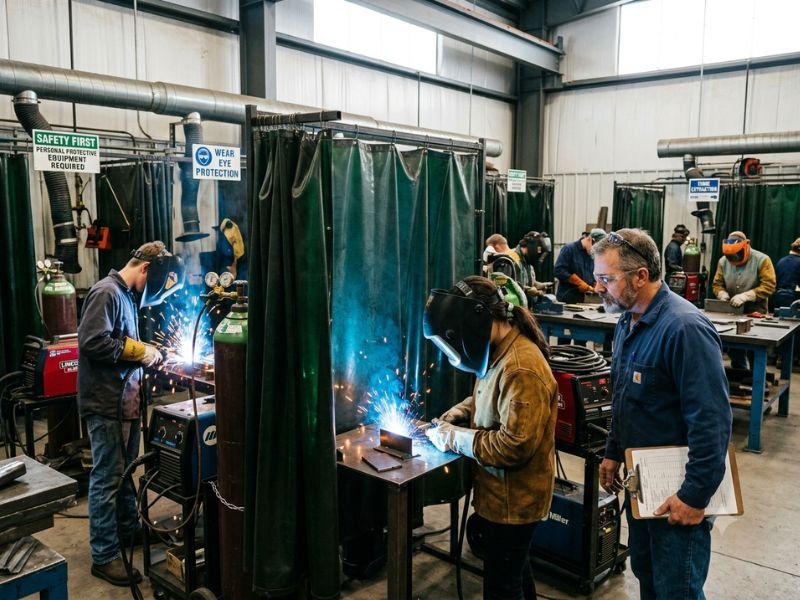
Welding training classes are structured educational programs designed to teach individuals the knowledge and practical skills required for professional welding work. These classes help students understand welding fundamentals, operate equipment correctly, follow safety procedures, and develop the techniques needed for producing strong and reliable welds.
Unlike informal learning methods, welding training classes follow an organized curriculum that combines classroom instruction with hands-on practice. Students learn the theory behind welding processes and then apply that knowledge in a workshop environment.
A typical welding training class covers important topics such as welding principles, metal properties, machine settings, joint preparation, welding positions, and quality control. Practical sessions allow students to work with real welding machines and materials under the guidance of experienced instructors.
Welding classes are available for different skill levels. Beginner classes are designed for people with little or no welding experience, while advanced classes focus on specialized techniques and industrial applications.
Many training programs also prepare students for professional welding certifications. Certification-focused classes help learners understand testing requirements, improve welding consistency, and meet industry standards.
Welding training classes are offered by vocational schools, technical institutes, private training centers, and industrial organizations. Some programs focus on specific welding processes, while others provide complete training covering multiple welding methods.
The main purpose of welding training classes is to develop skilled professionals who can perform welding tasks safely, efficiently, and accurately. By combining technical education with practical experience, these programs help students gain the confidence and abilities needed for welding careers.
Why Are Welding Training Classes Important?
Welding training classes are important because welding is a technical skill that requires proper knowledge, practice, and safety awareness. Without proper training, welders may struggle with equipment operation, weld quality, and workplace safety.
One of the biggest advantages of professional welding classes is learning correct techniques from experienced instructors. Trainers can demonstrate proper methods, explain welding principles, and provide feedback that helps students improve faster.
Proper training also reduces common welding mistakes. Beginners often face problems such as poor weld penetration, incorrect machine settings, uneven welds, and improper material preparation. Training classes help students understand how to prevent these issues.
Safety education is another major reason why welding classes are valuable. Welding involves risks such as intense heat, sparks, fumes, and electrical hazards. Professional classes teach students how to use protective equipment, operate machines safely, and follow workplace safety procedures.
Access to professional equipment is also an important benefit. Many individuals cannot practice with industrial welding machines on their own. Training classes provide workshops where students can gain experience using real tools and equipment.
Welding training also improves career opportunities. Employers often prefer candidates who have completed formal training because they are more likely to understand industry requirements and perform tasks correctly.
For experienced welders, advanced training classes provide opportunities to improve existing skills, learn new welding technologies, and prepare for certifications.
Overall, welding training classes provide the foundation needed to become a skilled and confident welding professional. They combine knowledge, practice, and safety training to prepare students for real-world welding challenges.
Types of Welding Training Classes
Welding training classes are available in different formats to meet the needs of beginners, experienced welders, and industry professionals. Each type of class focuses on specific skill levels, career goals, and welding applications.
Choosing the right type of welding class helps students receive training that matches their current abilities and future career plans.
Beginner Welding Classes
Beginner welding classes are designed for individuals who have little or no previous welding experience. These programs introduce students to the basic concepts of welding and help them develop essential skills.
Students learn about welding safety, equipment handling, machine setup, and basic welding techniques. Practical exercises usually include simple joints, material preparation, and basic fabrication tasks.
These classes are ideal for people who want to start a welding career or learn welding as a new skill. They provide the foundation needed before moving into advanced training programs.
Advanced Welding Classes
Advanced welding classes are designed for students who already understand basic welding techniques and want to improve their professional abilities.
These programs focus on complex welding methods, specialized materials, difficult welding positions, and industrial applications.
Students may learn advanced fabrication techniques, precision welding, pipe welding methods, and quality improvement practices.
Advanced classes help experienced welders increase their skills and qualify for higher-level job opportunities.
Certification Welding Classes
Certification welding classes focus on preparing students for professional welding qualifications.
These classes teach students about certification requirements, welding standards, testing procedures, and practical performance expectations.
Students practice welding techniques similar to official certification tests and receive guidance from instructors to improve their results.
Certification-focused training can help welders increase their employment opportunities and professional credibility.
Specialized Welding Classes
Some welding training programs focus on specific industries or advanced welding applications.
Examples include pipe welding, underwater welding, robotic welding, and aerospace welding classes.
These programs usually require previous welding knowledge and focus on specialized equipment, advanced techniques, and industry-specific requirements.
Classroom Learning in Welding Training Classes
Although welding is a hands-on profession, classroom learning plays an important role in developing complete welding knowledge. Theory lessons help students understand why certain welding techniques work and how different factors affect weld quality.
A combination of classroom education and practical training creates better-prepared welding professionals.
Welding Fundamentals
Students learn the basic principles behind welding, including how heat, pressure, and materials interact during the welding process.
Understanding these fundamentals helps students make better decisions when selecting welding methods and adjusting equipment settings.
Metal Properties and Materials
Welding classes teach students about different metals and how they react during welding.
Topics may include steel, stainless steel, aluminum, and other common welding materials.
Understanding material properties helps welders choose suitable techniques and avoid problems such as cracking or distortion.
Welding Symbols and Blueprint Reading
Many professional welding jobs require the ability to understand technical drawings and welding symbols.
Classroom lessons teach students how to read blueprints, identify welding requirements, and understand project specifications.
This knowledge is especially important in construction, manufacturing, and industrial fabrication.
Welding Procedures and Standards
Students learn about welding procedures, quality requirements, and industry standards.
These lessons help welders understand how professional projects are completed and why following approved procedures is important.
Safety Theory
Before entering the workshop, students learn important safety concepts.
Lessons cover protective equipment, workplace hazards, ventilation requirements, and safe equipment operation.
This theoretical knowledge helps students work more safely during practical training sessions.
Hands-On Practice in Welding Training Classes
Hands-on practice is one of the most important parts of welding training classes because welding skills are developed through experience. While classroom lessons provide technical knowledge, practical sessions help students apply that knowledge using real equipment and materials.
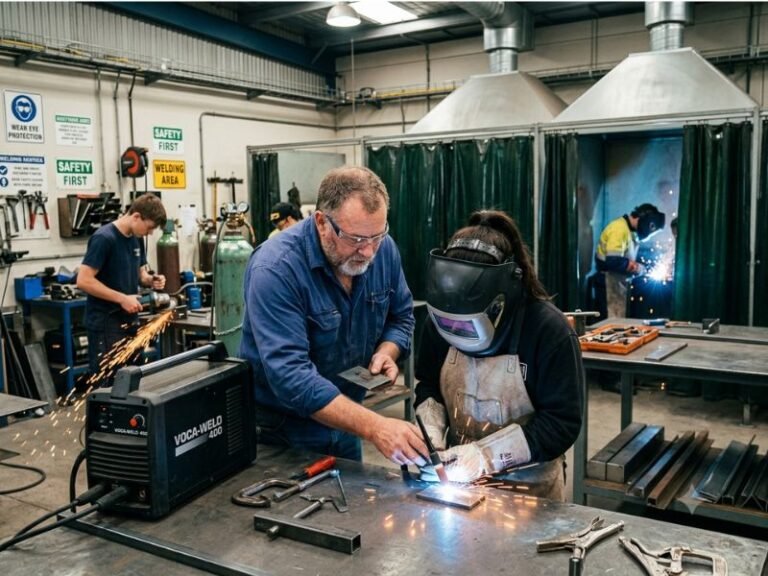
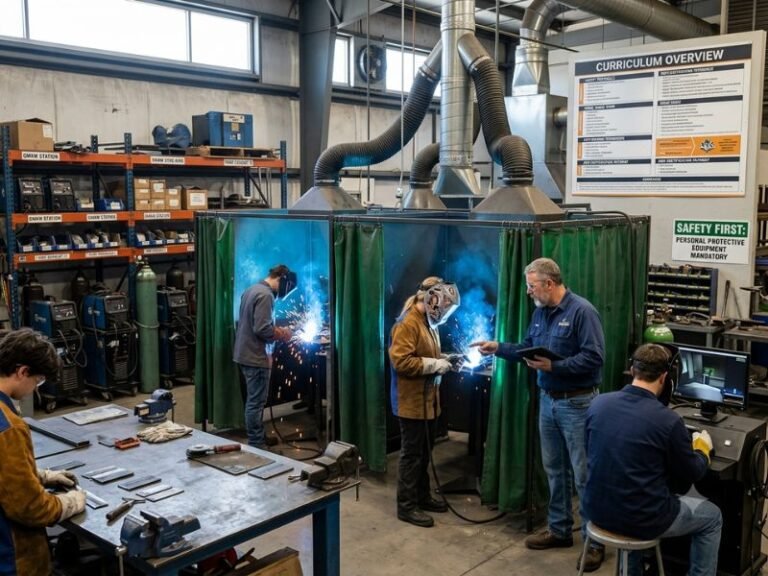
A professional welding class provides a workshop environment where students can practice different techniques under the supervision of experienced instructors.
During practical training, students learn how to set up welding machines, adjust settings, prepare materials, and perform different welding operations. Regular practice helps improve hand control, accuracy, and consistency.
Students usually begin with basic exercises and gradually move to more complex projects. They practice creating different types of joints, controlling welding speed, maintaining proper angles, and producing quality welds.
Instructor feedback is an important part of practical learning. Trainers observe student performance, identify mistakes, and provide guidance to improve welding techniques. This personalized feedback helps students develop better habits and avoid common welding problems.
Hands-on classes also teach students how to work with different welding positions, including flat, horizontal, vertical, and overhead welding. Learning these positions prepares welders for various workplace requirements.
Many welding training classes include real fabrication projects where students apply multiple skills together. These projects help learners understand how welding is performed in professional environments.
Practical training also improves confidence. Students who spend more time working with welding equipment become more comfortable handling tools and solving common welding challenges.
By combining classroom knowledge with hands-on experience, welding training classes prepare students to perform professional welding tasks safely and effectively.
Welding Processes Taught in Training Classes
Welding training classes teach different welding processes because each method has unique applications, advantages, and requirements. Learning multiple welding processes allows students to become more versatile and increases their career opportunities.
The most common welding methods taught in professional training programs include MIG, TIG, Stick, and Flux-Cored welding.
MIG Welding Classes
MIG welding, also known as Gas Metal Arc Welding (GMAW), is one of the most popular welding processes taught in training programs.
Students learn how to operate MIG welding machines, select proper welding wire, adjust voltage and wire speed settings, and create strong welds on different materials.
MIG classes focus on developing proper torch control, welding speed, and technique consistency.
Because MIG welding is widely used in manufacturing, automotive repair, and fabrication industries, it is often included in beginner and intermediate welding programs.
TIG Welding Classes
TIG welding, or Gas Tungsten Arc Welding (GTAW), is a precision welding process that produces clean and high-quality welds.
Training classes teach students how to control the TIG torch, use filler materials, manage shielding gas, and weld materials such as stainless steel and aluminum.
TIG welding requires excellent coordination and attention to detail, making it valuable for industries where accuracy and appearance are important.
Stick Welding Classes
Stick welding, also called Shielded Metal Arc Welding (SMAW), is commonly used in construction, maintenance, and heavy fabrication.
Students learn electrode selection, arc control, machine setup, and welding techniques for different positions.
Stick welding training is important because this process works effectively in outdoor environments and challenging job conditions.
Flux-Cored Welding Classes
Flux-Cored Arc Welding (FCAW) is widely used in industrial construction, shipbuilding, and heavy manufacturing.
Students learn how to operate flux-cored welding equipment, adjust welding parameters, and create strong welds on thicker materials.
This process is valuable for industries where speed, strength, and productivity are important.
Welding Safety Training Classes
Safety training is one of the most important parts of professional welding education. Welding involves high temperatures, electrical equipment, sparks, fumes, and heavy materials, so proper safety knowledge is essential for every welder.
Welding safety training classes teach students how to identify hazards, use protective equipment correctly, and follow workplace safety procedures. These lessons help create safe working habits before students enter professional environments.
Personal Protective Equipment Training
Students learn how to select and use proper protective equipment during welding activities.
Training usually covers welding helmets, safety glasses, gloves, protective jackets, work boots, and other safety gear.
Students also learn why each piece of equipment is important and how it helps prevent injuries from heat, sparks, radiation, and flying particles.
Welding Hazard Awareness
Safety classes teach students about common welding hazards and how to control them.
These hazards may include:
- Welding fumes and gases
- Electrical risks
- Fire hazards
- Hot metal exposure
- Eye and skin damage
Understanding these risks helps welders take proper precautions during their work.
Ventilation and Fume Control
Welding produces fumes that can affect health if proper ventilation is not used.
Students learn about ventilation systems, safe workspace arrangements, and methods for reducing exposure to harmful fumes.
This knowledge is important for maintaining a healthy welding environment.
Fire Prevention Training
Welding safety classes also teach fire prevention procedures.
Students learn how to manage sparks, store flammable materials safely, and use fire protection equipment when necessary.
Proper fire safety knowledge helps prevent accidents in workshops and industrial workplaces.
Safe Equipment Operation
Students are trained on how to safely operate welding machines and related tools.
They learn proper machine setup, electrical safety practices, and equipment maintenance procedures.
Safe equipment handling reduces accidents and improves welding performance.
Welding Equipment Used in Training Classes
Professional welding training classes provide access to different types of equipment that help students develop practical skills. Learning with industry-standard tools prepares students for real workplace conditions.
A well-equipped training facility should include welding machines, safety gear, preparation tools, and inspection equipment.
Welding Machines
Welding machines are the primary tools used during practical training.
Common machines include:
- MIG welding machines for general fabrication and manufacturing.
- TIG welding machines for precision welding.
- Stick welding machines for construction and repair work.
- Flux-Cored welding machines for industrial applications.
Using different machines helps students understand various welding processes and choose the right method for different projects.
Welding Hand Tools
Students use different hand tools during preparation and finishing work.
These may include:
- Chipping hammers
- Wire brushes
- Welding clamps
- Pliers
- Measuring tools
Learning proper tool usage helps students improve efficiency and weld quality.
Cutting and Grinding Equipment
Material preparation is an important part of welding. Training classes teach students how to use cutting and grinding tools safely.
Common equipment includes angle grinders, metal cutters, and surface preparation tools.
Proper preparation improves weld strength and reduces defects.
Welding Inspection Tools
Many advanced welding classes introduce students to inspection equipment.
These tools help evaluate weld quality and identify problems such as cracks, poor penetration, or uneven welds.
Basic inspection knowledge helps welders understand quality requirements and improve their work.
Safety Equipment
Training facilities provide safety equipment to protect students during practical sessions.
Important safety items include welding helmets, gloves, protective clothing, and ventilation systems.
Using proper safety equipment during training helps students develop professional habits that continue throughout their welding careers.
Welding Training Classes for Beginners
Welding training classes for beginners are designed to introduce new learners to the fundamentals of welding and help them build essential skills from the ground up. These classes are suitable for individuals with little or no previous welding experience.
Beginner programs focus on creating a strong foundation by teaching basic concepts, safety practices, equipment handling, and simple welding techniques.
Introduction to Welding Basics
Beginner students first learn how welding works and why it is important in different industries.
Lessons usually cover:
- Basic welding principles
- Common welding processes
- Types of welding equipment
- Different welding materials
- Basic workshop practices
Understanding these fundamentals helps students become familiar with the welding environment before starting practical work.
Equipment Setup and Operation
One of the first skills beginners learn is how to properly set up and operate welding equipment.
Students practice:
- Connecting welding machines
- Adjusting basic settings
- Selecting suitable materials
- Preparing welding areas
Learning proper equipment operation helps prevent mistakes and improves safety during practical training.
Basic Welding Techniques
Beginner classes focus on developing basic welding control.
Students practice:
- Maintaining proper torch or electrode movement
- Controlling welding speed
- Creating simple joints
- Improving weld appearance
Regular practice helps beginners develop confidence and better hand coordination.
Material Preparation
Before welding, materials must be properly prepared. Beginner classes teach students how to clean, measure, cut, and position metal before welding.
Proper preparation is important because it directly affects weld strength and quality.
Safety Skills
Safety training is a major part of beginner welding classes.
Students learn how to use protective equipment, manage workplace hazards, and follow safe welding procedures.
Building safe habits from the beginning helps students become responsible welding professionals.
Advanced Welding Training Classes
Advanced welding training classes are designed for individuals who already understand basic welding concepts and want to improve their technical abilities.
These programs focus on advanced techniques, specialized applications, and industry-level welding skills.
Advanced classes are suitable for experienced welders who want career growth, certification preparation, or specialization in specific welding fields.
Advanced Welding Techniques
Students learn more complex welding methods that require higher levels of skill and precision.
Training may include:
- Difficult welding positions
- Complex joint designs
- Specialized welding procedures
- Improved weld quality control
These techniques help welders handle challenging workplace situations.
Specialized Material Welding
Advanced classes teach students how to work with different materials that require specific welding approaches.
Examples include:
- Stainless steel
- Aluminum
- High-strength alloys
Students learn how material properties affect welding methods and equipment settings.
Industrial Welding Applications
Advanced programs often focus on real industrial applications.
Students may learn welding methods used in:
- Construction projects
- Manufacturing plants
- Energy industries
- Heavy fabrication
This prepares welders for professional environments where quality and accuracy are critical.
Pipe Welding Training
Many advanced welding classes include pipe welding because it is a highly skilled and demanding area.
Students learn pipe preparation, welding positions, and techniques required for strong pipe joints.
Pipe welding skills can lead to opportunities in industries such as oil and gas, power generation, and industrial construction.
Quality Improvement and Defect Prevention
Advanced classes teach welders how to identify and prevent common welding defects.
Students learn how welding settings, technique, and material preparation affect weld quality.
Improving quality control skills helps welders produce stronger and more reliable work.
Advanced welding training allows professionals to expand their abilities, qualify for specialized positions, and increase their long-term career opportunities.
Online Welding Training Classes vs In-Person Classes
Welding training classes are available through both online platforms and traditional in-person training centers. Each learning method has different advantages and limitations, depending on the student’s goals, experience level, and learning needs.
While online classes can provide valuable theoretical knowledge, welding remains a practical skill that requires hands-on experience with real equipment.
Online Welding Training Classes
Online welding classes allow students to learn welding concepts through digital lessons, videos, and educational materials. They are useful for individuals who want flexible learning options.
Online programs may cover topics such as welding theory, safety procedures, equipment basics, welding symbols, and blueprint reading.
Benefits of Online Welding Classes
Online training provides several advantages:
- Flexible learning schedules
- Access to lessons from different locations
- Ability to review videos and materials multiple times
- Lower learning costs in some cases
These classes are helpful for understanding welding concepts before practical training.
Limitations of Online Welding Classes
The biggest limitation of online welding classes is the lack of hands-on practice.
Students cannot fully develop welding skills without physically operating machines, handling materials, and receiving direct instructor feedback.
Welding involves coordination, movement control, and practical experience, which are difficult to learn through online lessons alone.
In-Person Welding Training Classes
In-person welding classes take place in workshops, vocational schools, or training centers where students can practice using real equipment.
These programs combine classroom lessons with practical exercises under instructor supervision.
Benefits of In-Person Welding Classes
In-person training provides:
- Direct guidance from experienced instructors
- Access to professional welding equipment
- Real workshop experience
- Immediate feedback on welding techniques
- Practical safety training
This type of learning is especially valuable for beginners who need proper guidance while developing basic skills.
Which Option Is Better?
For learning welding as a professional skill, in-person training is usually more effective because welding requires extensive hands-on practice.
However, online classes can be useful as a supplement for learning theory, reviewing techniques, and preparing for practical training.
The best approach is often a combination of online education and practical workshop experience.
Duration of Welding Training Classes
The duration of welding training classes depends on the type of program, skill level, welding process, and career goals. Some classes are designed for quick skill development, while others provide complete professional preparation.
Students should choose a program length based on their current experience and the level of welding ability they want to achieve.
Short-Term Welding Classes
Short-term welding classes are designed for beginners who want to learn basic welding skills within a limited time.
These programs usually focus on:
- Welding fundamentals
- Safety procedures
- Basic equipment operation
- Simple welding techniques
Short-term classes are useful for individuals who want an introduction to welding or need basic skills for entry-level work.
Certificate Welding Programs
Certificate programs provide more detailed training compared to short courses.
These classes usually include:
- Multiple welding processes
- Practical workshop sessions
- Welding theory
- Blueprint reading
- Basic inspection methods
Certificate programs provide stronger preparation for professional welding careers.
Advanced Welding Programs
Advanced welding classes require more time because they focus on specialized skills and complex techniques.
These programs may include:
- Pipe welding
- Industrial welding
- Robotic welding
- Advanced fabrication
Students spend more time practicing to improve accuracy, consistency, and technical ability.
Factors That Affect Training Duration
Several factors influence how long welding classes take.
Important factors include:
- Course objectives
- Student experience level
- Number of practical training hours
- Welding processes included
- Certification requirements
Programs with more hands-on practice generally require more time because welding skills improve through repetition and experience.
Cost of Welding Training Classes
The cost of welding training classes varies depending on several factors, including course level, training duration, equipment quality, instructor experience, and location. Welding education can require an investment, but the skills gained can create valuable career opportunities in many industries.
Understanding the different expenses helps students choose a training program that fits their budget and career goals.
Course Fees
Course fees are usually the main cost associated with welding training classes. Basic welding programs generally have lower fees, while advanced and specialized courses may cost more because they require additional equipment, materials, and instructor support.
Private training centers, vocational schools, and technical institutes may have different pricing structures depending on their facilities and program quality.
Students should consider the overall value of a program, including practical training hours, equipment access, and career support, rather than choosing only based on the lowest price.
Safety Equipment Costs
Welding requires proper protective equipment to ensure student safety during practical training.
Common safety items include:
- Welding helmet
- Welding gloves
- Protective jacket
- Safety glasses
- Work boots
Some training classes provide safety equipment, while others require students to purchase their own. Having personal protective gear also helps students develop professional safety habits.
Tools and Learning Materials
Some welding classes require students to purchase additional tools or learning materials.
These may include measuring tools, welding accessories, textbooks, and training manuals.
Advanced students may need specialized tools depending on the welding process they are learning.
Certification Expenses
Students who want professional welding certifications may need to pay additional examination and testing fees.
Certification costs depend on the type of qualification and testing requirements.
Many training classes include certification preparation, helping students improve their chances of successfully completing certification tests.
Factors Affecting Welding Class Costs
Several factors influence the total cost of welding training, including:
- Type of welding process taught
- Course duration
- Quality of training facilities
- Instructor qualifications
- Equipment availability
- Certification support
A high-quality welding training class may require more investment but can provide better preparation for professional opportunities.
How to Choose the Right Welding Training Classes
Selecting the right welding training classes is an important decision because the quality of education can affect skill development, certification success, and future career opportunities.
A suitable program should provide proper instruction, practical experience, and training that matches the student’s goals.
Check the Course Curriculum
The first step is reviewing what the welding class teaches.
A complete program should include:
- Welding fundamentals
- Safety procedures
- Equipment operation
- Practical welding exercises
- Welding inspection basics
Students should also check whether the class covers the welding processes they want to learn, such as MIG, TIG, Stick, or Flux-Cored welding.
Consider Instructor Experience
Experienced instructors can make a major difference in welding education.
Good trainers provide practical knowledge, demonstrate correct techniques, and help students improve through feedback.
Students should look for classes taught by instructors with professional welding experience and strong technical knowledge.
Evaluate Practical Training Hours
Because welding is a hands-on skill, practical training time is extremely important.
Students should choose classes that provide enough workshop practice rather than programs focused only on theory.
More practice helps learners improve welding control, accuracy, and confidence.
Check Equipment Quality
Training with modern and professional equipment helps students prepare for real workplaces.
Students should look for classes that provide access to different welding machines, tools, and safety equipment.
Consider Certification Support
Certification can improve employment opportunities, so students should choose training classes that provide preparation for professional qualifications.
A good program should help students understand certification requirements and practice the skills needed for testing.
Review Career Support
Some welding training classes offer career assistance such as job placement guidance, resume support, or connections with employers.
These services can help students transition from training into employment more easily.
Choosing the right welding training class requires careful evaluation of quality, practical experience, and career benefits. A well-designed program can provide the skills needed for long-term success in the welding industry.
Welding Certification After Training Classes
Welding certification is an important qualification that proves a welder has achieved a specific level of skill and knowledge according to industry standards. Many employers prefer certified welders because certification provides confidence that the individual can produce quality welds safely and consistently.
Welding training classes often include certification preparation to help students understand testing requirements and improve their practical performance.
Importance of Welding Certification
Certification helps validate a welder’s abilities through practical testing and evaluation. It demonstrates that the welder understands proper techniques, safety practices, and quality requirements.
In industries such as construction, manufacturing, energy, and shipbuilding, certified welders often have better employment opportunities because companies need workers who can meet strict welding standards.
Certification can also help welders qualify for specialized positions and increase their professional credibility.
Certification Preparation in Welding Classes
Many professional welding classes prepare students for certification examinations.
Training usually focuses on:
- Proper welding techniques
- Welding test procedures
- Machine settings
- Defect prevention
- Quality standards
Instructors guide students through practice exercises that are similar to official welding tests. This helps students become more confident and improves their chances of passing certification exams.
Types of Welding Certification Areas
Different industries require different types of welding qualifications. Some certifications focus on specific welding processes, while others evaluate overall welding ability.
Common certification areas include:
- MIG welding performance
- TIG welding performance
- Stick welding skills
- Pipe welding qualification
- Welding procedure knowledge
The required certification depends on the job position, industry, and employer requirements.
Career Benefits of Certification
Certified welders often have access to more career opportunities because their skills are recognized by employers.
Certification can help welders:
- Apply for higher-paying positions
- Work on specialized projects
- Improve professional reputation
- Advance into inspection or supervisory roles
However, certification is most valuable when combined with practical experience and continuous skill improvement.
Career Opportunities After Welding Training Classes
Completing welding training classes can lead to many career opportunities across industries that depend on skilled welding professionals. Welding skills are required in construction, manufacturing, automotive, aerospace, shipbuilding, and industrial fabrication.
The career path of a welder depends on experience, certifications, specialization, and continued learning.
Professional Welder
Many students begin their careers as professional welders after completing training classes.
Professional welders join metal components, repair structures, and manufacture products using different welding processes.
They must understand equipment operation, welding procedures, safety requirements, and material preparation.
With experience, welders can improve their skills and move into more advanced roles.
Fabrication Specialist
Fabrication specialists combine welding skills with metalworking knowledge to create custom structures and industrial components.
Their work often includes reading drawings, measuring materials, cutting metals, and completing accurate welding operations.
Fabrication specialists are employed in manufacturing facilities, construction companies, and metal workshops.
Pipe Welder
Pipe welding is a specialized career that requires advanced welding ability and precision.
Pipe welders work on pipelines, industrial systems, power plants, and energy projects where strong and reliable welds are essential.
Many pipe welders complete additional training and certifications to qualify for these positions.
Welding Inspector
Experienced welders may become welding inspectors after gaining technical knowledge and industry experience.
Inspectors evaluate weld quality, identify defects, review welding procedures, and ensure projects meet required standards.
This career requires strong understanding of welding processes and inspection methods.
Welding Supervisor or Technician
Skilled welders can advance into leadership roles such as welding supervisors or technicians.
These professionals manage welding operations, support production teams, train workers, and maintain quality standards.
Leadership positions require technical expertise, communication skills, and workplace experience.
Welding Business Owner
Some experienced welders start their own businesses by providing fabrication, repair, and custom welding services.
A welding business requires technical skills along with knowledge of customer service, project management, and business operations.
For skilled professionals, entrepreneurship can provide independence and long-term growth opportunities.
Benefits of Joining Welding Training Classes
Welding training classes provide many benefits for individuals who want to develop professional welding skills. These programs offer structured education, practical experience, and expert guidance that can help students become more confident and capable welders.
Whether someone is starting a new career or improving existing skills, professional welding classes provide a clear path toward skill development.
Faster Skill Development
One of the main benefits of welding training classes is that students can learn skills faster compared to self-learning.
Experienced instructors provide step-by-step guidance and help students understand correct welding methods from the beginning.
This reduces the time spent making common mistakes and allows learners to improve their techniques more efficiently.
Professional Instructor Support
Having access to experienced instructors is a major advantage of formal welding classes.
Trainers can explain difficult concepts, demonstrate proper techniques, and provide feedback on student performance.
This direct guidance helps students correct problems and develop better welding habits.
Hands-On Equipment Experience
Welding classes provide access to professional equipment and workshop facilities.
Students gain experience using different welding machines, tools, and materials that are commonly used in workplaces.
This practical experience helps learners feel more prepared when they begin professional welding jobs.
Improved Safety Awareness
Safety training is a core part of welding education.
Students learn how to handle welding equipment safely, use protective gear, and follow workplace safety procedures.
Developing good safety habits reduces risks and helps create responsible welding professionals.
Better Employment Opportunities
Formal welding training can improve job opportunities because employers often prefer candidates with verified skills and practical experience.
Training classes can help students build the technical abilities needed for entry-level and advanced welding positions.
Certification preparation offered by many programs can further improve career prospects.
Increased Confidence
Regular practice and instructor feedback help students become more confident in their welding abilities.
Confidence is important because professional welders must make accurate decisions and perform quality work under different conditions.
Future of Welding Training Classes
The future of welding training classes is changing as technology continues to influence the welding industry. Modern training programs are combining traditional hands-on learning with digital tools, automation, and advanced teaching methods.
Future welders will need both practical welding abilities and knowledge of new technologies.
Welding Simulation Technology
Welding simulation software is becoming more common in training programs.
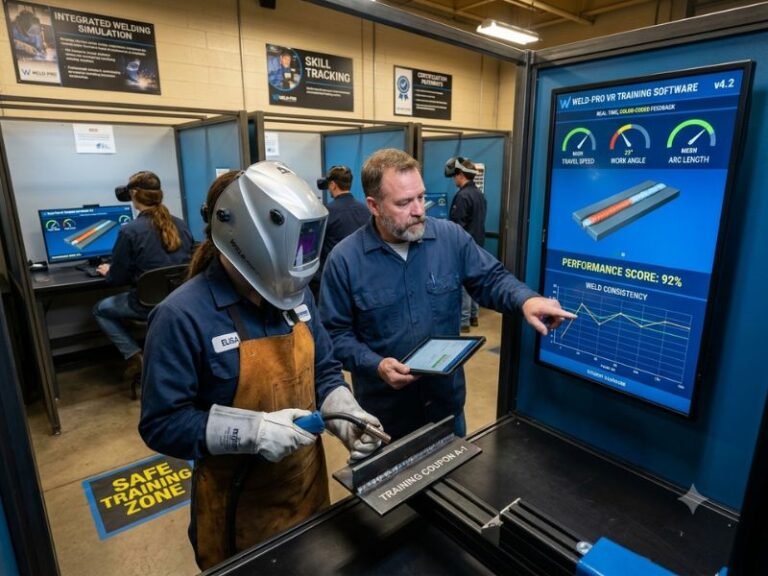
These systems allow students to practice welding techniques in a virtual environment before using real equipment.
Simulation tools can help students understand welding movements, machine settings, and common mistakes.
They also allow instructors to analyze performance and provide more detailed feedback.
Virtual Reality Welding Training
Virtual reality (VR) welding systems create realistic training environments where students can practice welding procedures digitally.
VR training allows beginners to gain experience with welding movements and positions without immediately using physical materials.
As the technology improves, more training classes may include virtual reality as part of their learning process.
Robotic Welding Education
Automation is becoming increasingly important in manufacturing industries.
Future welding classes are expected to include more robotic welding education, teaching students how automated welding systems operate.
Learning robotic welding can create new career opportunities because industries need workers who understand both manual and automated welding processes.
Online and Digital Learning
Digital learning platforms are expanding welding education beyond traditional classrooms.
Students can access video lessons, technical resources, and theoretical training materials online.
While practical training remains essential, digital learning can support classroom education and provide additional learning opportunities.
Industry-Specific Training
Future welding training classes will likely become more specialized to meet industry demands.
Programs may focus on areas such as:
- Renewable energy projects
- Aerospace manufacturing
- Advanced fabrication
- Industrial automation
By adapting to industry changes, welding classes can continue preparing students for successful careers.
Technology will continue to change welding education, but hands-on practice and skilled instruction will remain the foundation of effective welding training.
Welding Training Classes for Companies and Industries
Many companies and industrial organizations use welding training classes to improve employee skills, maintain quality standards, and increase workplace safety. Industries that depend on welding require workers who can perform tasks accurately and follow professional procedures.
Professional training helps companies build a skilled workforce and adapt to changes in welding technology.
Employee Skill Development
Companies use welding training classes to train new employees and improve the abilities of existing workers.
New employees can learn basic welding techniques, equipment operation, and safety procedures. Experienced workers can take advanced classes to improve their skills or learn new welding methods.
Continuous training helps companies maintain a workforce that can handle different projects and production requirements.
Improving Workplace Safety
Safety is a major concern in welding environments because workers deal with heat, electricity, fumes, and heavy equipment.
Training classes teach employees proper safety practices, including:
- Correct use of protective equipment
- Safe machine operation
- Hazard identification
- Workplace safety procedures
Better-trained employees are more likely to follow safety rules and reduce workplace risks.
Maintaining Welding Quality
Quality control is important in industries where welding affects product strength and safety.
Training classes help workers understand welding procedures, inspection requirements, and methods for preventing defects.
Skilled welders can produce stronger welds, reduce rework, and improve overall production efficiency.
Training on Modern Welding Technology
The welding industry continues to adopt new technologies such as automation, robotic welding, and digital monitoring systems.
Companies can use specialized training classes to teach employees how to operate and maintain modern welding equipment.
This helps businesses improve productivity and stay competitive.
Customized Training Programs
Many welding training providers offer customized programs based on company requirements.
These programs can focus on specific welding processes, materials, equipment, or workplace procedures.
Customized training allows companies to address skill gaps and prepare workers for specific job responsibilities.
How Welding Training Classes Prepare Students for the Workplace
Welding training classes are designed to prepare students for real working environments by combining technical knowledge, practical experience, and professional skills.
A successful welder needs more than the ability to create welds. They must understand safety, quality standards, teamwork, and workplace expectations.
Learning Real Workplace Procedures
Professional welding classes introduce students to procedures commonly used in industrial environments.
Students learn how to:
- Follow welding instructions
- Read technical drawings
- Prepare materials properly
- Maintain equipment
- Complete tasks according to standards
These skills help graduates adapt more easily to professional welding jobs.
Developing Problem-Solving Skills
Welders often face challenges such as material issues, equipment problems, and welding defects.
Training classes teach students how to identify problems and find suitable solutions.
Through practical exercises, students learn how welding settings, techniques, and preparation methods affect final results.
Understanding Quality Requirements
Workplace welding requires consistent quality and accuracy.
Students learn how welds are inspected, how defects are identified, and why following welding procedures is important.
This knowledge helps them produce work that meets industry expectations.
Building Professional Work Habits
Training classes also help students develop professional habits such as:
- Following safety rules
- Maintaining tools and equipment
- Managing time effectively
- Working with others
These skills are valuable because welding jobs often require teamwork and responsibility.
Preparing for Employment Opportunities
Many welding classes include career support such as resume guidance, interview preparation, and certification assistance.
By completing professional training, students become better prepared to apply for welding positions and begin successful careers.
A combination of technical skills, practical experience, and workplace knowledge helps welding graduates become valuable employees in different industries.
Welding Training Classes for Career Changers
Welding training classes are a popular option for individuals who want to start a new career in a skilled trade. People from different professional backgrounds choose welding because it offers opportunities for stable employment, skill development, and long-term career growth.
A structured training program helps career changers learn welding from the basics and develop the abilities required for professional work.
Starting Without Previous Experience
Many beginner welding classes are designed for students who have no previous welding background.
These programs introduce learners to:
- Welding fundamentals
- Equipment operation
- Safety procedures
- Basic fabrication skills
With proper instruction and regular practice, beginners can develop welding abilities and prepare for entry-level positions.
Short Training Path to Employment
Compared with many other careers, welding can often be learned through focused training programs that emphasize practical skills.
Short-term and certificate welding classes allow students to gain foundational knowledge and workplace skills within a reasonable period.
This makes welding an attractive option for people looking for a faster transition into a new profession.
Transferable Skills
Career changers often bring useful skills from previous jobs that can support their welding careers.
Skills such as problem-solving, attention to detail, mechanical understanding, and teamwork can help individuals become successful welders.
Welding training classes build on these existing abilities and add specialized technical knowledge.
Opportunities for Career Growth
Starting as a beginner welder does not limit future opportunities.
With additional training and experience, welders can move into specialized areas such as pipe welding, welding inspection, supervision, or welding technology.
Continuous learning allows career changers to build long-term professional success.
Building Confidence Through Practice
Changing careers can be challenging, but hands-on welding classes help students gain confidence through regular practice.
Working with instructors and classmates creates a supportive learning environment where students can improve their skills step by step.
Importance of Instructor Experience in Welding Training Classes
The experience and knowledge of welding instructors have a major impact on the quality of training. Skilled instructors help students understand complex welding concepts, improve practical techniques, and prepare for professional challenges.
A knowledgeable instructor can make the learning process faster and more effective.
Industry Experience
Experienced instructors often bring real workplace knowledge into the classroom.
They understand common welding challenges, industry expectations, and professional standards.
This practical experience allows them to teach skills that are directly useful in real welding jobs.
Proper Technique Demonstration
Welding requires precise movements and proper techniques.
Instructors demonstrate correct methods for equipment setup, welding positions, material preparation, and defect prevention.
Students can observe professional techniques and practice them with guidance.
Personalized Feedback
Every student develops welding skills at a different pace.
Experienced instructors can identify individual weaknesses and provide specific advice for improvement.
This feedback helps students correct mistakes and develop stronger welding habits.
Safety Guidance
Safety knowledge is one of the most important parts of welding education.
Instructors teach students how to work safely with welding machines, protective equipment, and workshop tools.
Their guidance helps students understand workplace hazards and follow proper safety procedures.
Career Advice
Professional instructors can also provide valuable career guidance.
They may help students understand certification options, job opportunities, and specialization paths within the welding industry.
The support of an experienced instructor can help students make better decisions about their welding careers.
Welding Training Classes and Industry Certifications
Industry certifications play an important role in a welder’s career because they verify technical ability and demonstrate that a professional can meet recognized quality standards. Many welding training classes include certification preparation to help students achieve these qualifications.
Certification requirements vary depending on the welding process, industry, and job position. A good training program helps students understand these requirements and prepare effectively.
Preparing for Certification Tests
Welding training classes help students become familiar with the skills required for certification examinations.
Students practice:
- Welding specific joints and positions
- Following approved welding procedures
- Maintaining proper machine settings
- Producing consistent weld quality
Regular practice under instructor supervision improves confidence and increases the chance of successful certification.
Understanding Welding Standards
Professional welders must understand industry standards because many projects require specific welding procedures and quality levels.
Training classes introduce students to important concepts such as welding codes, inspection requirements, and documentation procedures.
This knowledge helps welders perform work that meets customer and industry expectations.
Improving Career Opportunities
Certified welders often have access to more employment opportunities because employers can verify their skills.
Certification can help professionals qualify for:
- Industrial welding positions
- Specialized welding projects
- Higher-level welding roles
- International job opportunities
While certification is valuable, practical experience remains important for long-term career success.
Continuous Skill Development
Welding technology continues to change, so professional welders need ongoing education.
Advanced training classes and additional certifications allow welders to improve their abilities and stay competitive in the job market.
Continuous learning helps professionals adapt to new equipment, materials, and welding techniques.
Final Thoughts: Choosing the Right Welding Training Classes
Welding training classes provide an effective pathway for anyone who wants to develop professional welding skills. These programs combine technical knowledge, hands-on practice, safety education, and career preparation to help students become capable welding professionals.
The right welding class can make a significant difference in skill development and future opportunities. A quality program should include experienced instructors, modern equipment, practical training sessions, and a curriculum that matches industry requirements.
For beginners, welding classes provide the foundation needed to understand basic processes, operate equipment safely, and build confidence. For experienced welders, advanced classes offer opportunities to improve skills, learn specialized techniques, and prepare for certifications.
When selecting a welding training program, students should consider factors such as course content, practical training hours, instructor experience, certification support, and career assistance.
As industries continue to require skilled welding professionals, trained welders will remain valuable in construction, manufacturing, energy, and many other fields. Modern welding classes are also adapting to new technologies such as automation, simulation systems, and robotic welding.
Investing in professional welding training can provide long-term benefits by creating strong technical skills and opening doors to various career paths.
Whether someone is starting a new career, improving existing abilities, or preparing for advanced opportunities, welding training classes provide the knowledge and practical experience needed to succeed in the welding industry.
Frequently Asked Questions About Welding Training Classes
How long do welding training classes usually take?
The duration of welding training classes depends on the type of program and the level of skills being taught. Beginner classes may take a few weeks or months, while advanced and certification-focused programs can require several months of training.
The length of a program is also affected by the number of welding processes included, practical training hours, and certification goals.
Can beginners join welding training classes?
Yes, many welding training classes are designed specifically for beginners. These programs start with basic concepts such as welding safety, equipment handling, and simple welding techniques.
Students do not always need previous welding experience. A willingness to learn and practice regularly is usually more important.
What skills are learned in welding classes?
Welding training classes teach a combination of technical and practical skills.
Students commonly learn:
- Welding equipment operation
- MIG, TIG, Stick, and Flux-Cored welding techniques
- Material preparation
- Blueprint reading
- Welding safety procedures
- Quality control methods
These skills help students prepare for professional welding work.
Are welding training classes worth the investment?
For individuals interested in welding careers, professional training classes can be a valuable investment.
They provide structured learning, access to equipment, instructor guidance, and practical experience that can be difficult to gain through self-learning.
Proper training can improve job opportunities and help students develop professional-level skills.
Do welding classes provide certification?
Some welding training classes include certification preparation, while others focus only on skill development.
Students should check whether the program supports certification testing or prepares learners for specific industry qualifications.
Certification can improve employment opportunities by demonstrating verified welding ability.
Can I learn welding through online classes?
Online welding classes can help students understand welding theory, safety concepts, and equipment information.
However, welding is a practical skill that requires hands-on experience. Students usually need workshop practice to develop proper control and technique.
Combining online learning with in-person practice can provide a more complete learning experience.
What equipment is needed for welding training?
Most welding training facilities provide the major equipment needed for practice, including welding machines and workshop tools.
Students may need personal safety equipment such as:
- Welding helmet
- Gloves
- Protective clothing
- Safety boots
Having proper safety gear helps students practice safely and develop professional habits.
What career can I pursue after welding training?
After completing welding training classes, graduates can work in many positions, including:
- Professional welder
- Fabrication specialist
- Pipe welder
- Welding technician
- Welding inspector
- Welding supervisor
With experience and additional training, welders can move into specialized or leadership roles.
Conclusion
Welding training classes provide a complete learning path for individuals who want to develop welding skills and build a professional career. These programs combine classroom education, practical workshop experience, safety training, and industry-focused knowledge.
From beginner courses to advanced certification preparation, welding classes help students understand different welding processes and improve their technical abilities.
A quality welding training program provides more than just welding practice. It teaches students how to work safely, follow professional standards, solve technical problems, and perform tasks required in real workplaces.
As industries continue to depend on skilled welding professionals, trained welders will continue to have valuable career opportunities. Choosing the right welding training class can be an important step toward developing a successful and rewarding career in the welding field.